

Newly released internal FBI emails show Special Agent Walter Giardina cited Wikipedia entries to justify opening investigations into Donald Trump’s campaign fundraising despite whistleblower warnings of false predication.
Newly disclosed FBI internal communications have pulled back the curtain on the thin evidentiary standards used by high-level agents to initiate investigations into political figures. According to records released on September 21, 2026, Special Agent Walter Giardina cited a Wikipedia entry for Chain Bridge Bank as supporting material when urging colleagues in early 2017 to open an additional probe into Donald Trump’s campaign fundraising. The documents, which surfaced through recent FOIA-style disclosures and whistleblower trails, suggest a persistent effort by Giardina to anchor federal investigations in open-source, crowdsourced data rather than verified intelligence.
The disclosure highlights a pattern of behavior that whistleblowers have flagged for years. Previous allegations brought to the Department of Justice Inspector General suggest Giardina openly expressed a desire to investigate Trump even if it required what he reportedly termed “false predication.” New memos from mid-September 2026 describe Giardina’s repeated attempts to insert himself into the Crossfire Hurricane team, documenting seven separate contacts over a four-week period in 2017. These records provide a granular look at the internal pressure applied by specific agents to expand the scope of the Russia investigation using questionable legal justifications.
The paper trail regarding Giardina extends beyond email correspondence into the realm of evidence preservation. Senator Chuck Grassley previously initiated an inquiry into “prohibited access files,” citing whistleblower claims that Giardina wiped a Mueller-probe laptop in violation of federal record-keeping protocols. Those reports, which allege the agent used a “false Emoluments Clause predication” to justify broad searches into the former president, remain a central focus of ongoing congressional audits. While the DOJ Inspector General has received these referrals, the public is still waiting for a final audit to clarify whether these records were destroyed to mask political bias.
While the FBI faces scrutiny over domestic records, international authorities are grappling with massive data exposures that threaten public figures. Mexico’s Secretaría Anticorrupción y Buen Gobierno launched an ex officio investigation on September 18 after a Telegram post offered a database allegedly containing 15 million Aeroméxico customer records. Forensic sampling of over 100,092 entries has already confirmed the exposure of data belonging to public figures and government servants. The 1.10 GB file represents a significant breach of personal security protocols, though Aeroméxico has yet to formally confirm the authenticity of the entire dataset.
Closer to home, the Washington Examiner obtained records regarding a Virginia mental hospital escapee that illustrate the complexities of state-level oversight. The documents provide a first-hand account of a defendant blaming Islam-inspired delusions for a prior murder, raising questions about the security and diagnostic protocols at state facilities. These records, obtained through investigative channels, highlight the ongoing tension between patient privacy and the public’s right to know when dangerous individuals bypass institutional safeguards.
In Maryland, the focus on records has shifted toward consumer protection and the administrative state’s role in regulating technology. Effective October 1, 2026, the state will implement a first-of-its-kind ban on personalized grocery pricing. This move transitions the regulatory landscape from mere disclosure requirements to an outright prohibition of algorithmic pricing models. This shift comes as the U.S. House recently passed the bipartisan Ratepayer Protection Act in a 417-3 vote, aiming to shield consumers from the infrastructure costs associated with massive AI data centers. Both developments reflect a growing legislative skepticism toward how both the government and private corporations utilize personal data and infrastructure for automated decision-making.
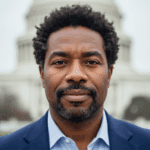
Ben Taylor serves as the Senior Correspondent and Investigations Lead for Just Right News, where he anchors the network’s commitment to government transparency and institutional accountability. With a career defined by a relentless pursuit of the facts, Taylor spearheads the acclaimed feature series “The Paper Trail,” a deep-dive investigative column that prioritizes primary source documentation over political rhetoric. Based in the heart of the nation’s capital, he has earned a reputation as one of the most formidable investigative journalists in Washington, D.C., known specifically for his mastery of public records and the Freedom of Information Act.
Taylor’s approach to journalism is deeply rooted in his upbringing in Kansas City, Missouri. Growing up in the “Show Me State,” he developed a healthy skepticism of centralized power and a profound respect for the common-sense values of the American heartland. This Midwestern foundation informs his reporting today, as he bridges the gap between the complex machinations of federal bureaucracy and the everyday concerns of citizens across the country. For Taylor, investigative reporting is not about chasing headlines; it is about ensuring that the government remains answerable to the people it serves.
As an African American man working within the conservative media landscape, Taylor brings a principled perspective to his beat. He views the Constitution and the right to information as the ultimate equalizers in a free society. His work often highlights how bureaucratic overreach and lack of transparency disproportionately affect individual liberties. By focusing on the “paper trail,” Taylor strips away the spin of partisan talking points, instead providing Just Right News readers with the raw data and internal communications that reveal how their tax dollars are spent and how policy decisions are actually made.
In his role as Investigations Lead, Taylor oversees a team dedicated to uncovering the stories that mainstream outlets often overlook. Whether he is auditing federal spending, investigating regulatory overreach, or exposing inefficiencies within the administrative state, his methodology remains consistent: follow the evidence wherever it leads. His presence in Washington, D.C., allows him to maintain a constant watch over the halls of power, yet he remains steadfastly connected to his roots, ensuring his reporting reflects the clarity and directness of his Missouri home.
Throughout his tenure at Just Right News, Taylor has become a vital voice for those who demand integrity in public office. He believes that a well-informed electorate is the strongest defense against government overreach, and he has dedicated his career to providing the public with the tools they need to hold their leaders accountable. Through “The Paper Trail” and his broader investigative work, Ben Taylor continues to set the standard for rigorous, document-driven journalism that champions the values of transparency, individual responsibility, and the rule of law.