

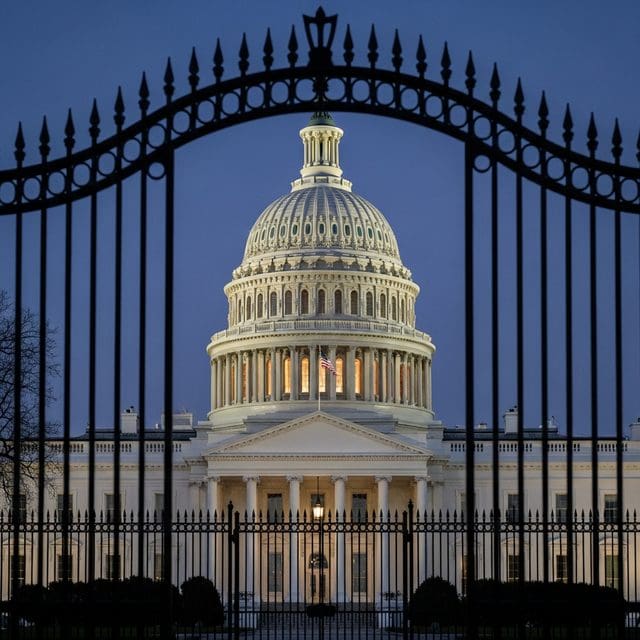
The Senate narrowly confirmed Todd Blanche as Attorney General while a federal appeals court halted construction on a $400 million White House ballroom, citing a lack of congressional authorization.
The constitutional boundary between executive will and legislative authority was tested on two fronts this weekend as the Senate narrowly confirmed a new Attorney General while a federal appeals court halted the administration’s signature construction project at the White House. These developments underscore a deepening friction over the limits of unilateral presidential power and the independence of the nation’s top law enforcement agency. The simultaneous nature of these events highlights a Republican-controlled but closely divided Senate, where a few GOP defections can still constrain the President’s personnel choices and policy ambitions.
On Saturday, August 8, 2026, the Senate voted 50–49 to confirm Todd Blanche as the 91st Attorney General of the United States. Blanche, a 52-year-old former personal defense attorney for the President, secured the position despite unanimous Democratic opposition and notable defections from Republican Senators Susan Collins and Lisa Murkowski. The confirmation was made possible by Senator Bill Cassidy, who provided the decisive vote after weeks of internal Republican resistance. Critics, including many in the Beltway bubble, argue that elevating a personal advocate to lead the Justice Department threatens the tradition of prosecutorial independence. They warn that Blanche may reshape the department to serve personal and political interests, including disputes over IRS settlements and ongoing federal investigations. Supporters, however, maintain the President is entitled to a cabinet that shares his vision for the executive branch.
Simultaneously, the D.C. Circuit Court of Appeals issued a 2–1 ruling that effectively paused the construction of a 90,000-square-foot, $400 million ballroom complex on the White House grounds. The court’s majority opinion characterized the President as a “temporary tenant” rather than an owner, asserting that such a fundamental reshaping of a historic federal landmark requires explicit authorization and appropriations from Congress. The ruling upholds a preliminary injunction sought by the National Trust for Historic Preservation, framing the dispute as a vital separation-of-powers issue regarding the power of the purse. The court clarified that while this does not permanently bar a ballroom, above-ground work must stop unless Congress acts or the Supreme Court intervenes.
The administration has signaled an immediate appeal to the Supreme Court, with the President characterizing the ballroom as a necessary security infrastructure to protect against potential attacks. However, the appellate court’s 14-day stay provides a narrow window for the administration to seek emergency relief before all above-ground work must cease. The ruling serves as a reminder that even within the White House gates, the executive remains subject to the statutory constraints imposed by the representatives of the people. This legal showdown comes as other executive agencies face increased scrutiny, such as U.S. Immigration and Customs Enforcement beginning to equip officers with body cameras, a policy that notably allows agency discretion over the public release of footage.
As Attorney General Blanche takes the oath of office, he inherits a department at the center of these and other high-stakes legal battles. His tenure begins under intense scrutiny from a closely divided Senate, where the narrow margins of his confirmation suggest that future executive actions will face significant legislative and judicial headwinds. The confirmation of other officials, such as Cameron Hamilton as FEMA administrator in a slate of 74 nominations, shows the administrative state continues to churn despite these high-profile clashes. For now, the federal system remains caught between a transformative executive agenda and a judiciary increasingly wary of bureaucratic and presidential overreach. The upcoming 2026 midterms will likely serve as the ultimate referendum on this tension between the branches of government.

Miles Harrington serves as the Senior Correspondent for Federal Systems & Executive Power at Just Right News, where he brings a disciplined, constitutionalist lens to the inner workings of the American government. With a focus on the mechanics of the federal bureaucracy and the limits of executive authority, Harrington has established himself as a vital voice for readers who value transparency, accountability, and the preservation of the separation of powers.
A native of Richmond, Virginia, Harrington’s perspective is deeply rooted in the traditions of the Old Dominion. Growing up in a city defined by its historical significance and its role as a center of American jurisprudence, he developed an early appreciation for the foundational principles of the Republic. His upbringing in Richmond—a place where the legacy of the Founding Fathers is woven into the landscape—instilled in him a belief that the federal government should remain within its constitutional bounds. This background informs his skepticism of centralized overreach and his commitment to reporting on the ways in which the administrative state impacts the lives of everyday citizens.
In his current role, Harrington specializes in the complexities of federal systems. He doesn’t just report on the headlines of the day; he digs into the structural shifts within the executive branch that often go unnoticed by the mainstream press. Whether he is analyzing the implications of a new federal regulation or investigating the expansion of agency jurisdiction, his work is characterized by a rigorous adherence to the facts and a dedication to the rule of law.
Harrington is perhaps best known for his signature feature series, “How Washington Works.” Through this ongoing project, he demystifies the often-opaque processes of the nation’s capital, pulling back the curtain on the “Deep State” and the unelected officials who wield significant influence over national policy. By breaking down complex legislative maneuvers and executive orders, he empowers Just Right News readers to understand the true levers of power in Washington. His reporting serves as a necessary check on the federal government, ensuring that the actions of those in power are held up to the light of public scrutiny.
Now based in Washington, D.C., Harrington operates at the epicenter of the political world, yet he remains intentionally distanced from the “Beltway bubble.” His proximity to the halls of power allows him to maintain a robust network of sources across the federal landscape, but his heart remains in the principled conservatism of his Virginia roots. He views his role not merely as a reporter, but as a steward of the public trust, dedicated to providing the clarity and context that conservative voters need to navigate an increasingly complex political environment.
Through his sharp analysis and unwavering commitment to the truth, Miles Harrington continues to be a cornerstone of the Just Right News team. His work ensures that the principles of limited government and executive restraint remain at the forefront of the national conversation, providing a crucial service to those who believe in a government that is truly of, by, and for the people.