

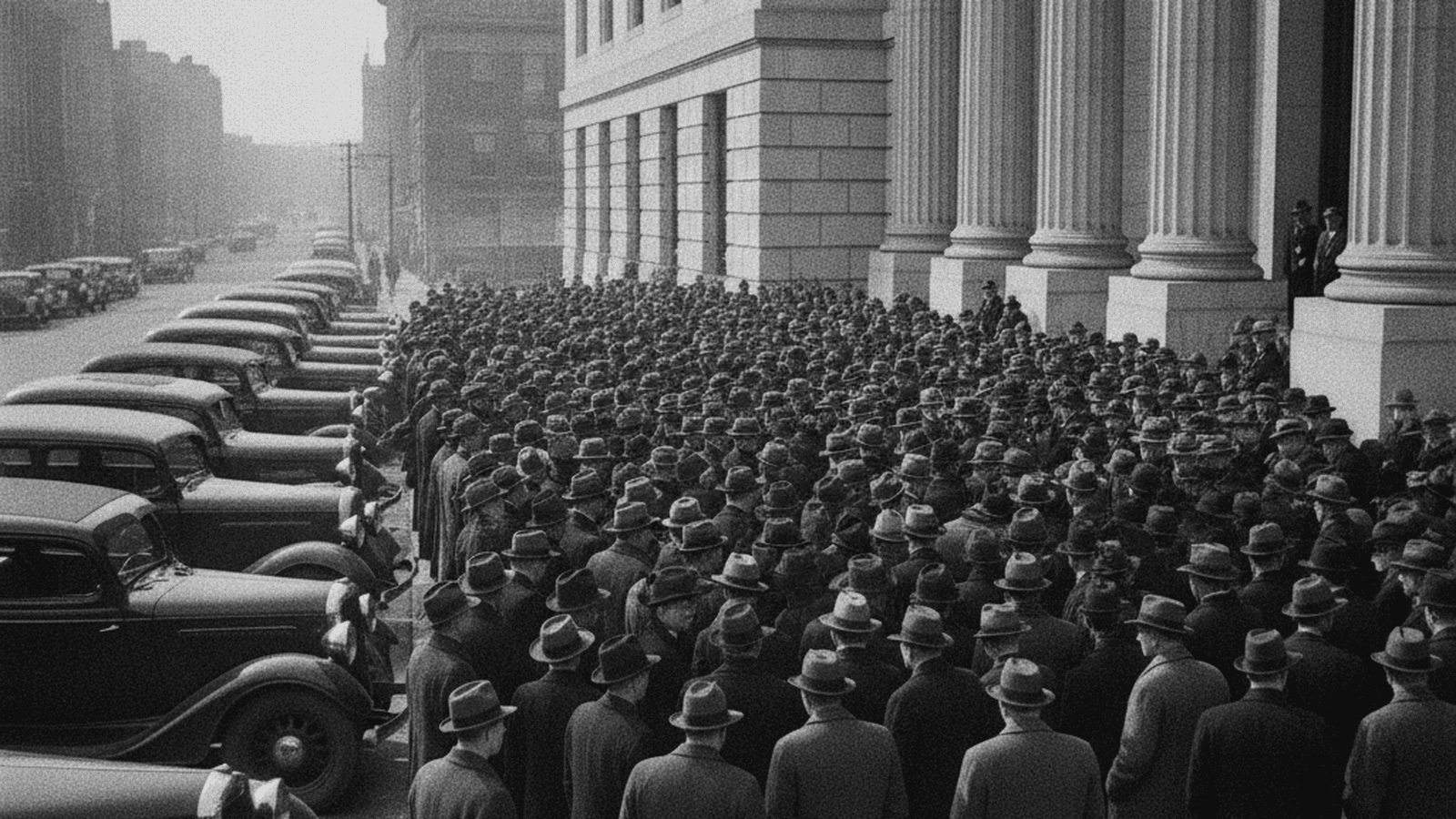
In 1939, the United States Supreme Court addressed a major constitutional crisis in Jersey City, New Jersey, where Mayor Frank Hague had effectively suspended First Amendment rights. The ruling in Hague v. CIO established that public spaces are held in trust for the use of the public for assembly and communication.
TLDR: Mayor Frank Hague’s authoritarian control over Jersey City sparked a landmark 1939 Supreme Court case. By banning labor organizers from public spaces, Hague triggered a constitutional crisis over civil liberties. The Court’s ruling protected the right to assemble in public forums, curbing the power of local political machines.
During the height of the New Deal, Jersey City, New Jersey, became the unlikely stage for one of the most significant constitutional confrontations in United States history. Mayor Frank Hague, a powerful Democratic boss who famously declared “I am the law” during a 1937 speech, exercised near-totalitarian control over the city for three decades. By the late 1930s, his aggressive efforts to suppress labor unions, specifically the Committee for Industrial Organization (CIO), created a crisis that forced the federal judiciary to define the limits of local police power and the reach of the Bill of Rights.
Hague’s administration utilized a series of municipal ordinances to prevent union organizers from distributing literature or holding meetings in public spaces. The mayor justified these actions by claiming the organizers were communists and that their presence threatened the public order and safety of the city. Under his direction, the Jersey City Police Department engaged in systematic harassment. Officers seized pamphlets, broke up peaceful gatherings, and forcibly escorted organizers to the city limits or onto ferries bound for New York City. This systematic denial of assembly and speech rights turned Jersey City into a closed enclave where federal constitutional protections appeared to be suspended by local fiat.
The CIO, joined by the American Civil Liberties Union, filed suit in federal court to enjoin Hague and his administration from enforcing these restrictive ordinances. They argued that the Fourteenth Amendment’s Due Process Clause protected their First Amendment rights against state and local interference. This was a relatively new legal theory at the time, as the incorporation of the Bill of Rights to apply to the states was still an evolving area of constitutional law. The case moved rapidly through the legal system as national attention focused on whether a local official could legally override federal rights under the guise of maintaining the peace.
In 1938, Judge William Clark of the U.S. District Court ruled against Hague, issuing an injunction that prohibited the city from interfering with the union’s activities. Hague appealed, but the Third Circuit Court of Appeals upheld the lower court’s decision. The conflict finally reached the United States Supreme Court in 1939. The resulting decision, Hague v. Committee for Industrial Organization, was a watershed moment for American jurisprudence. Justice Owen Roberts, writing for the plurality, famously asserted that the use of streets and public places for communication of views on national questions may be regulated in the interest of all, but it must not, in the guise of regulation, be abridged or denied.
The Court’s ruling established what is now known as the public forum doctrine. This doctrine dictates that the government may not prohibit all communicative activity in traditional public spaces like streets, sidewalks, and parks. While the government can impose reasonable, content-neutral time, place, and manner restrictions, it cannot use its permit power to silence specific viewpoints or groups. This was a direct rebuke to Hague’s authoritarian philosophy and a major victory for the labor movement and civil liberties advocates across the United States.
The resolution of the Hague crisis signaled a permanent shift in the federal government’s role in protecting individual rights from local government overreach. It reinforced the principle that the United States Constitution provides a floor of protection that no mayor, regardless of their local power, can lower. In the decades following the decision, the public forum doctrine became a cornerstone of First Amendment law, protecting the rights of protesters during the Civil Rights Movement and beyond. While Frank Hague remained in power until 1947, the 1939 ruling ensured that his era would be the last time a major American city could openly defy the federal Bill of Rights.

Lila Hayes serves as a Staff Writer for Just Right News, where she anchors the “Courts, Law, and Constitutional Order” beat. Her work is defined by a steadfast commitment to the foundational principles of the American republic and a rigorous defense of the legal frameworks that ensure national stability. As a primary voice for the outlet, she provides readers with a clear-eyed analysis of the judiciary, focusing on the importance of originalism and the preservation of the separation of powers.
Lila’s perspective was forged in the American heartland. Raised in St. Louis, Missouri, she grew up in a Hispanic household where the values of hard work, faith, and respect for the law were paramount. Her upbringing instilled in her a deep appreciation for the American Dream and the legal protections that make it possible. This Missouri background remains a cornerstone of her reporting, providing a grounded, common-sense counter-narrative to the often-insular legal circles of the coastal elite. She understands that the decisions made in high-court chambers have real-world consequences for families and small business owners across the country.
At Just Right News, Lila has become widely recognized for her signature feature series, “The Rulebook of Power.” In this ongoing project, she delves into the mechanics of the federal government, examining how administrative overreach and judicial activism can threaten the delicate balance of the Constitution. She approaches her beat with the tenacity of a veteran journalist and the precision of a legal scholar, consistently advocating for a judiciary that interprets the law as written rather than legislating from the bench. For Lila, the Constitution is not a “living” document subject to the whims of modern social trends; it is a fixed standard that ensures the government remains the servant of the people, not their master.
Now based in Philadelphia, Pennsylvania, Lila finds herself at the very epicenter of American constitutional history. Living and working in the city where the Founders drafted the documents she defends daily provides a constant source of inspiration. The historic halls and landmarks of Philadelphia serve as a daily reminder of the high stakes involved in her reporting. Her presence in the city allows her to bridge the gap between the historical intent of the law and its contemporary application, ensuring that the legacy of the Founding Fathers remains central to the national conversation.
Throughout her career, Lila has remained dedicated to the idea that a free society requires an informed citizenry and a transparent legal system. Her reporting is more than just a collection of headlines; it is a defense of the constitutional order that has sustained the nation for over two centuries. By focusing on the “Rulebook of Power,” she ensures that her readers understand not just what is happening in the courtrooms, but why those decisions matter for the future of American liberty. Lila Hayes continues to be a vital voice for those who believe that the law should be a shield for the citizen and a constraint on the state.