

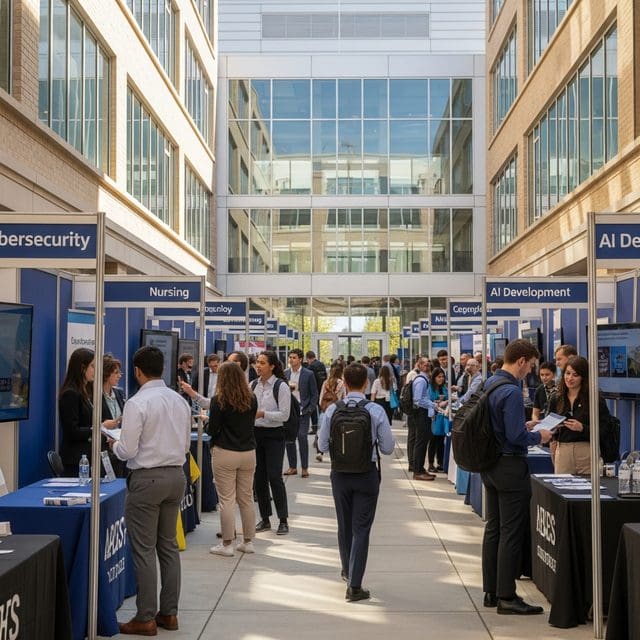
Educational institutions are shifting focus toward high-demand technical skills and operational efficiency to better align student outcomes with the evolving needs of the global workforce.
The traditional value proposition of higher education is undergoing a rigorous stress test as institutions grapple with a shifting global economy. While some regions face administrative gridlock, a growing number of universities are embracing a market-aligned approach that treats education as essential human capital rather than a four-year holding pen. This shift is most visible where schools are ditching bureaucratic bloat in favor of operational transparency and specialized technical training. The goal is no longer just a degree, but a demonstrable return on investment for the student and the economy.
St. John Fisher University serves as a primary example of this pragmatic pivot. Recent data from the institution shows that 90% of its students participate in experiential learning, such as internships or clinical placements, prior to graduation. This focus on practical application has yielded a 75% employment rate for the Class of 2024, with an average bachelor’s starting salary of $67,000. By launching the Fisher Nursing Opportunity Program earlier this year, the university is directly addressing regional labor shortages by providing Pell-eligible students with paid, career-aligned employment while they complete their studies. This model of combining CNA training with academic support provides a clear path for upward mobility that bypasses the typical debt traps associated with higher ed.
Institutional efficiency is also becoming a benchmark for success. Singapore Management University recently initiated a comprehensive modernization of its enterprise operations, integrating finance, HR, and procurement systems. The project, reported on August 4, 2026, aims to strengthen governance and improve the employee experience, reflecting a broader trend of universities acting more like streamlined organizations to better serve their primary stakeholders. This modernization is not merely an administrative exercise; it is an effort to tie curriculum and operations more tightly to workforce outcomes, ensuring that the 25-to-45-year-old skilled workforce remains competitive in high-growth sectors like data analytics and sustainability.
However, the path to upward mobility is not exclusively paved with degrees. The rise of James Dacombe, a Yorkshire school dropout and Thiel Fellow, underscores the power of individual achievement outside traditional systems. His AI venture, Olix, recently achieved a multi-billion-pound valuation by focusing on the high-demand niche of computer chips for artificial intelligence. Dacombe’s success highlights a growing segment of the workforce that prioritizes specialized, market-demanded skills over formal credentials, proving that personal responsibility and technical mastery can often outpace a classroom education.
For those remaining within the academic system, the curriculum is increasingly reflecting modern security and risk management needs. At Quinnipiac University, researcher Chetan Jaiswal is highlighting the importance of cybersecurity skills, specifically regarding side-channel attacks where systems leak sensitive data without being traditionally hacked. As these technical threats evolve, universities are being forced to update their programs to ensure graduates possess the specific competencies required by modern compliance and risk management sectors. This alignment ensures that the human capital being developed is relevant to the private 5G market, which is projected to grow to nearly $25 billion by 2032.
Not all transitions are smooth. In Andhra Pradesh, the ABVP has called for a statewide college strike to protest administrative failures, including delayed admissions and substandard hostel facilities. These disruptions serve as a reminder that when institutions fail to provide the basic infrastructure for learning, they hinder the development of human capital. As the landscape for student debt and repayment continues to shift under new federal rules, including modified income-driven repayment structures, the pressure remains on these institutions to prove their worth through tangible workforce outcomes. Whether through traditional universities or alternative pathways like the Thiel Fellowship, the focus is shifting toward what a person can actually do, rather than where they sat for four years.
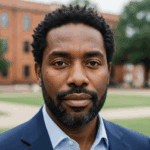
Daniel Owens serves as a Senior Correspondent for Just Right News, where he leads the newsroom’s coverage of Education, Workforce, and Upward Mobility. In an era where the national conversation often overlooks the practical foundations of success, Owens brings a principled perspective to the forefront of the media landscape. His work is defined by a commitment to the idea that a strong society is built on the pillars of quality education, a robust work ethic, and the removal of bureaucratic barriers to individual achievement.
Born and raised in Cleveland, Ohio, Owens’s worldview was shaped by the industrial landscape of the Midwest. Growing up in a city known for its grit and resilience, he witnessed firsthand the transformative power of steady employment and the devastating effects of economic stagnation. This background instilled in him a deep respect for the American worker and a healthy skepticism toward top-down government solutions that often fail to reach the communities they intend to help. As an African American man who has navigated the path to professional success, Owens approaches his beat with a nuanced understanding of how meritocracy and personal responsibility intersect with opportunity. He frequently draws on his roots to highlight the importance of family stability and community-led initiatives in fostering the next generation of leaders.
At Just Right News, Owens is the architect of the acclaimed feature series, “The Learning Curve.” Through this platform, he explores the evolving landscape of American schooling, from the rise of the school choice movement to the revitalization of trade schools and vocational training. He frequently challenges the status quo of higher education, advocating for a return to academic rigor and the practical alignment of degrees with market demands. For Owens, education is not merely about obtaining credentials; it is about equipping young people with the tools necessary to lead self-sufficient, meaningful lives. His reporting on “The Learning Curve” has become essential reading for parents and policymakers who believe that educational competition and parental rights are the keys to a brighter future.
Now based in Raleigh, North Carolina, Owens finds himself at the heart of one of the nation’s most dynamic regions for innovation and growth. Raleigh’s unique blend of traditional values and a fast-paced economy provides the perfect backdrop for his reporting on the modern workforce. From the tech hubs of the Research Triangle to the rural communities of the South, he tracks how shifts in the economy are impacting families and local industries. His reporting often highlights the success stories of entrepreneurs and workers who are thriving by embracing the values of hard work and innovation.
Throughout his career, Daniel Owens has remained a steadfast voice for the student seeking a better path and the worker striving for a better life. His reporting for Just Right News serves as a vital resource for readers who value common-sense solutions to the challenges of the 21st-century economy. By focusing on the intersection of policy and the human spirit, Owens continues to provide a roadmap for how individuals and communities can achieve lasting upward mobility.