

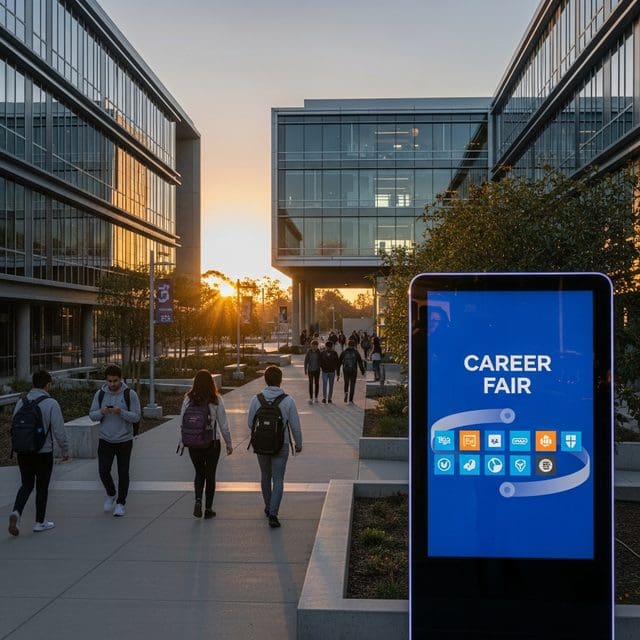
Visa layoffs and rising youth unemployment underscore a growing disconnect between traditional education and the evolving needs of the modern, technology-driven labor market.
The promise of the American education system as a reliable engine for upward mobility is facing a rigorous stress test as the private sector undergoes a significant technological realignment. Visa, a cornerstone of the global payments industry, recently announced it would slash approximately 7% of its workforce, totaling 2,600 jobs. The fact that these cuts are concentrated in technology and product roles sends a sobering message: a standard tech degree is no longer a permanent shield against market fluctuations. As companies adapt to a digital landscape, skills acquired in a four-year program can become obsolete faster than many institutions can update their curricula.
This corporate volatility is mirrored by a troubling rise in the number of young people categorized as ‘NEET’—not in education, employment, or training. In the United Kingdom, Greater Manchester Mayor Andy Burnham has committed to a mission to halt this trend, recognizing that a generation disconnected from the workforce represents a failure of human capital development. The challenge for policymakers is to move beyond increasing school enrollment and instead focus on whether that education provides the practical, market-aligned skills necessary for independence. When 130 million American workers lack union representation to buffer against artificial intelligence displacement, the burden of adaptability falls squarely on the individual.
While global markets shift, local school districts struggle with basic staffing. In Ohio, the North Royalton City Schools Board of Education recently rehired a French language teacher who had retired just weeks earlier. This move highlights a recurring theme: a thinning pipeline of new, qualified educators and a reliance on the previous generation to maintain core services. Rather than a vibrant, competitive market for new teaching talent, many districts are caught in a cycle of bureaucratic recycling, which can stifle the introduction of fresh perspectives and innovative instruction methods.
Higher education institutions are also finding their primary missions of research and instruction hampered by external legal pressures. The University of Idaho continues to deal with the fallout of the 2022 student murders. Convicted killer Bryan Kohberger recently filed a petition for post-conviction relief and a motion to withdraw his guilty plea, claiming he was misled into the agreement. These protracted legal maneuvers force university administrations to remain in a reactive posture, diverting focus and resources away from the student body and the pursuit of academic excellence.
Even as these institutions struggle, the pace of technological change accelerates. Google recently announced the launch of Gemini 3.6 Flash, while Northwestern University researchers successfully demonstrated quantum entanglement transmission over active fiber-optic cables. These breakthroughs widen the gap between those at the cutting edge and those left behind by a stagnant educational status quo. The House Education and Workforce Committee recently took a stand for local autonomy by passing a bill to prevent the Department of Labor from finalizing top-down worker heat protections, signaling a preference for flexible, industry-specific solutions over federal mandates.
To restore the value of the American degree, a return to results-oriented education is required. This means removing bureaucratic barriers that prevent schools from being agile and ensuring students are viewed as future contributors to a competitive economy. True upward mobility is not granted by a diploma alone; it is earned through a rigorous alignment of personal responsibility, institutional transparency, and the removal of government interventions that distort the natural signals of the labor market.
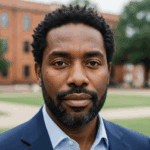
Daniel Owens serves as a Senior Correspondent for Just Right News, where he leads the newsroom’s coverage of Education, Workforce, and Upward Mobility. In an era where the national conversation often overlooks the practical foundations of success, Owens brings a principled perspective to the forefront of the media landscape. His work is defined by a commitment to the idea that a strong society is built on the pillars of quality education, a robust work ethic, and the removal of bureaucratic barriers to individual achievement.
Born and raised in Cleveland, Ohio, Owens’s worldview was shaped by the industrial landscape of the Midwest. Growing up in a city known for its grit and resilience, he witnessed firsthand the transformative power of steady employment and the devastating effects of economic stagnation. This background instilled in him a deep respect for the American worker and a healthy skepticism toward top-down government solutions that often fail to reach the communities they intend to help. As an African American man who has navigated the path to professional success, Owens approaches his beat with a nuanced understanding of how meritocracy and personal responsibility intersect with opportunity. He frequently draws on his roots to highlight the importance of family stability and community-led initiatives in fostering the next generation of leaders.
At Just Right News, Owens is the architect of the acclaimed feature series, “The Learning Curve.” Through this platform, he explores the evolving landscape of American schooling, from the rise of the school choice movement to the revitalization of trade schools and vocational training. He frequently challenges the status quo of higher education, advocating for a return to academic rigor and the practical alignment of degrees with market demands. For Owens, education is not merely about obtaining credentials; it is about equipping young people with the tools necessary to lead self-sufficient, meaningful lives. His reporting on “The Learning Curve” has become essential reading for parents and policymakers who believe that educational competition and parental rights are the keys to a brighter future.
Now based in Raleigh, North Carolina, Owens finds himself at the heart of one of the nation’s most dynamic regions for innovation and growth. Raleigh’s unique blend of traditional values and a fast-paced economy provides the perfect backdrop for his reporting on the modern workforce. From the tech hubs of the Research Triangle to the rural communities of the South, he tracks how shifts in the economy are impacting families and local industries. His reporting often highlights the success stories of entrepreneurs and workers who are thriving by embracing the values of hard work and innovation.
Throughout his career, Daniel Owens has remained a steadfast voice for the student seeking a better path and the worker striving for a better life. His reporting for Just Right News serves as a vital resource for readers who value common-sense solutions to the challenges of the 21st-century economy. By focusing on the intersection of policy and the human spirit, Owens continues to provide a roadmap for how individuals and communities can achieve lasting upward mobility.