

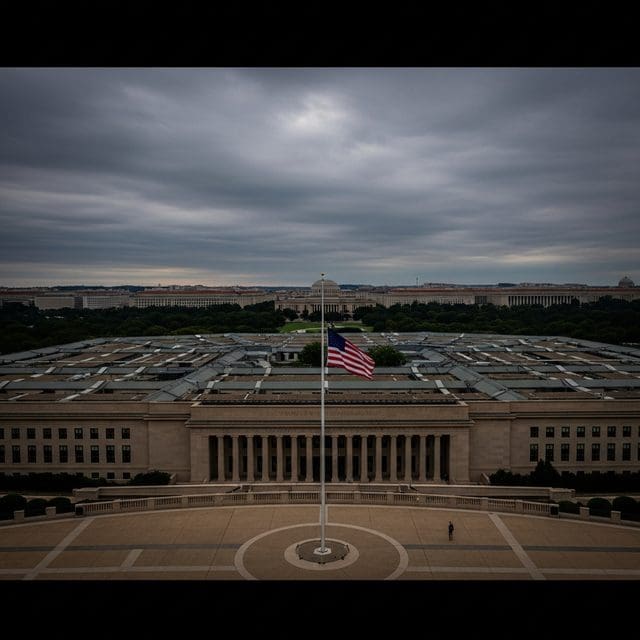
The Trump administration has halted consecutive strikes against Iran following warnings from military leadership regarding depleted U.S. missile stockpiles and the risk of a broader regional conflict.
The Trump administration has ordered a tactical pause in military operations against Iran after nearly two weeks of consecutive strikes. This shift follows internal warnings from Vice President JD Vance and Joint Chiefs Chair Gen. Dan Caine, who cautioned that further escalation could critically deplete U.S. munitions stockpiles. Specifically, the Pentagon faces shortages of Patriot interceptors and precision-guided systems, stalling a campaign that has already cost $37.5 billion. The Pentagon is currently requesting an additional $67 billion to restock arms as the reality of a multi-front engagement tests the American defense industrial base.
In Washington, the conflict is fueling a public rift between the executive branch and Senate leadership. Senate Majority Leader John Thune is locked in a standoff with the White House over the SAVE America Act and emergency Pentagon funding. President Trump has expressed growing frustration with Thune, stating his patience is running out as legislative gridlock threatens military readiness. Simultaneously, Rep. Thomas Massie has accused Defense Secretary Pete Hegseth of violating the law by portraying the Iran conflict as two separate wars to bypass congressional authorization, sparking a debate over the constitutional limits of executive power.
This domestic friction is mirrored by a widening gap in the transatlantic alliance. British Prime Minister Andy Burnham has signaled a departure from Washington’s trajectory, expressing concern over the U.S. initiation of the conflict. Burnham notably dodged commitments to increase UK defense spending to NATO targets, creating a significant burden-sharing dispute. While the U.S. remains the primary security guarantor, the reluctance of key allies to follow the American lead on Iran suggests a fragmenting Western front. This tension extends to trade, where Canada recently opened the Gordie Howe International Bridge without U.S. participation following Trump’s threat of a 50 percent tariff on Canadian imports.
Despite the operational pause, President Trump maintains a combative public stance, suggesting Iran is becoming “more serious” in negotiations while threatening a “massive attack” if a deal is not reached. This brinkmanship unfolds as Persian Gulf states appeal for restraint to avoid global economic disruption. Meanwhile, Saudi Arabia is navigating a new civilian nuclear deal with the U.S. that includes American technology and potential uranium enrichment. However, Trump has added a requirement that Riyadh normalize relations with Israel, further complicating the regional security calculus.
The geopolitical stakes will intensify this week as Israeli Prime Minister Benjamin Netanyahu arrives in Washington. Netanyahu is scheduled to meet with President Trump and attend the funeral of Senator Lindsey Graham, whose career-long push for military action against Tehran was recently highlighted in unreleased documentary footage. As the administration prepares for these meetings, it continues to use economic leverage to reshape alliances. New tariffs grounded in forced-labor claims have drawn rebukes from China and Japan, with analysts viewing these measures as a secondary front to pursue foreign policy aims while sidestepping congressional constraints.

Olivia Kendall serves as the Senior Correspondent for Geopolitics, Defense, and Foreign Policy at Just Right News, where she provides a principled, conservative perspective on the complex forces shaping the global stage. With a career dedicated to deconstructing the intricacies of international relations, Kendall has become a trusted voice for readers who value national sovereignty, a robust military, and a foreign policy that prioritizes American interests above all else.
A native of Washington, D.C., Kendall’s professional journey is deeply rooted in her upbringing within the nation’s capital. Growing up in the epicenter of American political life, she developed an early and profound understanding of how policy is crafted and, more importantly, how it often fails to account for the values of the American heartland. This unique vantage point allowed her to witness firsthand the rise of globalist bureaucracies, fueling her commitment to reporting that champions the constitutional foundations of the United States. Her background as a British White American further informs her worldview, providing her with a keen appreciation for the Western tradition and the enduring importance of the “Special Relationship” in maintaining global stability.
Now based in Arlington, Virginia, Kendall operates from the doorstep of the Pentagon and the heart of the nation’s defense establishment. Her proximity to the decision-makers in the military and intelligence communities allows her to provide boots-on-the-ground reporting that is both timely and deeply informed. For Kendall, Arlington is more than just a base of operations; it is a daily reminder of the sacrifices made by the men and women in uniform. This connection to the defense community drives her rigorous coverage of military readiness and her advocacy for a “peace through strength” approach to diplomacy.
At Just Right News, Kendall is perhaps best known for her acclaimed feature series, “The World’s Shadow on America.” In this ongoing project, she explores the direct correlation between international developments and the daily lives of American citizens. Whether she is analyzing the encroachment of foreign adversaries in domestic supply chains or the impact of international treaties on local economies, Kendall’s work serves as a vital bridge between distant geopolitical shifts and their consequences at home. She rejects the notion that foreign policy is an abstract concern for elites, instead proving that what happens in the corridors of power in Brussels or Beijing has a tangible “shadow” that falls across every American doorstep.
Throughout her tenure, Kendall has remained a steadfast critic of international overreach and a vocal proponent of a clear-eyed, realistic foreign policy. She brings a sharp analytical mind to her beat, often challenging the prevailing narratives of the mainstream media to uncover the underlying truths that affect national security. Her reporting is characterized by a refusal to compromise on the truth and a dedication to the idea that a strong, secure America is the world’s best hope for liberty. As a Senior Correspondent, Olivia Kendall continues to lead the charge in providing the essential context and conservative insight necessary to navigate an increasingly volatile world.