

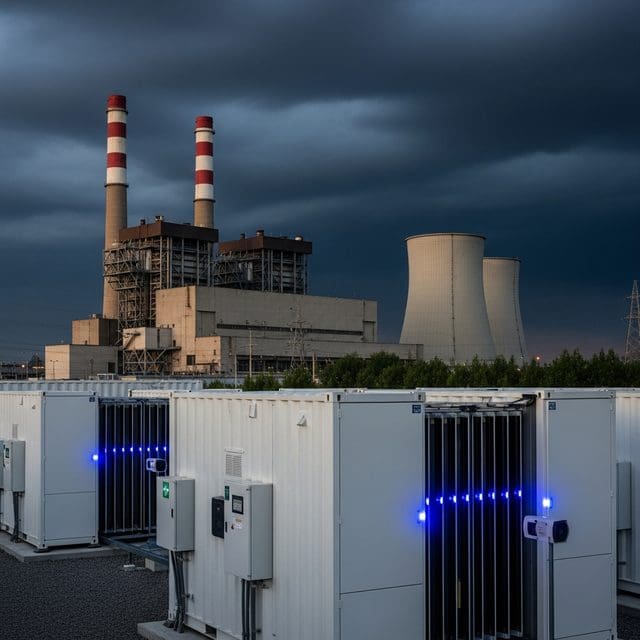
Widespread blackouts in Cuba and grid alerts in the Philippines expose the critical intersection of aging infrastructure, geopolitical fuel blockades, and the high cost of energy mismanagement.
The global energy landscape is currently defined by a harsh reality: the widening gap between policy ambitions and physical grid reliability. From the Caribbean to Southeast Asia, recent systemic failures underscore the high cost of deferred maintenance, the geopolitical risks of fuel dependency, and the tangible economic impacts on citizens. As nations attempt to navigate the transition to modern systems, the immediate challenge remains keeping the lights on with infrastructure that is increasingly unfit for purpose.
In Cuba, the national power grid remains in a state of precarious instability following a series of total collapses that began in early July. Despite government efforts to reconnect the system, the island is currently generating less than one-third of its required demand. President Miguel Díaz-Canel and Energy Minister Vicente de la O Levy have framed the crisis as a direct consequence of a U.S.-imposed oil blockade, which they claim has left the nation with almost no fuel to power its generating plants. However, independent analysts and international observers point to a deeper structural rot. The island relies heavily on crumbling Soviet-era thermal plants that have lacked significant capital investment or routine maintenance for decades. The result is a humanitarian and economic bottleneck, with residents in cities like Santiago de Cuba enduring outages lasting between 24 and 70 hours. Hospitals and essential services have been forced onto emergency microsystems, while businesses shutter under the weight of the eighth nationwide blackout since late 2024.
Across the Pacific, the Philippines is grappling with its own reliability hurdles that highlight the risks of private-sector mismanagement within a fragile state grid. The Department of Energy (DOE) is currently investigating the Visayas grid after a 138 kV line trip forced the Panay Energy Development Corporation (PEDC) Unit 3 offline. This specific failure by a private coal-fired producer triggered red and yellow alerts, signaling a dangerous depletion of reserves. The DOE’s Electric Power Industry Management Bureau is now probing whether systemic vulnerabilities in transmission and reserve margins allowed a single line trip to isolate an entire generating unit. Regulators are pressing operators for better contingency planning, even as the region begins to look toward Battery Energy Storage Systems (BESS) as a market-driven solution to replace aging coal assets and stabilize the central Philippines’ power supply.
In the United Kingdom, the political dimension of energy economics is reaching a fever pitch. As the Labour government settles into power, figures like Andy Burnham are championing a platform focused on cutting energy bills through public intervention and insulation schemes. The challenge for the new administration will be balancing these consumer-focused subsidies with the massive capital expenditure required to modernize the British grid. The debate over public ownership versus private investment continues to swirl, but the underlying physics of the grid remain unchanged: without a massive influx of capital into transmission and baseload reliability, the promise of lower bills remains a difficult political sell.
These disparate crises in Cuba, the Philippines, and the UK demonstrate that energy policy cannot be governed by slogans alone. Whether it is the impact of U.S. sanctions on Cuban fuel shipments or the regulatory scrutiny of private operators in the Philippines, the common thread is a lack of resilient, diversified energy portfolios. For the American taxpayer and global investors, these events serve as a cautionary tale. Market-oriented solutions that prioritize technological innovation and infrastructure hardening are the only viable path to energy independence. Without a realistic assessment of existing assets and a commitment to reliable baseload power, the transition to a cleaner future will be marked by the same instability currently plaguing Havana and the Visayas.
Mark Davis serves as the Senior Correspondent for Energy, Climate, and Resource Economics at Just Right News. In an era where the conversation around the environment is often dominated by alarmism and top-down mandates, Mark provides a vital, market-oriented perspective on the complex forces shaping our world. As the lead voice behind the acclaimed feature series “Power and the Planet,” he explores the intersection of environmental policy, global energy markets, and the fundamental economic principles that sustain modern civilization.
Mark’s pragmatic approach to resource management was forged in the high desert of his hometown, Albuquerque, New Mexico. Growing up in a region defined by both its breathtaking natural beauty and its rugged, resource-dependent landscape, he developed an early appreciation for the delicate balance between conservation and utilization. New Mexico’s unique position as a hub for both traditional energy production and cutting-edge scientific research provided Mark with a front-row seat to the evolution of the American energy sector. This upbringing instilled in him a deep-seated belief that true environmental stewardship is inseparable from economic prosperity and technological innovation.
Now based in Boulder, Colorado, Mark operates from the heart of the nation’s climate research community. While Boulder is often seen as a bastion of environmental idealism, Mark utilizes his post to provide a necessary counterweight, grounded in the realities of resource economics. He understands that energy policy does not exist in a vacuum; it has tangible consequences for the American taxpayer, the stability of the national power grid, and the strength of the domestic manufacturing sector. By reporting from the front lines of the climate debate, he is able to challenge prevailing narratives with hard data and a commitment to the principles of the free market.
Throughout his tenure at Just Right News, Mark has distinguished himself by focusing on the “Resource Economics” aspect of his beat. He frequently highlights the hidden costs of rapid energy transitions and advocates for an “all-of-the-above” energy strategy that prioritizes American energy independence. His work often shines a light on the geopolitical implications of resource scarcity, arguing that a secure nation must first be an energy-secure nation. Whether he is analyzing the impact of federal land-use regulations or investigating the supply chains required for new technologies, Mark remains focused on how policy decisions affect the lives and livelihoods of everyday citizens.
In “Power and the Planet,” Mark continues to bridge the gap between complex scientific concepts and the economic realities facing the country. He rejects the false choice between a healthy environment and a thriving economy, instead seeking out solutions that leverage American ingenuity and private-sector competition. For Mark, reporting on the climate is not about following the latest trends, but about ensuring that the conversation remains tethered to the foundational values of liberty, property rights, and fiscal responsibility. His contributions ensure that Just Right News readers receive a comprehensive, clear-eyed view of the challenges and opportunities defining the future of our planet.