

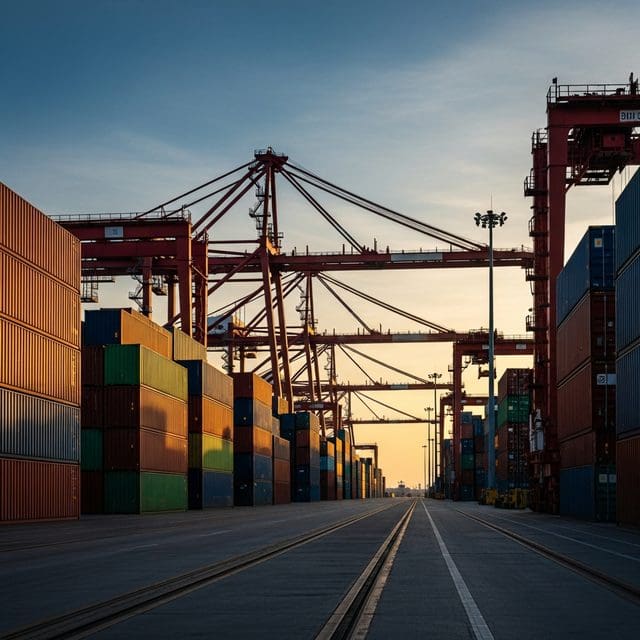
U.S. container imports surged in June as businesses front-loaded goods to bypass rising ocean freight costs and the potential extension of a 10% global tariff.
The rhythm of the American dockside is quickening as a wave of front-loaded cargo hits West Coast gateways. In a clear sign of the anxiety gripping the domestic supply chain, U.S. container imports jumped 8.2% in June compared to the previous year. This surge was driven primarily by a massive 27.4% increase in volumes from China, totaling over 814,000 twenty-foot equivalent units (TEUs). For the American worker and consumer, these numbers tell a story of a market bracing for impact.
This rush to the ports is no accident of seasonal demand. Shippers are moving aggressively to outrun a dual threat of rising costs. On July 1, ocean-freight rates climbed due to higher fuel expenses linked to regional instability. Simultaneously, the shadow of trade policy looms large over every bill of lading. While the current 10% worldwide tariff remains under litigation following a Supreme Court challenge, it is legally scheduled to expire on July 24 unless Congress intervenes. The uncertainty of whether these costs will vanish or be replaced by a new regime is forcing businesses to prioritize immediate inventory over long-term planning.
Beyond the expiring global duties, the geopolitical landscape of manufacturing is shifting under the weight of new enforcement measures. Public comments recently closed on proposed duties tied to forced-labor prevention, which could see tariffs of 10% to 12.5% levied against specific countries. These measures are essential for ensuring that American enterprise is not undercut by foreign entities that disregard the dignity of labor, yet they add another layer of complexity for those managing the journey of goods from factory to shelf.
The broader economic picture shows the strain of this transition. U.S. factory activity has eased off a four-year high as input prices remain elevated. While the reopening of the Strait of Hormuz—secured through a memorandum of understanding that includes the removal of tolls and a ceasefire extension—has provided a much-needed 10% drop in oil prices, the manufacturing sector is still navigating the fallout of shifting trade rules. Domestic producers continue to face high costs for raw materials even as they compete with the influx of front-loaded foreign inventory.
As the July 24 deadline approaches, the focus remains on whether the federal government will prioritize a stable, pro-worker trade environment or allow the current volatility to persist. For the blue-collar workforce in the nation’s industrial heartland, the goal is clear: a trade policy that values domestic production over the convenience of globalist supply chains. For now, the ports are full, but the long-term health of American manufacturing depends on a return to predictable, sovereignty-focused trade standards.

Sean Bradley serves as the Senior Correspondent for Trade, Supply Chains, and Global Labor at Just Right News, where he brings a principled, clear-eyed perspective to the complex systems that power the modern world. With a focus on the economic forces that impact the American household, Bradley has distinguished himself as a leading voice in explaining how global shifts in manufacturing and logistics translate to the kitchen table.
Growing up in Long Beach, California, Bradley’s interest in the movement of goods was forged against the backdrop of one of the nation’s most vital maritime gateways. Raised in a community where the towering cranes of the port were a constant fixture on the horizon, he developed an early appreciation for the blue-collar industries that form the backbone of the American economy. This upbringing instilled in him a profound respect for the dockworkers, truckers, and laborers who keep the country moving, a sentiment that remains a cornerstone of his reporting today. For Bradley, trade is not merely a series of abstract figures on a spreadsheet; it is a human endeavor that sustains families and defines the strength of a nation.
Now based in Seattle, Washington, Bradley occupies a strategic vantage point in another of the country’s most significant trade hubs. His location allows him to witness firsthand the intersection of traditional industry and the evolving technological landscape of global logistics. From the Pacific Northwest, he monitors the flow of goods across the ocean, providing Just Right News readers with timely insights into how international tensions, regulatory hurdles, and labor disputes affect the availability and cost of essential goods.
His signature feature series, “The Journey of Things,” has become a staple for readers seeking to understand the intricate path products take from raw materials to the retail shelf. Through this series, Bradley pulls back the curtain on the global marketplace, often highlighting the risks of over-reliance on foreign adversaries and the importance of domestic manufacturing resilience. His reporting consistently emphasizes the conservative values of national sovereignty, free-market competition, and the protection of the American worker from unfair global practices.
As a journalist of Irish heritage, Bradley maintains a deep-seated respect for the dignity of the individual worker and the importance of community stability. He approaches his beat with a commitment to transparency, often questioning the status quo of globalist policies that prioritize corporate efficiency over local prosperity. Whether he is reporting from a warehouse floor or analyzing a new international trade agreement, his goal remains the same: to provide the American public with the truth about where their products come from and what it costs to get them there.
Throughout his tenure at Just Right News, Bradley has remained a steadfast advocate for economic common sense. His work serves as a vital resource for those who believe that a strong nation is built on secure borders, robust trade, and a respected workforce. By combining his local roots in Long Beach with his professional experience in Seattle, Bradley continues to offer a unique and necessary perspective on the forces that shape the American way of life.