

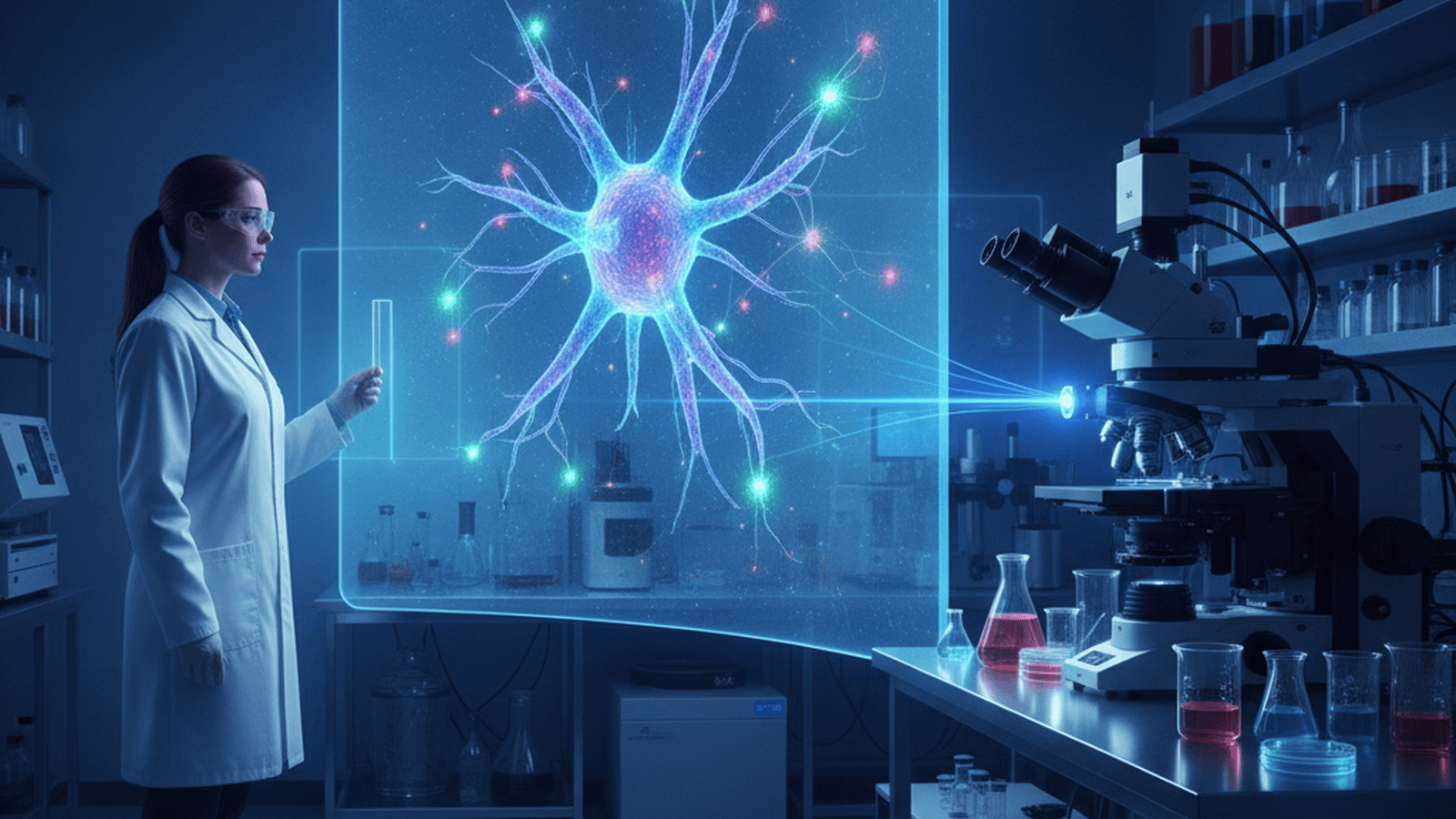
Researchers at Tufts University have discovered that the Sonic Hedgehog protein plays a vital role in maintaining adult brain plasticity by regulating astrocyte-neuron communication. The study reveals that this developmental pathway remains active in adulthood to manage the density and strength of synapses in the hippocampus.
TLDR: Scientists have identified the Sonic Hedgehog signaling pathway as a critical regulator of synaptic plasticity in the adult brain. By acting on astrocytes, the protein ensures the proper maintenance of neural connections required for learning and memory, offering a new target for treating cognitive decline and neurological disorders.
Researchers at Tufts University School of Medicine have identified a critical molecular pathway that maintains the adult brain’s ability to rewire itself. The study, published in the journal Molecular Psychiatry, focuses on the Sonic Hedgehog (Shh) signaling pathway. While Shh is a well-documented driver of tissue growth and patterning during embryonic development, its role in the mature nervous system has remained largely mysterious until now. The research team discovered that Shh signaling remains active in the adult hippocampus, a region of the brain essential for learning and memory. Unlike its role in the embryo, where it dictates cell identity, Shh in the adult brain acts as a modulator of synaptic plasticity. This process allows the brain to strengthen or weaken connections between neurons in response to new information or environmental changes. The discovery marks a significant shift in how scientists view developmental proteins in the context of the aging brain.
The study specifically highlights the role of astrocytes, the star-shaped glial cells that outnumber neurons in the human brain. For decades, astrocytes were viewed as mere “glue” providing structural and metabolic support. However, the Tufts team demonstrated that astrocytes are the primary responders to Shh signaling through a receptor known as Patched-1. When the Shh pathway is activated, astrocytes undergo subtle structural changes and release specific factors that promote the formation and stability of dendritic spines. These tiny protrusions on neurons are the sites where synapses occur, and their health is directly linked to cognitive capacity.
To test the significance of this pathway, the researchers used advanced genetic tools to selectively “knock out” Shh signaling in the brains of adult mice. Using high-resolution confocal microscopy, they observed a significant reduction in the density of synapses. The animals also showed a corresponding decline in their performance on spatial memory tasks. Electrophysiological recordings confirmed that the remaining synapses were weaker and less capable of the long-term potentiation required for memory consolidation. Conversely, the team found that stimulating the Shh pathway could potentially reverse these effects. By introducing small-molecule agonists that mimic Shh activity, they were able to restore synaptic density in models of cognitive impairment. This finding suggests that the Shh-astrocyte axis is a dynamic system that can be tuned to enhance or protect brain function. It reinforces the emerging concept of the “tripartite synapse,” where the astrocyte is considered an equal partner to the two neurons it connects.
The implications of this discovery extend to a wide range of neurological conditions. Many neurodegenerative diseases, including Alzheimer’s and Parkinson’s, are characterized by the early loss of synapses long before neurons themselves begin to die. If the Shh pathway can be safely targeted with pharmaceuticals, it may be possible to slow or even halt the cognitive decline associated with these disorders. The ability to maintain synaptic integrity could provide a buffer against the toxic proteins that accumulate in these diseases. Furthermore, the research provides a new framework for understanding how the brain recovers from traumatic injury or stroke. Brain trauma often disrupts the delicate balance of glial signaling, leading to permanent loss of connectivity. By identifying the specific molecular cues that astrocytes use to rebuild synapses, scientists may develop therapies that encourage the brain to repair its own circuits.
Future research will focus on identifying the specific downstream molecules that astrocytes secrete in response to Shh. The team also aims to investigate whether this pathway is involved in other brain regions, such as the prefrontal cortex, which governs executive function and social behavior. Understanding the full scope of Shh signaling in the adult brain could redefine the field of regenerative neurology and lead to a new class of “gliotherapeutics.”

Mason Reed serves as a Staff Writer for Just Right News, where he spearheads the Future Frontiers & Special Projects desk. In an era defined by rapid technological shifts and evolving social landscapes, Mason provides a steady, principled voice, examining the innovations of tomorrow through the lens of traditional American values. His work is most prominently featured in his signature series, “The Next Horizon,” where he explores the intersection of emerging technology, national sovereignty, and the preservation of individual liberty.
A native of San Diego, California, Mason’s worldview was shaped by the unique culture of his hometown. Growing up in a region defined by its strong military presence and its history of maritime industry, he developed a deep-seated respect for the institutions that provide national stability and the entrepreneurial spirit that drives the American economy. This upbringing instilled in him a belief that true progress is not found in discarding the past, but in building upon a foundation of proven principles. His reporting often reflects this San Diego influence, emphasizing the importance of a robust national defense and the necessity of maintaining a competitive edge in the global marketplace.
Now based in San Francisco, Mason operates from the heart of the world’s technological engine. Living and working in the Bay Area provides him with a front-row seat to the advancements—and the ideological challenges—emanating from Silicon Valley. While many in the region embrace a “move fast and break things” mentality, Mason’s reporting serves as a vital counterweight. He offers Just Right News readers a “boots on the ground” perspective, documenting how radical local policies and the concentration of tech power impact the everyday lives of citizens. His proximity to the industry allows him to cut through the marketing jargon of big tech to uncover the real-world implications for privacy, free speech, and the nuclear family.
In his “Future Frontiers” beat, Mason tackles complex subjects ranging from the ethics of artificial intelligence to the burgeoning private space race. He approaches these topics with a healthy skepticism toward centralized bureaucracy, championing instead the decentralized innovations that empower individuals. Through “The Next Horizon,” he highlights the pioneers and thinkers who are working to ensure that the future remains a place where human dignity and constitutional rights are protected. He believes that the rapid pace of change requires more than just technical expertise; it requires a moral compass rooted in the Western tradition.
Throughout his tenure at Just Right News, Mason has remained committed to the idea that the future is something to be shaped, not merely accepted. His writing is characterized by a rigorous defense of American exceptionalism and a belief that the country’s best days lie ahead, provided it remains true to its founding ideals. Whether he is investigating the impact of automation on the American workforce or profiling the next generation of aerospace engineers, Mason Reed ensures that his readers are equipped with the insights they need to navigate a changing world with confidence and clarity.