

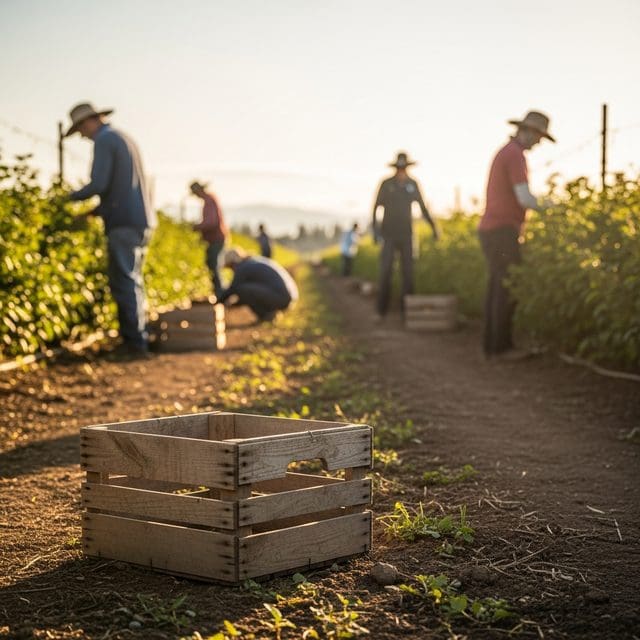
Rural employers in British Columbia receive a temporary reprieve on foreign labor caps as the province faces a projected shortfall of 15,000 agricultural workers by 2030.
The struggle to keep the North American dinner table full is meeting a harsh reality in the Pacific Northwest. This week, British Columbia provincial officials confirmed they will allow rural employers to retain existing low-wage temporary foreign workers beyond the standard 10% cap for an additional year. This decision highlights a growing desperation in the Fraser Valley, where intensive farming operations—from berry patches and greenhouses to poultry and dairy barns—face an acute labor squeeze that threatens the stability of local food production.
Current projections from the province’s agriculture workforce initiative suggest that unfilled jobs in the sector will grow nearly five-fold by the end of the decade, ballooning from 3,000 to more than 15,000 missing workers. For the small business owner in the heartland, these are not just abstract statistics; they represent the difference between a successful harvest and a total loss. The BC Agriculture Council has identified access to these workers as a top priority for the 2026 growing season, noting that the sector is uniquely sensitive to federal temporary resident caps that often fail to account for the seasonal rhythms of the land.
To balance this reliance on outside labor, British Columbia is making a significant play for domestic renewal. A new $241 million investment in skilled trades training is set to launch, aiming to add 5,000 new seats across public post-secondary, union, and private trainers in its first year. This initiative is designed to ensure that while temporary measures address immediate shortages, the long-term goal remains a domestic workforce capable of handling the demands of modern industry. Small and medium enterprises (SMEs) are being incentivized with the BC Employer Training Grant, which now reimburses up to 80% of eligible training costs, reaching as high as $10,000 per employee.
The pressure on the labor market is further complicated by shifting global dynamics. As the Trump administration lifts export restrictions on advanced AI models like GPT-5.6 and navigates a volatile ceasefire collapse in the Middle East, the cost of doing business is rising. Domestically, families are already feeling the pinch of a projected 14% median increase in healthcare premiums. In the agricultural sector, national reports from RBC and the University of Guelph warn that Canada could face a shortfall of 24,000 farm operators by 2033. This looming crisis is driven by an aging operator base and a lack of clear succession plans for the next generation of farmers.
To combat these trends, the province is stacking various supports for SMEs, including the Canada-BC Job Grant and WorkBC wage subsidies that cover roughly 50% of wages for new hires. These programs are increasingly focused on digital skills and automation-related upskilling, acknowledging that the future of the manual trades will involve a partnership between human grit and technological precision. However, technology alone cannot replace the 30,000 farm workers that experts say need a clear pathway to permanent residency to stabilize the national food supply.
For the blue-collar worker, the message is clear: the demand for tangible, manual skills remains high, but the stability of these trades depends on a delicate balance of immigration policy and domestic investment. The reliance on temporary foreign labor serves as a stopgap, but the real work lies in making the trades a viable, attractive path for the next generation of local workers. Without a steady stream of domestic talent and a common-sense approach to labor participation, the dignity of the manual trades risks being outsourced or automated into extinction.

Tom Blake serves as the Senior Correspondent for Labor, Wages, and Automation at Just Right News, where he brings a grounded, principled perspective to the most pressing economic issues facing the American heartland. As the lead voice behind the acclaimed feature series “The Price of Work,” Tom focuses his reporting on the intersection of traditional industry and the rapidly evolving technological landscape, always prioritizing the dignity of the individual worker and the health of the American family.
Tom’s deep understanding of the labor market is not merely academic; it is rooted in his upbringing in Detroit, Michigan. Growing up in the shadow of the automotive industry, he witnessed firsthand the triumphs and tribulations of the American blue-collar workforce. He saw how the stability of a manufacturing job could build a community and, conversely, how the erosion of those industries could tear the social fabric apart. This background instilled in him a lifelong respect for the trades and a healthy skepticism toward economic policies that prioritize globalist interests over the well-being of local communities.
Now based in Pittsburgh, Pennsylvania, Tom continues to report from the front lines of the shifting economy. Pittsburgh, a city that has reinvented itself while maintaining its gritty, industrious spirit, provides the perfect vantage point for his beat. From the steel mills that remain to the high-tech robotics labs reshaping the city’s future, Tom explores how automation is changing the nature of employment. His reporting often highlights the tension between innovation and tradition, arguing that while progress is inevitable, it must not come at the expense of the American worker’s ability to provide for their family through honest, meaningful labor.
In his role at Just Right News, Tom has become a vital voice for those who feel overlooked by mainstream economic coverage. He rejects the notion that the decline of American manufacturing is an unavoidable casualty of the modern era. Instead, his work often examines how regulatory overreach, rising energy costs, and the unchecked rise of automation impact the take-home pay of everyday citizens. Through “The Price of Work,” Tom delves into the true cost of economic shifts, looking beyond the raw data to tell the stories of the people behind the statistics.
Tom’s reporting is characterized by a commitment to the conservative values of self-reliance, fiscal responsibility, and the preservation of the American dream. He believes that a strong nation is built on a foundation of stable jobs and fair wages, and his work seeks to hold both government and corporate entities accountable to that standard. Whether he is interviewing a shop floor manager about the implementation of new AI technology or analyzing the impact of wage inflation on small businesses, Tom provides a clear-eyed analysis that resonates with readers who value hard work and common sense.
Through his dedicated coverage, Tom Blake remains a steadfast advocate for the American workforce, ensuring that the voices of those in the industrial heartland are heard loud and clear in the national conversation. His perspective is essential for anyone seeking to understand the complex realities of labor and automation in the twenty-first century.