

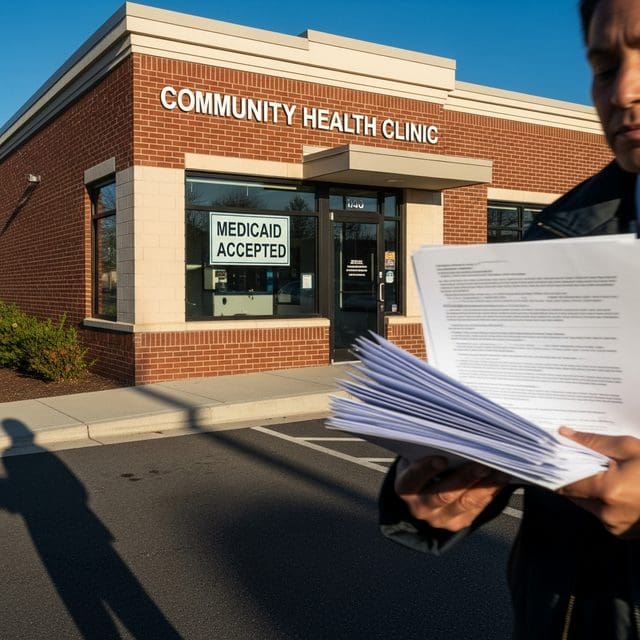
The expiration of a federal Planned Parenthood funding ban and looming trillion-dollar Medicaid cuts under H.R. 1 are creating a fiscal crisis for the American healthcare safety net.
The American healthcare landscape faced a significant fiscal reckoning as several federal policy deadlines converged over the Independence Day weekend. Central to the debate is the expiration of a one-year ban on Planned Parenthood receiving Medicaid reimbursements, which lapsed on July 4, 2026. This expiration presents the Trump administration and Congress with an immediate choice: allow taxpayer funds to resume flowing to the nation’s largest abortion provider or enact a permanent prohibition. The decision comes as the administration faces pressure from conservative factions to ensure public dollars are not entangled with controversial services.
Recent performance data from Planned Parenthood’s 2024–2025 annual report has added fuel to the legislative fire. While the organization reported an increase in abortion procedures and total government funding, it recorded a decline in essential cancer screenings and preventative care. For fiscal hawks, this shift in service priority raises fundamental questions about the efficient use of public health dollars. Critics argue that if the primary mission of these clinics is shifting away from broad-based preventative health, the justification for their unique status in the Medicaid reimbursement queue begins to erode.
Beyond the specific fight over reproductive health funding, a larger structural shift is underway via the One Big Beautiful Bill Act (H.R. 1). The legislation is projected to reduce federal Medicaid spending by approximately $1 trillion over the next decade. Implementation milestones are already hitting state budgets; the sunset of enhanced expansion funding on January 1, 2026, and the introduction of stricter eligibility redeterminations are expected to result in nearly 11.8 million people losing traditional Medicaid coverage. This contraction is intended to restore the program to its original purpose as a safety net, yet the transition is proving turbulent for state administrators.
In states like Maryland and California, the impact is manifesting through mandatory work requirements of 80 hours per month for expansion adults and tighter provider tax caps. These changes are designed to encourage workforce participation and reduce state reliance on federal accounting gimmicks, but they also place immediate pressure on rural hospitals and nursing homes that rely on Medicaid as their primary payer. Senate leaders, including Mitch McConnell, are now navigating a delicate balance between fiscal restraint and the potential for hospital closures in underserved areas. McConnell’s own health has recently come under scrutiny, raising questions about the future of Republican leadership as these complex budget fights reach a fever pitch.
Adding to the uncertainty is the ongoing leadership vacuum at the Centers for Disease Control and Prevention (CDC). Former Chief Medical Officer Dr. Debra Houry, who resigned in August 2025 following the ouster of Susan Monarez by HHS Secretary Robert F. Kennedy Jr., has become a vocal critic of the current administration. In a recent interview on Face the Nation, Houry warned of political interference in scientific processes, suggesting that the power struggle between scientific independence and political control is hampering the agency’s ability to provide clear guidance.
As the administration weighs further payment cuts to state-directed programs, the focus remains on whether these reforms will lead to a more transparent, market-driven system or simply leave the most vulnerable patients caught in a crossfire of budget mathematics. The CBO estimates that millions will lose marketplace-related coverage alongside traditional Medicaid, a shift that will test the resilience of the private insurance market. For now, the expiration of the Planned Parenthood ban serves as a high-stakes proxy for the broader battle over the soul and solvency of the American healthcare system.

Susan Carter serves as a Senior Correspondent for Just Right News, where she leads the network’s comprehensive coverage of Health, Medicine, and Public Policy. With a career dedicated to dissecting the complexities of the American healthcare system, Susan brings a principled perspective to the most pressing debates of the day. Her reporting is characterized by a commitment to individual liberty, fiscal responsibility, and a healthy skepticism of government overreach, making her a vital voice for audiences seeking clarity in an increasingly regulated landscape.
Raised in Minneapolis, Minnesota, Susan’s professional outlook is deeply informed by the values of the American heartland. Growing up in the Twin Cities, she witnessed firsthand the importance of community-driven solutions and the resilience of the individual. This Midwestern foundation instilled in her a firm belief that the best answers to public policy challenges often come from local innovation and personal responsibility rather than top-down federal mandates. Her background allows her to translate complex legislative jargon into stories that resonate with families who value common sense and local autonomy.
Now based in Baltimore, Maryland, Susan operates from a unique vantage point at the intersection of medical innovation and urban policy. Living and working in a city renowned for its world-class medical institutions and significant public health challenges, she has a front-row seat to the realities of the modern healthcare landscape. Her proximity to these hubs of research and policy allows her to scrutinize how government intervention affects the quality of care and the freedom of medical professionals. In Baltimore, she sees the tangible results of policy decisions, using the city as a lens through which to examine the broader national health debate and the impact of federal spending on local communities.
As the lead for the acclaimed feature series “The Cost of Care,” Susan dives deep into the economic realities facing patients and providers alike. Her work focuses on the necessity of price transparency, the benefits of market competition, and the preservation of the sacred doctor-patient relationship. She is a staunch advocate for the idea that a well-informed public is the best defense against bureaucratic inefficiency. Through this series, she has exposed the hidden drivers of rising medical expenses, always seeking to empower the individual consumer over the massive institution.
Susan’s reporting on public policy is characterized by a commitment to rigorous inquiry and a focus on constitutional limits. Whether she is analyzing new pharmaceutical regulations, investigating the impact of federal health mandates, or exploring the future of medical technology, her goal remains the same: to provide Just Right News audiences with the facts they need to navigate a complex world. By blending her Midwestern sensibilities with the insights gained from her base in Maryland, Susan Carter has become a trusted authority for those who believe that personal freedom and public health are inextricably linked. Her work continues to challenge the status quo, advocating for a system that respects the taxpayer and prioritizes the patient.