

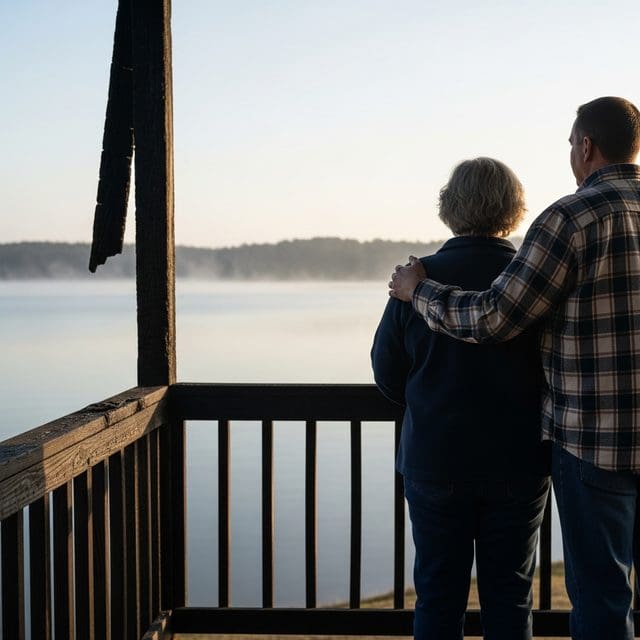
From a tragic fire at Lake Gaston to the halls of the Smithsonian, American families are navigating a complex intersection of local resilience and shifting national priorities.
The Fourth of July at Lake Gaston usually follows a predictable, sun-drenched rhythm of pontoon boats and shared cookouts. This year, the celebration ended in a harrowing display of loss for one local family. While they were out on the water watching fireworks, their home was consumed by a blaze sparked by the festivities. The sight of the charred remains on July 5 served as a sobering reminder that the stability of the American home, so often discussed in the abstract by policymakers, can be upended in a single evening.
This local tragedy unfolds as the White House intensifies its focus on the domestic sphere. Health and Human Services Secretary RFK Jr. has become the primary face of this effort, traveling to swing districts to champion the “Make America Healthy Again” (MAHA) initiative. His message emphasizes whole foods and chronic disease prevention as a way to reclaim the health of the next generation. For families around Lake Gaston, the MAHA platform is framed not just as health policy, but as a restoration of local food systems and a rejection of centralized industrial control over the family dinner table.
Yet, as the administration pushes for a return to traditional health, it is simultaneously clashing with the nation’s cultural gatekeepers. A recent White House report labeled the leadership of the Smithsonian Institution as “radical activists,” signaling a deep distrust of how national history is curated. This friction creates a paradox for the average family; while the Smithsonian offers “Smithsonian Sleepovers” for children and design challenges at the Cooper Hewitt, the administration warns that these institutions may no longer reflect the values of the working class.
Economic forces provide a similarly complex backdrop. While the family at Lake Gaston faces the daunting task of rebuilding, the broader economy is reacting to significant geopolitical shifts. The reopening of the Strait of Hormuz without tolls, following a memorandum of understanding between the U.S. and Iran, led to a 10% drop in oil prices this past April, providing some breathing room for the American commuter. Furthermore, the launch of $1,000 direct deposits this week aims to provide immediate relief to millions, though for a family that has lost everything, such sums are merely a drop in the bucket compared to rising construction costs.
In Southern California, the state has declared July 2026 as “Parks Make Life Better! Month,” highlighting the role of public spaces in fostering social cohesion. From the car culture of the Pacific Coast to the quiet docks of the Southeast, these spaces serve as the frontline for the administration’s “Fostering the Future” executive order, which seeks to modernize child welfare and support youth aging out of foster care. The goal is to create a safety net that feels less like a cold bureaucracy and more like a community-driven support system.
Ultimately, the story of the American family in 2026 is one of navigating these overlapping layers of policy and personal reality. Whether it is the Teamsters in West Virginia voting for better warehouse conditions or a family in North Carolina leaning on neighbors after a fire, the spirit of self-reliance remains the primary engine of American life. As the nation prepares for the America-250 celebrations, the focus remains on whether these high-level policy shifts will truly translate into the security and prosperity promised to the people in the small towns that define the country’s character.

Ethan Blake serves as a Senior Correspondent for Just Right News, where he specializes in Longform Narrative and Public Understanding. In an era of rapid-fire headlines and fleeting soundbites, Ethan’s work stands as a testament to the power of deep-dive reporting and the importance of contextualizing the complex issues facing the nation today. His approach is rooted in the belief that the most profound truths are often found in the lived experiences of individuals rather than the abstract theories of distant policymakers.
Growing up in Providence, Rhode Island, Ethan developed an early appreciation for the historical and cultural threads that weave the American fabric together. Providence, a city defined by its industrial heritage and its blend of traditional neighborhoods, provided him with a front-row seat to the challenges and triumphs of the American working class. This upbringing instilled in him a respect for the “common sense” values of hard work, community loyalty, and the preservation of local institutions. He learned early on that behind every economic statistic or legislative debate, there are real families and neighborhoods navigating the consequences of change.
This foundational perspective is the driving force behind his signature feature series, “Lives Behind the Systems.” Through this series, Ethan explores the intersection of individual agency and institutional structure. Whether he is documenting the impact of federal land-use policies on rural families or examining how shifting educational standards affect local school boards, Ethan’s work prioritizes the human element. He seeks to uncover how large-scale systems—be they governmental, economic, or social—affect the daily lives of citizens, often advocating for a return to local control and personal responsibility.
Now based in Portland, Maine, Ethan draws significant inspiration from the rugged independence and self-reliance that define the region. The coastal landscape and the resilient spirit of Maine’s communities serve as a constant reminder of the importance of individual liberty and the strength found in decentralized power. Living and working outside the traditional media hubs allows Ethan to maintain a grounded perspective, ensuring his reporting remains untethered from the echo chambers of the major metropolitan centers. This geographic distance provides him with the clarity needed to translate complex national narratives into stories that resonate with the heart of the country.
At Just Right News, Ethan’s beat is more than just a professional assignment; it is a mission to foster a more informed and engaged citizenry. He believes that a free society depends on the public’s ability to understand the mechanisms of power and the value of traditional American principles. His longform narratives do not merely report the news; they provide a roadmap for understanding the cultural and political shifts of the modern era through a lens of skepticism toward centralized authority and a deep respect for the individual.
Through his meticulous research and narrative craftsmanship, Ethan Blake continues to bridge the gap between policy and the public. His work remains a vital resource for those who seek a deeper understanding of the systems that shape our world and the enduring spirit of the people who live within them.