

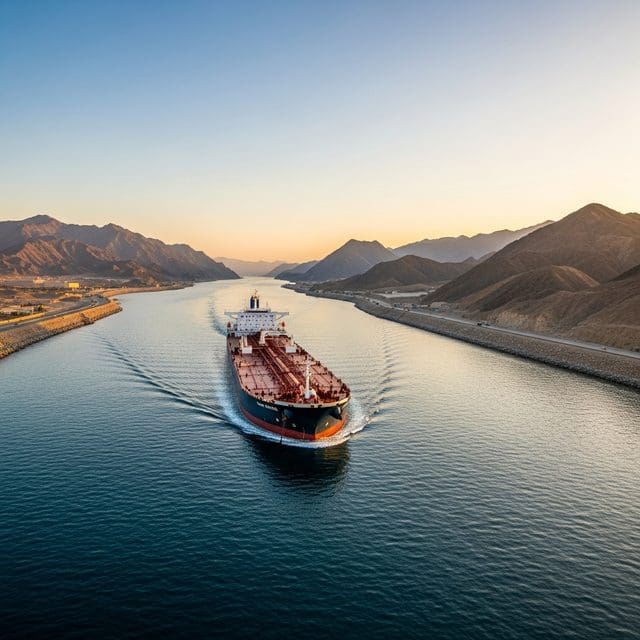
The reopening of the Strait of Hormuz stabilizes energy markets while FIFA’s 2026 World Cup pivots toward a controversial, blockchain-based digital supply chain.
The global flow of essential goods received a significant reprieve this week as the Strait of Hormuz officially reopened, marking a pivotal moment for international shipping and domestic energy costs. Following a memorandum of understanding between the United States and Iran, oil prices plummeted by over 10% on April 17, 2026. This development, rooted in a 10-day ceasefire and reinforced by a 60-day extension, removes a primary bottleneck for energy exports and provides a necessary stabilizing force for the American workforce reliant on affordable fuel.
Under the terms of the memorandum, the waterway will operate without tolls, a victory for the principle of free maritime passage. While sanctions relief remains contingent on Iranian compliance, the immediate restoration of shipping lanes offers a breather for global supply chains strained by months of volatility. However, the peace remains fragile. Iranian Parliament Speaker Mohammad Bagher Qalibaf has already issued warnings of a response should the U.S. or Israel breach the interim agreement. This tension looms over the landscape even as President Trump celebrated the nation’s 250th birthday at Mount Rushmore.
While physical energy corridors reopen, the 2026 World Cup is highlighting a different trade evolution: the aggressive digitization of the consumer journey. FIFA has integrated blockchain infrastructure into its core commercial architecture, naming Kraken as an official supporter. This shift toward digital ‘Right to Buy’ (RTB) tokens and on-chain ticket settlement on the Avalanche network represents a move away from traditional merchandise toward speculative digital assets. These RTB tokens are tradable reservations that guarantee access to high-tier tickets, with prices reaching several thousand dollars per token.
This transition has faced friction. While FIFA touts digital engagement, fans have faced a 35% hike in ticket prices since October, making 2026 the most expensive World Cup on record. The move toward blockchain ticketing has also drawn the attention of international regulators. Switzerland’s gambling regulator opened a probe into whether these digital reservations constitute unregulated gambling. Similarly, UK MPs have urged that football clubs be prevented from using fan tokens as engagement tools, warning of volatile assets marketed to supporters.
Even established clubs like Liverpool have shown caution, holding back on new crypto offerings due to mounting regulatory risk. Despite this, the tournament has seen heavy speculation on national-team fan tokens for countries like Argentina and Portugal, though many underperformed during the group stages. The integration of decentralized infrastructure, including prediction markets using Chainlink oracles, signals that blockchain is now embedded in FIFA’s sponsorship architecture.
For the American worker, these twin developments—the reopening of oil lanes and the rise of digital-first trade—underscore a changing landscape. While the restoration of physical shipping routes secures the movement of raw materials, the encroachment of speculative digital finance into international events suggests a future where the value of a ‘thing’ is increasingly untethered from physical production. Maintaining the dignity of the individual worker requires a trade policy that prioritizes the tangible over the speculative, ensuring that the benefits of open seas translate into local prosperity rather than digital volatility.

Sean Bradley serves as the Senior Correspondent for Trade, Supply Chains, and Global Labor at Just Right News, where he brings a principled, clear-eyed perspective to the complex systems that power the modern world. With a focus on the economic forces that impact the American household, Bradley has distinguished himself as a leading voice in explaining how global shifts in manufacturing and logistics translate to the kitchen table.
Growing up in Long Beach, California, Bradley’s interest in the movement of goods was forged against the backdrop of one of the nation’s most vital maritime gateways. Raised in a community where the towering cranes of the port were a constant fixture on the horizon, he developed an early appreciation for the blue-collar industries that form the backbone of the American economy. This upbringing instilled in him a profound respect for the dockworkers, truckers, and laborers who keep the country moving, a sentiment that remains a cornerstone of his reporting today. For Bradley, trade is not merely a series of abstract figures on a spreadsheet; it is a human endeavor that sustains families and defines the strength of a nation.
Now based in Seattle, Washington, Bradley occupies a strategic vantage point in another of the country’s most significant trade hubs. His location allows him to witness firsthand the intersection of traditional industry and the evolving technological landscape of global logistics. From the Pacific Northwest, he monitors the flow of goods across the ocean, providing Just Right News readers with timely insights into how international tensions, regulatory hurdles, and labor disputes affect the availability and cost of essential goods.
His signature feature series, “The Journey of Things,” has become a staple for readers seeking to understand the intricate path products take from raw materials to the retail shelf. Through this series, Bradley pulls back the curtain on the global marketplace, often highlighting the risks of over-reliance on foreign adversaries and the importance of domestic manufacturing resilience. His reporting consistently emphasizes the conservative values of national sovereignty, free-market competition, and the protection of the American worker from unfair global practices.
As a journalist of Irish heritage, Bradley maintains a deep-seated respect for the dignity of the individual worker and the importance of community stability. He approaches his beat with a commitment to transparency, often questioning the status quo of globalist policies that prioritize corporate efficiency over local prosperity. Whether he is reporting from a warehouse floor or analyzing a new international trade agreement, his goal remains the same: to provide the American public with the truth about where their products come from and what it costs to get them there.
Throughout his tenure at Just Right News, Bradley has remained a steadfast advocate for economic common sense. His work serves as a vital resource for those who believe that a strong nation is built on secure borders, robust trade, and a respected workforce. By combining his local roots in Long Beach with his professional experience in Seattle, Bradley continues to offer a unique and necessary perspective on the forces that shape the American way of life.