

The Nigeria Customs Service is launching a sweeping anti-corruption partnership in the northeast while the Senate clears the agency of a multi-billion naira revenue under-remittance allegation.
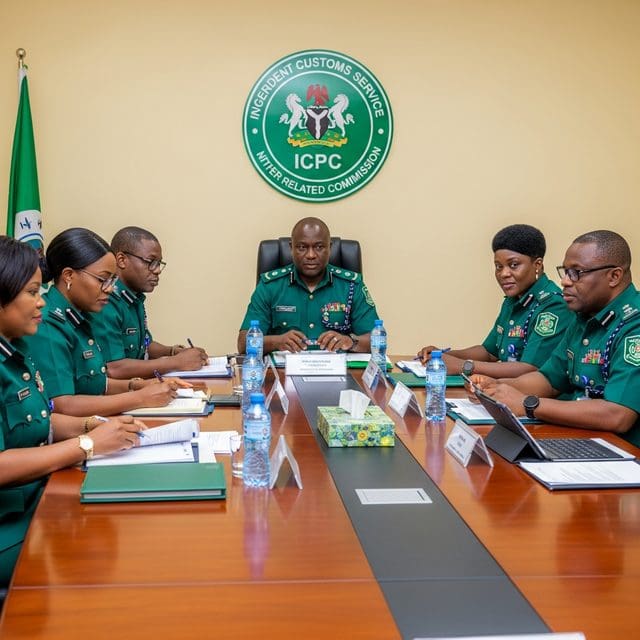
The Nigeria Customs Service is currently navigating a pivotal period of institutional reform and financial exoneration as it manages the country’s sensitive northeast border regions. In a strategic move to bolster national security and internal accountability, the Independent Corrupt Practices and Other Related Offences Commission (ICPC) has established a formal partnership with the Customs Borno/Yobe Command. This collaboration focuses on intelligence sharing to identify public officials and individuals facilitating contraband smuggling, which authorities frame as a direct threat to the stability of a region already affected by long-term insurgency.
Linus Gubbi, the ICPC Resident Anti-Corruption Commissioner for the Borno/Yobe region, stated that the initiative is part of a wider anti-corruption advocacy across various Ministries, Departments, and Agencies (MDAs). The partnership emphasizes preventive measures over purely punitive actions, utilizing a sensitization meeting in Maiduguri to push for internal integrity measures. The ICPC is encouraging Customs officers to adhere to strict protocols even without direct supervision, specifically regarding the proper verification of declared goods and the stricter handling of seized contraband. This strategy is designed to close the gaps that allow illicit trade to bypass border controls, which often funds regional instability and undermines the rule of law.
Borno/Yobe Area Comptroller A.M. Idris publicly endorsed the ICPC collaboration, describing it as a vital opportunity to identify institutional vulnerabilities. Idris framed the anti-graft push not as an external probe, but as an essential institutional reform and a way to protect the reputation of the service. By aligning with modern ways of doing things, the Customs leadership aims to project a renewed sense of transparency at a time when the integrity of border enforcement is under constant public and legislative scrutiny. This internal reform is particularly critical given the command’s role in monitoring porous borders where the movement of goods and people is often obscured by conflict.
While enforcement measures tighten on the ground, the agency has also secured a significant legal and political victory in the capital. The Senate Committee on Public Accounts recently vacated a long-standing allegation that the Nigeria Customs Service had under-remitted N62.2 billion in 2017. This allegation had originated from a 2019 audit report and had been a point of contention for years, fueling public distrust regarding the agency’s financial management. Following an extensive review, Comptroller-General Bashir Adewale Adeniyi provided a detailed explanation that the disputed sum reflected misclassified levies intended for other government agencies rather than missing or diverted revenue. The explanation clarified that the funds were accounted for within the broader government treasury system, though not under the specific Customs heading initially expected by auditors.
Senators involved in the review disclosed that the N62.2 billion question, along with two other major audit queries, should have been resolved at the reconciliation level with auditors. Instead, the matter escalated to a high-profile public investigation due to what was described as previously “strained” relations between the Senate and the Customs Service. By formally clearing the agency, the Senate has shifted the narrative from suspected diversion to a failure in the audit and reconciliation process, highlighting the political and institutional tensions that often cloud the reporting of financial wrongdoing. This resolution marks a significant step in repairing the working relationship between the legislative branch and the executive agencies responsible for the nation’s revenue and security.
Despite this headline-making clearance, the Nigeria Customs Service remains under rigorous legislative oversight. A smaller Senate reconciliation panel has been established to work through 74 remaining audit queries concerning the agency’s 2019–2020 financial books. This ongoing scrutiny ensures that the service remains under financial pressure even as it seeks to rehabilitate its public image. The combination of the ICPC anti-smuggling pact in the northeast and the Senate’s partial clean bill of health in Abuja positions the Customs Service as a frontline security actor attempting to balance the demands of the rule of law with the complexities of managing porous and volatile borders. These dual developments suggest a broader effort to stabilize the social contract by ensuring that the institutions tasked with protecting the nation’s borders are both financially transparent and operationally honest.

Julie Harris serves as a Staff Writer for Just Right News, where she tackles some of the most pressing and complex issues facing the nation today. As the lead reporter for the Migration, Demographics & Cultural Shifts beat, Julie provides a grounded, principled perspective on how the movement of people and the changing makeup of communities are reshaping the American landscape. Her work is defined by a commitment to exploring the long-term consequences of social change, prioritizing the stability of local institutions and the preservation of national identity.
Her deep understanding of these issues is rooted in her upbringing in Tucson, Arizona. Growing up in a prominent border state, Julie witnessed firsthand the intricate realities of migration and the profound impact it has on local infrastructure, law enforcement, and the social fabric. This early exposure instilled in her a respect for the rule of law and a keen awareness of the challenges that arise when federal policies fail to align with the needs of border communities. Her reporting often reflects this lived experience, bringing a necessary level of nuance to topics that are often treated with abstraction in coastal newsrooms.
Now based in Santa Fe, New Mexico, Julie continues to report from the heart of the American Southwest. Her location provides a unique vantage point to observe the intersection of traditional regional cultures and the modern shifts brought about by both internal and external migration. In Santa Fe, a city defined by its rich history and distinct cultural heritage, she finds a perfect environment to explore how communities strive to maintain their character while navigating the pressures of a rapidly changing world. This perspective allows her to bridge the gap between policy debates in Washington and the reality of life in the high desert.
At Just Right News, Julie’s work is characterized by a dedication to examining the data and the human stories that define the “New Mosaic” of America. Her signature feature series, “The New Mosaic,” has become a cornerstone of her reporting. Through this series, Julie explores the evolving social architecture of the United States, documenting how shifts in population affect everything from local economies to the political landscape. She brings a critical eye to the narrative of demographic inevitability, instead asking how these shifts impact the average citizen’s sense of belonging and the integrity of the American social contract.
Julie’s background and her dedication to conservative principles make her a vital voice in contemporary journalism. She understands that demographics are more than just numbers on a spreadsheet; they represent the future of the American family and the nation’s enduring legacy. Through her diligent reporting and insightful analysis, Julie Harris ensures that her readers are informed about the forces shaping their world, providing a perspective that is as thoughtful as it is necessary for the modern era.