

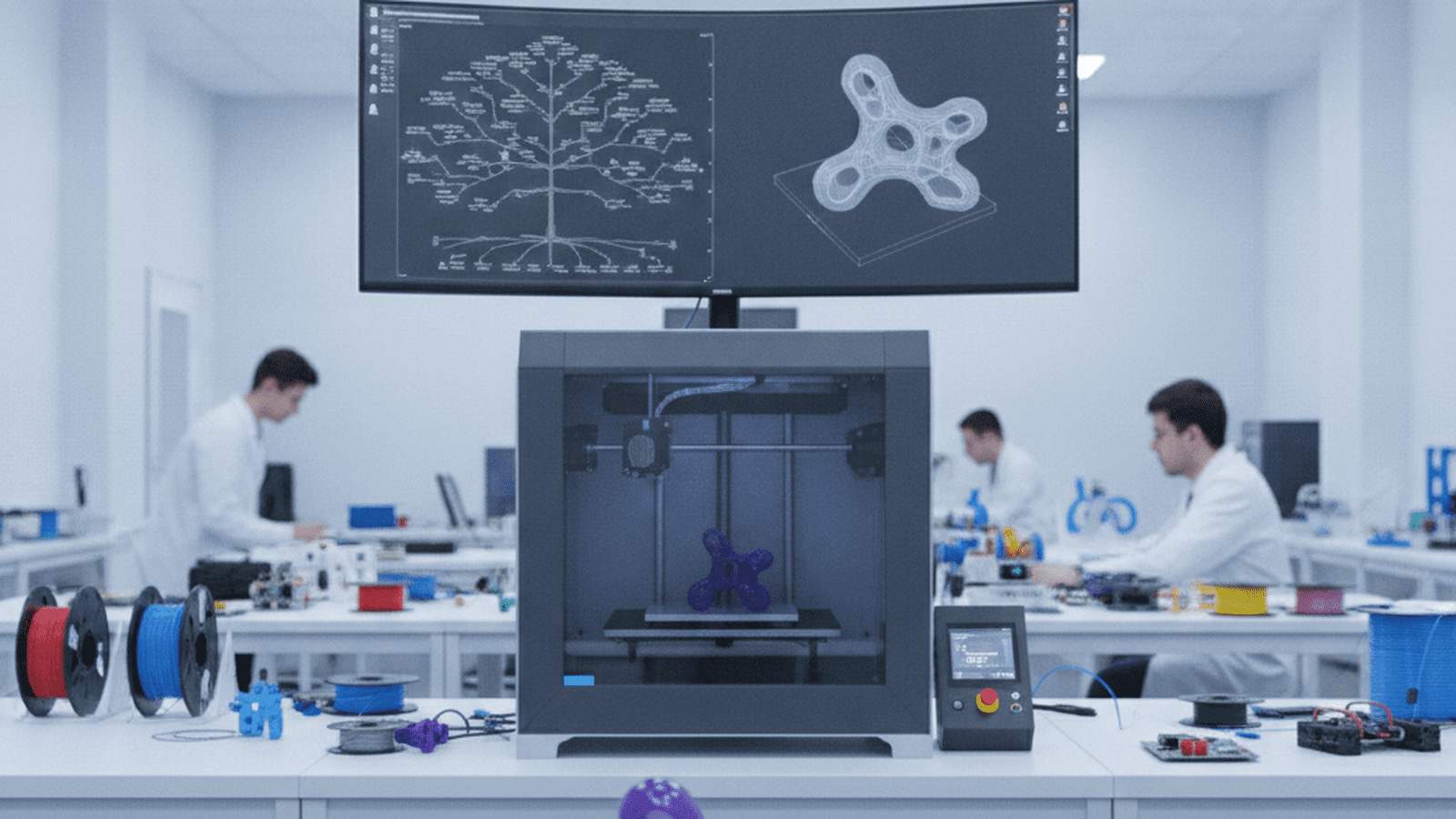
Northwestern University researchers have created an AI that can design functional robots from scratch in seconds using a process called instant evolution. The algorithm evolved a walking robot with an unconventional, organic shape without any human input or prior knowledge of physics.
TLDR: Northwestern University researchers developed an AI that designs functional robots in seconds. By bypassing billions of years of evolution, the algorithm created a unique, 3D-printable walking machine from a simple prompt. This breakthrough could lead to rapidly deployed, specialized robots for search-and-rescue and medical applications.
Researchers at Northwestern University have developed an artificial intelligence capable of designing functional robots from scratch in mere seconds. This breakthrough, led by computer scientist Sam Kriegman, marks a significant shift from traditional robotic engineering, which often relies on years of human trial and error or massive computational power. The AI algorithm does not require human guidance or prior knowledge of physics; it simply evolves a design based on a specific goal, such as moving across a flat surface. This process, which the team describes as “instant evolution,” represents a new paradigm in autonomous design.
The team initiated the process by providing the AI with a simple prompt: design a machine that can walk. Within 26 seconds, the AI progressed through billions of years of evolutionary milestones. It started with a motionless block of digital material and iteratively refined the shape, eventually producing a three-legged structure that could successfully locomote. This rapid development occurs on a standard personal computer, rather than the supercomputers typically required for such complex simulations. The efficiency of the algorithm allows it to explore vast design spaces that would be inaccessible through traditional methods.
One of the most striking aspects of the discovery is the AI’s unconventional design choices. Unlike human engineers who might default to wheels or symmetrical legs, the AI developed a shape that appears organic and somewhat erratic. The resulting robot features a series of internal holes and an asymmetrical body. When the researchers 3D-printed the design using a flexible silicone material, the physical robot successfully mimicked the digital model’s movements. By filling the robot with air, it expands and contracts to pull itself forward in a rhythmic gait.
The algorithm functions by identifying flaws in its own designs and correcting them in real-time. If a specific iteration fails to move, the AI modifies the geometry until progress is made. This autonomous loop allows the system to bypass the “sim-to-real” gap that often plagues robotic development. By evolving the design within a simulated environment that accounts for physical constraints, the AI ensures that the final blueprint is viable in the physical world. The researchers noted that the AI’s ability to innovate without human bias led to structural solutions that people might never consider.
The internal holes in the robot’s body were initially a mystery to the researchers. However, they soon realized these voids served a critical purpose: reducing weight and increasing flexibility, allowing the robot to bend its legs more effectively. This suggests that the AI is capable of discovering fundamental structural principles through pure observation of performance. The speed of the code allows for rapid prototyping, enabling engineers to test thousands of variations in the time it would normally take to sketch a single concept. This could drastically reduce the cost and time associated with developing new robotic systems.
Looking forward, this technology could revolutionize fields ranging from disaster relief to internal medicine. In the future, specialized robots could be evolved on-site to navigate specific debris patterns in collapsed buildings or underwater environments. On a smaller scale, the AI could design microscopic robots intended to navigate the human bloodstream to deliver targeted medication or clear arterial blockages. The Northwestern team plans to further refine the algorithm to allow for more complex tasks, such as swimming or manipulating objects. This research paves the way for a future where machines are not just built by humans, but evolved by intelligent systems to meet the specific needs of any environment.

Mason Reed serves as a Staff Writer for Just Right News, where he spearheads the Future Frontiers & Special Projects desk. In an era defined by rapid technological shifts and evolving social landscapes, Mason provides a steady, principled voice, examining the innovations of tomorrow through the lens of traditional American values. His work is most prominently featured in his signature series, “The Next Horizon,” where he explores the intersection of emerging technology, national sovereignty, and the preservation of individual liberty.
A native of San Diego, California, Mason’s worldview was shaped by the unique culture of his hometown. Growing up in a region defined by its strong military presence and its history of maritime industry, he developed a deep-seated respect for the institutions that provide national stability and the entrepreneurial spirit that drives the American economy. This upbringing instilled in him a belief that true progress is not found in discarding the past, but in building upon a foundation of proven principles. His reporting often reflects this San Diego influence, emphasizing the importance of a robust national defense and the necessity of maintaining a competitive edge in the global marketplace.
Now based in San Francisco, Mason operates from the heart of the world’s technological engine. Living and working in the Bay Area provides him with a front-row seat to the advancements—and the ideological challenges—emanating from Silicon Valley. While many in the region embrace a “move fast and break things” mentality, Mason’s reporting serves as a vital counterweight. He offers Just Right News readers a “boots on the ground” perspective, documenting how radical local policies and the concentration of tech power impact the everyday lives of citizens. His proximity to the industry allows him to cut through the marketing jargon of big tech to uncover the real-world implications for privacy, free speech, and the nuclear family.
In his “Future Frontiers” beat, Mason tackles complex subjects ranging from the ethics of artificial intelligence to the burgeoning private space race. He approaches these topics with a healthy skepticism toward centralized bureaucracy, championing instead the decentralized innovations that empower individuals. Through “The Next Horizon,” he highlights the pioneers and thinkers who are working to ensure that the future remains a place where human dignity and constitutional rights are protected. He believes that the rapid pace of change requires more than just technical expertise; it requires a moral compass rooted in the Western tradition.
Throughout his tenure at Just Right News, Mason has remained committed to the idea that the future is something to be shaped, not merely accepted. His writing is characterized by a rigorous defense of American exceptionalism and a belief that the country’s best days lie ahead, provided it remains true to its founding ideals. Whether he is investigating the impact of automation on the American workforce or profiling the next generation of aerospace engineers, Mason Reed ensures that his readers are equipped with the insights they need to navigate a changing world with confidence and clarity.