

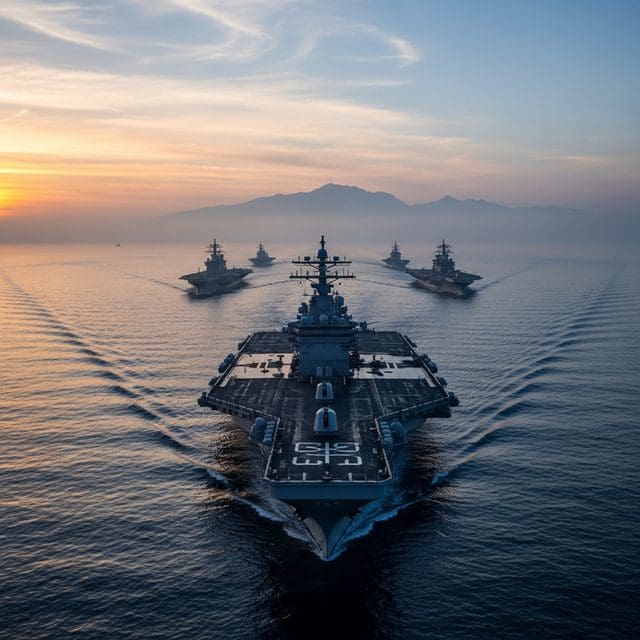
The White House has transitioned to a strategy of ‘negotiation by fire,’ using targeted strikes to force Tehran into a peace deal as regional hostilities expand to U.S. bases.
The Trump administration has pivoted to a high-stakes strategy of kinetic diplomacy in the Persian Gulf, utilizing targeted military strikes to break a perceived stalemate in negotiations with Tehran. Following the June 9 downing of a U.S. Army Apache helicopter near the Strait of Hormuz—an incident in which both pilots were reported safe—President Trump has significantly sharpened his rhetoric. While the President initially suggested a peace deal could be reached within forty-eight to seventy-two hours, he has since warned that Iran will pay a heavy price for taking too long to finalize terms. This shift indicates that the White House now views military action not as a breakdown of diplomacy, but as a necessary tool of leverage to compel Iranian compliance.
U.S. Central Command has characterized the latest operations as limited self-defense strikes. These missions have specifically targeted Iranian missile launch sites and fast-attack boats observed laying mines in the southern Gulf. Despite the Pentagon’s emphasis on restraint and the preservation of the existing ceasefire framework, the regional response has been immediate and volatile. Reports indicate that Iranian forces have launched retaliatory strikes against U.S. military installations in Bahrain, Jordan, and Kuwait. This tit-for-tat escalation directly threatens the logistics and basing infrastructure that underpins American power projection in the Middle East, even as Speaker Mike Johnson confirms that the administration is working with allies to ensure the Strait of Hormuz remains open to global commerce.
The complexity of the situation is further compounded by diverging interests between Washington and Jerusalem. On June 8, Israel conducted strikes on petrochemical facilities in Mahshahr, Iran, marking the first such kinetic action by the Israel Defense Forces since the April ceasefire. Vice President Vance has publicly acknowledged that U.S. and Israeli interests on the Iran issue are no longer perfectly aligned, particularly as the U.S. prioritizes a rapid diplomatic exit. Simultaneously, political tensions have flared between President Trump and Prime Minister Benjamin Netanyahu. After the President privately expressed frustration with Netanyahu’s handling of regional conflicts, the Likud party formally announced that the Prime Minister would seek re-election this year, signaling a defiance of Washington’s preference for new leadership.
While the Middle East remains a primary focus, the broader geopolitical landscape is being reshaped by the evolving conflict in Eastern Europe. Ukraine has significantly expanded its operational reach, launching intermediate and long-range strikes deep into Russian territory. Recent attacks have successfully targeted the St. Petersburg oil terminal, the Kronstadt naval base, and military manufacturing sites in the Tambov region. These operations are designed to bring the war home to the Russian populace and degrade the ground lines of communication that sustain Russian forces in occupied Crimea. In response, Moscow has intensified its drone and missile salvos, creating a cycle of escalation that parallels the volatility in the Gulf.
On the domestic front, the administration’s foreign policy is facing legislative and judicial hurdles. The House of Representatives recently passed a war powers resolution aimed at halting further military action against Iran, with several Republicans joining Democrats to signal concern over executive overreach. Furthermore, the Senate blocked a procedural motion to extend a key surveillance program, and a federal judge struck down a $100,000 fee on H-1B visas, complicating the administration’s broader national security and economic agenda. As the White House navigates these internal pressures, the success of its ‘peace through strength’ doctrine depends on whether Tehran views the current military pressure as a credible threat or a manageable cost of delay.

Olivia Kendall serves as the Senior Correspondent for Geopolitics, Defense, and Foreign Policy at Just Right News, where she provides a principled, conservative perspective on the complex forces shaping the global stage. With a career dedicated to deconstructing the intricacies of international relations, Kendall has become a trusted voice for readers who value national sovereignty, a robust military, and a foreign policy that prioritizes American interests above all else.
A native of Washington, D.C., Kendall’s professional journey is deeply rooted in her upbringing within the nation’s capital. Growing up in the epicenter of American political life, she developed an early and profound understanding of how policy is crafted and, more importantly, how it often fails to account for the values of the American heartland. This unique vantage point allowed her to witness firsthand the rise of globalist bureaucracies, fueling her commitment to reporting that champions the constitutional foundations of the United States. Her background as a British White American further informs her worldview, providing her with a keen appreciation for the Western tradition and the enduring importance of the “Special Relationship” in maintaining global stability.
Now based in Arlington, Virginia, Kendall operates from the doorstep of the Pentagon and the heart of the nation’s defense establishment. Her proximity to the decision-makers in the military and intelligence communities allows her to provide boots-on-the-ground reporting that is both timely and deeply informed. For Kendall, Arlington is more than just a base of operations; it is a daily reminder of the sacrifices made by the men and women in uniform. This connection to the defense community drives her rigorous coverage of military readiness and her advocacy for a “peace through strength” approach to diplomacy.
At Just Right News, Kendall is perhaps best known for her acclaimed feature series, “The World’s Shadow on America.” In this ongoing project, she explores the direct correlation between international developments and the daily lives of American citizens. Whether she is analyzing the encroachment of foreign adversaries in domestic supply chains or the impact of international treaties on local economies, Kendall’s work serves as a vital bridge between distant geopolitical shifts and their consequences at home. She rejects the notion that foreign policy is an abstract concern for elites, instead proving that what happens in the corridors of power in Brussels or Beijing has a tangible “shadow” that falls across every American doorstep.
Throughout her tenure, Kendall has remained a steadfast critic of international overreach and a vocal proponent of a clear-eyed, realistic foreign policy. She brings a sharp analytical mind to her beat, often challenging the prevailing narratives of the mainstream media to uncover the underlying truths that affect national security. Her reporting is characterized by a refusal to compromise on the truth and a dedication to the idea that a strong, secure America is the world’s best hope for liberty. As a Senior Correspondent, Olivia Kendall continues to lead the charge in providing the essential context and conservative insight necessary to navigate an increasingly volatile world.