

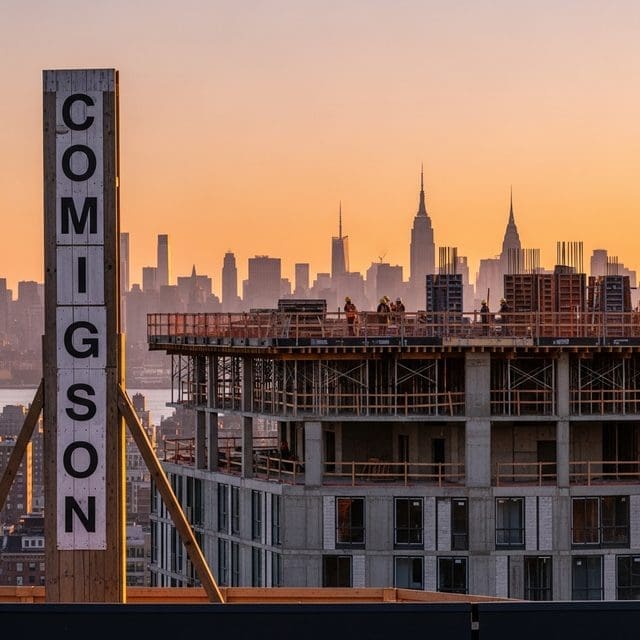
Governor Kathy Hochul considers a sweeping housing and zoning reform package as New York expands its $25 billion housing plan to address rising construction costs and supply shortages.
The New York State Legislature has delivered a comprehensive housing reform bill to Governor Kathy Hochul, marking a critical juncture for property rights and urban development. The Governor now has a ten-day window to sign or veto the legislation, which advocates frame as a necessary disruption of the status quo to unlock stagnant housing supply. This legislative push arrives as the state grapples with a persistent affordability crisis that has squeezed the budgets of middle-class taxpayers and low-income residents alike.
The bill is being viewed as a potentially sweeping change in how housing, zoning, and related policies are regulated across the state, signaling a shift toward more centralized oversight to bypass local bottlenecks. Governor Hochul’s administration has already signaled a commitment to long-term infrastructure through the recently enacted FY 2026–27 budget. That fiscal plan maintains a $25 billion multi-year housing strategy while adding $250 million in affordable housing capital and $25 million for homeless assistance.
Central to the Governor’s current agenda is a series of budget-linked measures designed to lower the barriers to entry for private developers. Industry groups representing lumber and building materials suppliers estimate that proposed construction-cost reforms could save builders between $7 million and $10 million over the next two years. These reforms are intended to streamline the supply chain and reduce the regulatory friction that often inflates the price of new construction, potentially easing the upward pressure on new home prices for the average buyer.
While Albany debates regulatory shifts, federal agencies are moving to restart critical support pipelines. The U.S. Department of Housing and Urban Development (HUD) recently released the 2026 Continuum of Care (CoC) Notice of Funding Opportunity. This move follows a period of uncertainty caused by federal shutdown threats and ensures that approximately $2.4 billion in renewal funding will flow to existing homeless housing and service projects nationwide. In New York City, local administrators are already initiating the 2026 application process to secure these vital resources.
The tension between housing as a long-term residence and housing as a short-term commodity is also manifesting across the border, providing a cautionary tale for New York regulators. In Toronto, the upcoming 2026 FIFA World Cup has triggered a surge in “side hustle” rentals. Airbnb is reportedly offering incentives of up to 2,000 Canadian dollars to attract new hosts to list entire homes, raising concerns that long-term rental stock is being diverted to the tourism market. This highlights a broader North American challenge: protecting the availability of permanent housing in the face of temporary market spikes.
For New York, the pending bill represents more than just a policy adjustment; it is a test of whether state-level intervention can effectively balance local sovereignty with the urgent need for market-driven growth. The legislation sits at the intersection of private property rights and public mandate, as the state attempts to mandate density in areas that have historically resisted it. As taxpayers look for relief from high rents and mortgage rates, the focus remains on whether these bureaucratic maneuvers will translate into tangible reductions in the cost of living or simply create new layers of administrative complexity.
Ultimately, the success of Hochul’s housing plank depends on the private sector’s ability to respond to these new incentives. While the $25 billion state plan provides a significant capital floor, the real movement in affordability will likely come from the regulatory relief promised to builders. If the Governor signs the pending bill, it will signal a new era of state-led development, prioritizing the production of units over the traditional local control that has defined New York’s suburbs and boroughs for decades.

Deborah Cole serves as a Senior Correspondent for Just Right News, where she spearheads the network’s coverage of Housing, Infrastructure, and Mobility. With a career defined by a commitment to rigorous reporting and a focus on the fundamental pillars of American community life, Deborah brings a principled perspective to the complex issues that dictate how and where we live. Her work is grounded in the belief that sound policy, fiscal responsibility, and respect for private property are the essential foundations of a prosperous society.
Originally from Boston, Massachusetts, Deborah’s upbringing in one of the nation’s oldest and most historically significant cities deeply influenced her professional trajectory. Growing up amidst the architectural legacy and dense urban planning of New England, she developed an early appreciation for the importance of durable infrastructure and the role of local tradition in shaping neighborhoods. Her perspective is informed by the classic American values of her hometown—hard work, community cohesion, and a healthy skepticism of top-down bureaucratic mandates that often overlook the unique needs of individual citizens.
Today, Deborah operates from her base in Austin, Texas, a city that serves as a primary laboratory for her reporting. Austin’s rapid expansion and its status as a hub for innovation and migration provide her with a front-row seat to the most pressing challenges in modern infrastructure and housing. From the Lone Star State, she chronicles the tensions between rapid growth and the preservation of the American Dream, often highlighting how market-driven solutions and deregulation can address the housing shortages that plague many of the country’s metropolitan areas.
At Just Right News, Deborah is perhaps best known for her signature feature series, “Where We Live.” Through this platform, she explores the intersection of public policy and private life, moving beyond mere statistics to tell the stories of families, small business owners, and local developers. Her reporting frequently highlights the importance of mobility—not just in terms of transportation and transit, but as a vehicle for economic opportunity and social stability. She remains a staunch advocate for the taxpayer, consistently scrutinizing government spending on large-scale projects and advocating for transparency in how infrastructure dollars are allocated.
Deborah’s beat is more than just a collection of policy topics; it is an investigation into the physical and legal structures that allow families to flourish. Whether she is reporting on the impact of zoning laws on suburban development or the necessity of maintaining the nation’s highway systems, her work is characterized by a dedication to the facts and a respect for the constitutional principles that protect the rights of homeowners.
As a Senior Correspondent, Deborah Cole continues to be a vital voice for Just Right News, providing the audience with the clarity and context needed to navigate an ever-changing landscape. Her reporting ensures that the values of individual liberty and local sovereignty remain at the forefront of the national conversation regarding the future of our cities and towns. Through her tireless efforts, she remains committed to informing the public on the issues that hit closest to home.