


Internal payment logs show Polymarket executives bypassed corporate channels to pay over 800 influencers $2.5 million for scripted, unlabeled endorsements on social media.
Financial records and internal payment logs have pulled back the curtain on a massive, undisclosed influence campaign orchestrated by the prediction market platform Polymarket. While initial estimates suggested a modest marketing push, a deep dive into the payment trail reveals that a company executive utilized a personal PayPal account to distribute more than $2.5 million to over 800 individuals between January 2025 and February 2026. This document-driven investigation highlights a significant departure from standard corporate transparency, as the platform sought to shape public discourse through a decentralized network of paid voices.
The records show that Chief Marketing Officer Matthew Modabber was the primary source of these funds. By utilizing a personal account rather than a corporate disbursement system, the company effectively obscured the scale of its operations from public and regulatory view. This method of payment raises immediate questions regarding internal accounting controls and whether these transactions were properly reported as business expenses to the Internal Revenue Service. In the world of investigative journalism, the use of personal accounts for million-dollar corporate outlays is a significant red flag, suggesting a deliberate attempt to avoid the audit trails associated with traditional business banking.
The investigation identified at least 20 prominent content creators who posted about Polymarket on the platform X nearly 500 times without disclosing that the content was paid for. These influencers span a wide ideological range, including conservative figures like Alex LoRusso and Riley Gaines, as well as progressive commentator Brian Krassenstein. This broad ideological reach suggests a calculated effort to saturate the political spectrum with betting-related content. Despite X rolling out a formal paid-promotion labeling tool on March 1, the vast majority of the analyzed posts lacked any indication of a commercial relationship, presenting instead as organic commentary on market trends.
Documentary evidence suggests the relationship between the platform and the creators went beyond simple sponsorship. One influencer, speaking on the condition of anonymity, provided details indicating that Polymarket staff frequently wrote the specific text for posts and directed creators to promote specific betting pools. This level of scripted content, when presented as organic opinion, directly challenges Federal Trade Commission (FTC) guidelines regarding the clear disclosure of endorsements. When a company provides the script and the payment through a private channel, the line between independent commentary and corporate propaganda disappears.
Legal experts note that while the FTC has not yet issued a specific ruling on prediction markets, the agency’s standing policy is that any material connection between an endorser and a seller must be clearly and conspicuously disclosed. The use of personal accounts to facilitate these payments further complicates the regulatory landscape. A former FTC deputy general counsel noted that such endorsements generally should be disclosed to maintain market integrity. The failure to do so risks eroding public trust in digital information, particularly when the content involves financial markets and political outcomes.
Polymarket has declined to provide a public explanation for its disclosure policies or its decision to route millions of dollars through a personal PayPal account. The company has also remained silent on whether these payments were reported to the IRS as taxable business expenses. As the administrative state weighs potential enforcement actions, the paper trail left by these transactions serves as a primary record of how digital platforms may be circumventing traditional advertising standards. For those of us who follow the money, the use of personal accounts to pay for scripted political content is a clear signal that the current regulatory framework is being tested by new forms of digital influence.
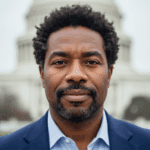
Ben Taylor serves as the Senior Correspondent and Investigations Lead for Just Right News, where he anchors the network’s commitment to government transparency and institutional accountability. With a career defined by a relentless pursuit of the facts, Taylor spearheads the acclaimed feature series “The Paper Trail,” a deep-dive investigative column that prioritizes primary source documentation over political rhetoric. Based in the heart of the nation’s capital, he has earned a reputation as one of the most formidable investigative journalists in Washington, D.C., known specifically for his mastery of public records and the Freedom of Information Act.
Taylor’s approach to journalism is deeply rooted in his upbringing in Kansas City, Missouri. Growing up in the “Show Me State,” he developed a healthy skepticism of centralized power and a profound respect for the common-sense values of the American heartland. This Midwestern foundation informs his reporting today, as he bridges the gap between the complex machinations of federal bureaucracy and the everyday concerns of citizens across the country. For Taylor, investigative reporting is not about chasing headlines; it is about ensuring that the government remains answerable to the people it serves.
As an African American man working within the conservative media landscape, Taylor brings a principled perspective to his beat. He views the Constitution and the right to information as the ultimate equalizers in a free society. His work often highlights how bureaucratic overreach and lack of transparency disproportionately affect individual liberties. By focusing on the “paper trail,” Taylor strips away the spin of partisan talking points, instead providing Just Right News readers with the raw data and internal communications that reveal how their tax dollars are spent and how policy decisions are actually made.
In his role as Investigations Lead, Taylor oversees a team dedicated to uncovering the stories that mainstream outlets often overlook. Whether he is auditing federal spending, investigating regulatory overreach, or exposing inefficiencies within the administrative state, his methodology remains consistent: follow the evidence wherever it leads. His presence in Washington, D.C., allows him to maintain a constant watch over the halls of power, yet he remains steadfastly connected to his roots, ensuring his reporting reflects the clarity and directness of his Missouri home.
Throughout his tenure at Just Right News, Taylor has become a vital voice for those who demand integrity in public office. He believes that a well-informed electorate is the strongest defense against government overreach, and he has dedicated his career to providing the public with the tools they need to hold their leaders accountable. Through “The Paper Trail” and his broader investigative work, Ben Taylor continues to set the standard for rigorous, document-driven journalism that champions the values of transparency, individual responsibility, and the rule of law.