

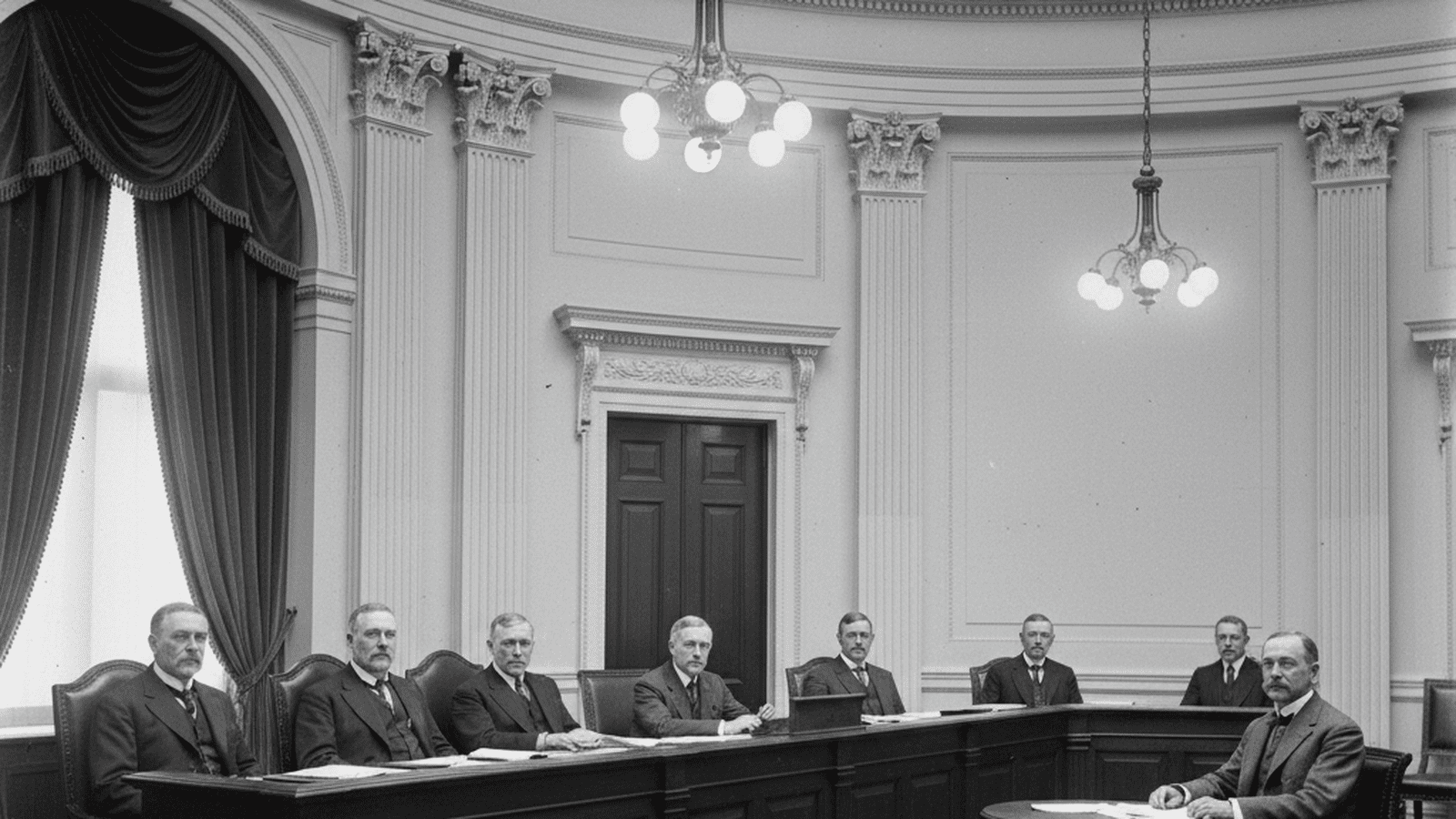
The Clapp Committee investigations of 1912 exposed the deep financial ties between major corporations and federal political campaigns in the United States. Led by Senator Moses Clapp, the inquiry revealed systemic violations of the Tillman Act and fueled the Progressive Era’s demand for transparency.
TLDR: In 1912, the U.S. Senate’s Clapp Committee uncovered massive, illegal corporate donations to presidential campaigns. The investigation forced industrial titans to testify, revealing how slush funds bypassed federal law. This landmark probe catalyzed the first major wave of modern campaign finance reforms in American history.
The dawn of the 20th century in the United States was defined by a profound tension between the burgeoning power of industrial titans and a public increasingly wary of concentrated wealth. By 1912, this friction reached a boiling point in Washington, D.C., as the United States Senate Subcommittee on Privileges and Elections launched a sweeping investigation into campaign contributions. Led by Senator Moses Clapp of Minnesota, a staunch Progressive Republican, the committee sought to uncover the extent of corporate influence in the presidential elections of 1904 and 1908. This inquiry, which became known as the Clapp Committee, stands as a defining moment for the Progressive Era’s push for government transparency and the regulation of “money power.”
The immediate impetus for the investigation stemmed from the sensational publication of the Archbold letters. These documents, leaked to and published by media mogul William Randolph Hearst, revealed that John D. Archbold, a high-ranking executive at Standard Oil, had funneled significant sums to various influential politicians. While the Tillman Act of 1907 had technically banned direct corporate contributions to federal candidates, the law was notoriously toothless, lacking any effective enforcement or disclosure mechanisms. The Clapp Committee aimed to determine if these rules were being systematically bypassed through private slush funds, indirect payments, and the influence of “interlocking directorates.” This was the first time the federal government aggressively pursued the paper trail of political donations from the boardrooms of Wall Street to the campaign trail.
The hearings became a national sensation, transforming the Senate into a theater of accountability. Some of the most powerful men in America were summoned to testify under oath. J.P. Morgan, the era’s preeminent financier and the face of American capitalism, appeared before the committee to answer for his financial support of Theodore Roosevelt’s 1904 campaign. Morgan admitted to donating 150,000 dollars—a staggering sum at the time—but maintained a stoic, almost defiant posture, insisting he expected no specific legislative favors in return. His testimony, along with that of George W. Perkins of U.S. Steel, highlighted a corporate culture where industrial leaders viewed political contributions as a necessary cost of doing business and a strategic means of ensuring a favorable regulatory environment.
The investigation also cast a long shadow over the legacy of Theodore Roosevelt. In 1912, Roosevelt was running for the presidency again under the Progressive “Bull Moose” banner, campaigning on a platform of trust-busting and the “Square Deal.” However, evidence emerged that his 1904 campaign had accepted substantial sums from the very trusts he sought to regulate, including Standard Oil and the insurance giants. Roosevelt himself was forced to testify, defending his personal integrity while acknowledging the messy realities of political fundraising. The revelations suggested a deep hypocrisy: that the reformist zeal of the era was, at least in part, financed by the interests it claimed to oversee.
Beyond individual testimonies, the Clapp Committee exposed the structural rot in American election law. It revealed that political parties often operated as private entities with no public accounting of their finances, allowing “slush funds” to dictate policy behind closed doors. The committee’s findings demonstrated that without mandatory, public disclosure, any ban on corporate giving was largely symbolic. The public outcry following the hearings pressured Congress to move beyond the Tillman Act.
The legacy of the Clapp Committee was the eventual strengthening of the Federal Corrupt Practices Act. The revelations fueled the passage of amendments in 1911 and later the comprehensive 1925 act, which expanded disclosure requirements and set spending limits. While these reforms did not end the influence of wealth in politics, they established the foundational principle that the public has a right to know who is funding their leaders. The Clapp Committee initiated a century-long struggle for campaign finance reform, serving as a direct precursor to the modern era of political transparency.
Ben Taylor serves as the Senior Correspondent and Investigations Lead for Just Right News, where he anchors the network’s commitment to government transparency and institutional accountability. With a career defined by a relentless pursuit of the facts, Taylor spearheads the acclaimed feature series “The Paper Trail,” a deep-dive investigative column that prioritizes primary source documentation over political rhetoric. Based in the heart of the nation’s capital, he has earned a reputation as one of the most formidable investigative journalists in Washington, D.C., known specifically for his mastery of public records and the Freedom of Information Act.
Taylor’s approach to journalism is deeply rooted in his upbringing in Kansas City, Missouri. Growing up in the “Show Me State,” he developed a healthy skepticism of centralized power and a profound respect for the common-sense values of the American heartland. This Midwestern foundation informs his reporting today, as he bridges the gap between the complex machinations of federal bureaucracy and the everyday concerns of citizens across the country. For Taylor, investigative reporting is not about chasing headlines; it is about ensuring that the government remains answerable to the people it serves.
As an African American man working within the conservative media landscape, Taylor brings a principled perspective to his beat. He views the Constitution and the right to information as the ultimate equalizers in a free society. His work often highlights how bureaucratic overreach and lack of transparency disproportionately affect individual liberties. By focusing on the “paper trail,” Taylor strips away the spin of partisan talking points, instead providing Just Right News readers with the raw data and internal communications that reveal how their tax dollars are spent and how policy decisions are actually made.
In his role as Investigations Lead, Taylor oversees a team dedicated to uncovering the stories that mainstream outlets often overlook. Whether he is auditing federal spending, investigating regulatory overreach, or exposing inefficiencies within the administrative state, his methodology remains consistent: follow the evidence wherever it leads. His presence in Washington, D.C., allows him to maintain a constant watch over the halls of power, yet he remains steadfastly connected to his roots, ensuring his reporting reflects the clarity and directness of his Missouri home.
Throughout his tenure at Just Right News, Taylor has become a vital voice for those who demand integrity in public office. He believes that a well-informed electorate is the strongest defense against government overreach, and he has dedicated his career to providing the public with the tools they need to hold their leaders accountable. Through “The Paper Trail” and his broader investigative work, Ben Taylor continues to set the standard for rigorous, document-driven journalism that champions the values of transparency, individual responsibility, and the rule of law.