

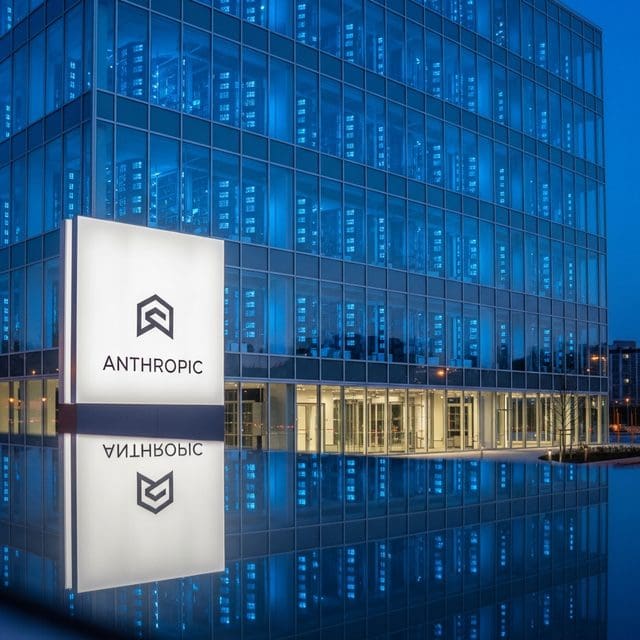
Anthropic has closed a massive Series H round valuing the company at $965 billion, signaling a shift in the competitive landscape for artificial intelligence dominance and market power.
The landscape of artificial intelligence underwent a seismic shift this week as Anthropic closed a $65 billion Series H funding round. This massive influx of capital brings the company’s post-money valuation to $965 billion, effectively leapfrogging OpenAI’s last reported valuation of $852 billion. The deal, which many analysts view as the final private funding milestone before a highly anticipated initial public offering, signals that institutional investors are increasingly betting on Anthropic’s safety-oriented architecture as the dominant standard for corporate and industrial applications.
The funding round was co-led by a coalition of heavyweights including Altimeter Capital, Dragoneer, Greenoaks, Sequoia Capital, Capital Group, Coatue, and D1 Capital Partners. The sheer appetite for the round was evidenced by reports that at least one institutional investor pledged $5 billion simply to secure a meeting with Anthropic’s Chief Financial Officer, Krishna Rao. Beyond the lead investors, the cap table now includes a diverse array of global capital, ranging from GIC and Temasek to Blackstone, Brookfield, and Fidelity Management & Research. This broad institutional backing suggests a consolidation of financial power around a few select AI entities capable of meeting the immense capital requirements of the sector.
Strategic infrastructure partners played a critical role in the transaction, highlighting the deep integration between AI developers and the hardware supply chain. Samsung, SK Hynix, and Micron joined the round, ensuring that Anthropic remains tethered to the physical components necessary for scaling intelligence. Furthermore, $15 billion of the total round consisted of previously committed capital from hyperscalers. This includes $5 billion from Amazon, which had been announced in April as part of a broader strategic alliance. Amazon has indicated it could invest up to $20 billion more in the future, tied to specific performance milestones, further cementing the role of Amazon Web Services as a primary backbone for Anthropic’s operations.
Coinciding with the financial news, Anthropic released its Claude Opus 4.8 model on May 28, 2026. This new iteration is optimized for complex coding and agentic tasks, with a specific focus on self-correction and focus. Available via the Claude Platform and major cloud providers, the model is priced at $5 per million input tokens and $25 per million output tokens. The company also announced plans to release Claude Mythos in the coming weeks. Mythos, a more powerful model previously held in limited release due to cybersecurity and safety concerns, represents Anthropic’s attempt to balance raw computational power with the “interpretability” research that its founders claim is essential for avoiding catastrophic AI failures.
From a market perspective, Anthropic’s growth appears to justify the astronomical valuation. The company reported that its run-rate revenue crossed $47 billion earlier this month, driven largely by enterprise adoption of its Claude Code tools. Internal projections suggest a 130% revenue surge is on the horizon, which would bring the startup to its first operating profit. This financial trajectory is a rarity in the high-burn world of AI development, where compute costs often outpace early adoption. Brad Gerstner, founder of Altimeter Capital, noted that the momentum positions Anthropic to lead the next phase of innovation, particularly among the world’s most demanding organizations that require high-reliability systems.
While the scale of these investments is unprecedented, they raise significant questions about market competition and corporate accountability. With hyperscalers like Amazon and Google providing both the capital and the essential cloud infrastructure for these models, the line between independent innovation and corporate subsidiary continues to blur. As Anthropic prepares for the public markets, it faces the challenge of maintaining its principled stance on safety while satisfying the growth demands of a trillion-dollar valuation. The battle for AI supremacy is no longer just about code; it is an arms race of capital, infrastructure, and institutional influence.

Greg Sanders serves as the Senior Correspondent for Corporate Power and Antitrust at Just Right News, where he brings a principled, conservative perspective to the complex intersection of big business, government regulation, and the American consumer. With a career dedicated to investigative depth and economic clarity, Greg has become a leading voice in examining how the consolidation of industry power impacts the foundational values of the free market and individual liberty.
Raised in Denver, Colorado, Greg’s reporting is deeply informed by the Western spirit of independence and a healthy skepticism of centralized authority. Growing up in the shadows of the Rockies, he witnessed firsthand the importance of local entrepreneurship and the vital role that small-medium enterprises play in sustaining vibrant communities. This upbringing instilled in him a belief that the American Dream is best preserved when the playing field remains level and when competition—rather than backroom deals between corporate lobbyists and federal regulators—dictates success. For Greg, the rugged individualism of his home state serves as a constant reminder that the economy should serve the people, not the other way around.
Now based in Chicago, Illinois, Greg operates from the heart of the nation’s industrial and financial crossroads. His location in the Midwest provides him with a unique vantage point to observe the real-world consequences of corporate overreach. From the boardrooms of the Loop to the manufacturing hubs that define the region, he tracks the movement of capital and the shifting tides of market influence. Chicago’s history as a center of trade and labor offers a rich backdrop for his work, allowing him to bridge the gap between high-level economic theory and the lived experiences of hardworking Americans who feel the squeeze of monopolistic practices.
At Just Right News, Greg’s beat focuses on the “new monopolies” and the rise of “woke” corporate culture. He argues that when corporations become too large, they often abandon their fiduciary duties to shareholders in favor of social engineering and political posturing. His reporting seeks to hold these “Titans” accountable, ensuring that the power of the purse is not used to silence dissent or bypass the democratic process. He is a firm advocate for the idea that true conservatism requires a vigilant defense of competition, preventing any single entity—public or private—from exerting undue control over the lives of citizens.
This mission is most clearly seen in his acclaimed feature series, “The Titans and the Toll.” In this ongoing project, Greg explores the human cost of market consolidation, from the erosion of consumer choice to the decline of local economies. Through rigorous analysis and boots-on-the-ground reporting, he documents how the concentration of power in sectors like tech, agriculture, and finance creates a “toll” paid by the average family.
Greg Sanders remains committed to the idea that a transparent, competitive market is the greatest engine for prosperity ever devised. Through his work at Just Right News, he continues to provide the essential oversight necessary to protect that engine from the encroaching influence of corporate giants and the bureaucratic structures that enable them.