

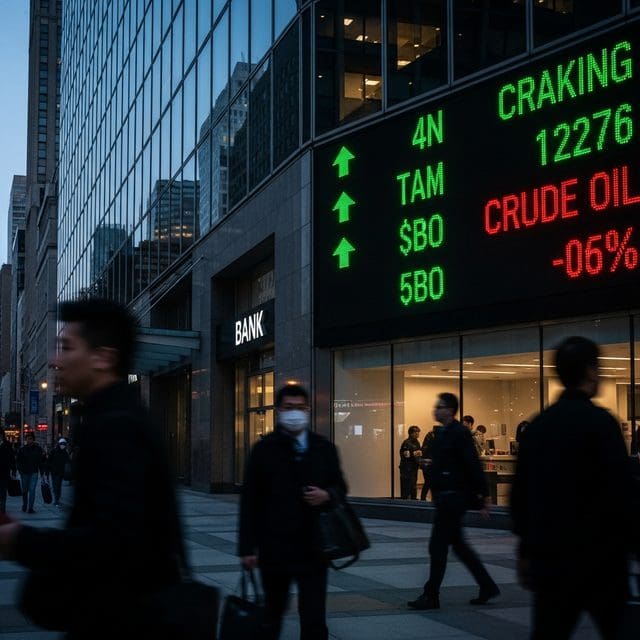
Global equities advanced while energy prices and the dollar retreated as tentative negotiations for a ceasefire in the Iran conflict provided a much-needed reprieve for inflation-weary households.
Global financial markets shifted momentum on Monday as the prospect of a resolution to the Iran conflict sparked a broad risk-on rally. The S&P 500 ETF (SPY) rose 0.40% on the session, reflecting a cautious recalibration of the global economy. For the American taxpayer, this movement signals a potential cooling of energy-driven inflation that has strained household budgets for months. The conflict has reshaped the global rates outlook, as inflation concerns intensified following Tehran’s shutdown of the key waterway.
The primary catalyst was the emergence of a tentative deal between the Trump administration and Iranian negotiators. The proposed framework includes a 60-day ceasefire extension and the reopening of the Strait of Hormuz, which previously carried 20% of global oil and liquefied natural gas shipments. Although President Trump cautioned representatives not to rush, the memorandum of understanding sent Brent crude tumbling over 4% to $98.80 a barrel, while West Texas Intermediate (WTI) fell to roughly $92.00. These figures represent two-week lows, offering a reprieve from the $100-plus prices seen earlier in May.
This retreat in energy costs provided an immediate tailwind for equities. In Tokyo, the Nikkei jumped 3% to push through the 65,000 level for the first time, while the pan-European STOXX 600 climbed to 629.24. In the United States, Nasdaq futures led with a 1.4% gain, as lower energy prices translate to lower input costs for corporations and more disposable income for consumers. However, the rally remains sensitive; any delay in approval from Iranian Supreme Leader Mojtaba Khamenei could reverse these gains. White House officials have played down hopes of an imminent breakthrough to manage expectations, yet the market is focusing on the positive tone of headlines.
In currency markets, the U.S. dollar index slipped as investors unwound safe-haven positions. The euro climbed to $1.1646, and the Japanese yen firmed to 158.96 per dollar. This softening of the dollar, combined with easing Treasury yields, suggests the market is pricing in a less aggressive inflationary environment. For the average household, lower oil prices act as a de facto tax cut, cooling near-term inflation fears and supporting U.S. growth names already at record highs.
Despite the optimism, institutional risks remain. Analysts from Barclays expect oil prices to stay elevated even with a resolution, as supply chain disruptions take time to remedy. Furthermore, institutional volatility persists. Companies like Stellantis N.V. (STLA) and Gemini Space Station (GEMI) face class-action securities fraud lawsuits, reminding investors that legal accountability remains vital. Additionally, while firms like Elliott Investment Management are making strategic moves in Japan, the broader market remains tethered to the geopolitical outcome in the Middle East.
For the working household, today’s activity is a rare piece of good news. If the ceasefire holds and the Strait of Hormuz reopens, the reduction in energy costs will provide relief for every American filling a gas tank. While finalization may take several days pending Iranian leadership approval, the market reaction confirms that the path to economic stability runs through the restoration of free-flowing global trade. The shift from a war stalemate toward a resolution is the most significant development for the invisible economy this quarter.

Jordan Lee serves as the Senior Correspondent for Wall Street, Finance, and Monetary Systems at Just Right News. Based in the heart of the world’s financial capital, New York City, Lee brings a sharp, principled eye to the complex mechanisms that drive the global economy. His reporting is defined by a commitment to fiscal responsibility, the defense of the free market, and a deep-seated belief that a transparent monetary system is the bedrock of a free society.
Raised in Portland, Oregon, Lee’s perspective was forged in a city that has undergone significant cultural and economic shifts. His upbringing in the Pacific Northwest instilled in him a profound appreciation for the industriousness of small business owners and the importance of local economic stability. Watching the evolution of his hometown’s landscape sparked an early interest in how federal fiscal policy and large-scale financial trends eventually trickle down to the average citizen. This background provides him with a unique vantage point; he understands the growing disconnect between the policy-making elite and the reality of Main Street, a theme that frequently resonates throughout his work.
Now operating from his base in New York City, Lee bridges the gap between the high-stakes trading floors of Manhattan and the households of everyday Americans. He views the financial sector not merely as a collection of numbers and tickers, but as a vital engine of American prosperity that requires constant vigilance and accountability. His reporting often highlights the dangers of centralized financial control and the necessity of maintaining a system that rewards merit, risk-taking, and innovation.
As the creator and lead of the featured series, “The Invisible Economy,” Lee pulls back the curtain on the often-opaque world of monetary systems. He specializes in translating the dense jargon of central banking and international finance into actionable insights for the Just Right News audience. His work explores the “invisible” forces—such as inflationary pressures, regulatory creep, and the expansion of the administrative state—that erode the purchasing power of American families. By focusing on these systemic issues, Lee empowers readers to understand the hidden forces shaping their financial independence.
Lee’s journalistic philosophy is rooted in a steadfast commitment to traditional American values. As an Asian American professional who has navigated the competitive corridors of the financial world, he is a vocal advocate for meritocracy and the preservation of the American Dream. He believes that a stable currency and a predictable regulatory environment are essential for national sovereignty and individual liberty. His reporting frequently warns against the risks of government overreach in the private sector, arguing that the most effective solutions to economic challenges arise from competition and individual enterprise rather than bureaucratic mandates.
At Just Right News, Jordan Lee remains dedicated to providing a clear-eyed defense of the taxpayer. Whether he is analyzing market volatility or investigating the long-term implications of national debt, his mission is to provide the truth about where the money is going and what it means for the future of the country. Through his rigorous analysis and principled stance, Lee has become a trusted voice for those who value a strong, sovereign, and fiscally sound America.