

With physical oil supplies through the Strait of Hormuz down 95%, the U.S. faces a dual challenge of record-low consumer sentiment and a looming 2008-style commodity shock.
The global energy market is currently navigating its most precarious period since the 1970s, as the physical supply of oil through the Strait of Hormuz has collapsed by 95% as of late May 2026. This near-total cessation of transit through the world’s most vital energy artery has sent shockwaves through commodity markets, with analysts at MarketWatch warning that a failure to reopen the strait by the end of August will trigger a price shock rivaling the 2008 financial crisis. The disruption is no longer a theoretical risk; it is a tangible economic weight that has driven U.S. consumer sentiment to an all-time low.
On the diplomatic front, the situation is a study in high-stakes volatility. Secretary of State Marco Rubio noted on May 22 that while there has been “slight progress” in negotiations with Tehran, the path forward remains clouded by uncertainty. Reports indicate that Iran is in the final stages of drafting a nuclear deal framework with the United States. This potential breakthrough offers a glimmer of hope for regional stabilization, yet the U.S. military and commercial sectors are not waiting for a signature. The United States has already redirected approximately 100 vessels to bypass the Iranian port blockade, a logistical maneuver that adds significant time and cost to global supply chains.
This geopolitical instability arrives at a moment of transition for American monetary policy. Kevin Warsh was sworn in as the 17th Federal Reserve Chair on May 22, 2026, in a ceremony hosted by President Trump. Warsh, who secured confirmation with a 54-45 Senate vote, inherits an economy reeling from an April inflation spike. With bond markets applying immense pressure, the new Chair faces a mandate to raise interest rates to combat rising costs, even as high energy prices threaten to dampen industrial productivity. The intersection of a restricted oil supply and rising borrowing costs creates a narrow corridor for economic stability.
Domestically, the energy crisis is forcing difficult political decisions at the state level. In New Jersey, Governor Mikie Sherrill has maintained a firm stance against suspending the state gas tax, despite pressure from the Trump administration and local Republicans to provide relief at the pump. This bipartisan reluctance in Trenton underscores the tension between immediate consumer relief and the long-term necessity of maintaining infrastructure revenue during a period of fiscal uncertainty. As taxpayers feel the squeeze, the debate over energy taxation is becoming a central flashpoint in state-level politics.
While the West focuses on the maritime blockade, the human cost of the global energy scramble remains high. In China’s Shanxi Province, a devastating gas explosion at the Liushenyu coal mine in Changzhi city claimed the lives of at least 90 people this week. The accident highlights the extreme pressures on traditional energy sectors to fill the void left by disrupted oil and gas markets. As nations pivot back to coal and other fossil fuels to ensure grid reliability, the safety and environmental trade-offs are becoming increasingly stark.
Amidst this turmoil, the private sector continues to bet on long-term technological shifts, even if they cannot solve the immediate supply crunch. Nvidia has reportedly funneled $18.6 billion into venture-capital investments over the last three months, signaling that while the current grid is under duress, the race for AI-driven energy efficiency and next-generation infrastructure remains well-funded. However, for the American taxpayer, these innovations offer little comfort against the immediate reality of a 95% reduction in Hormuz crude flows and the looming threat of a summer price explosion.
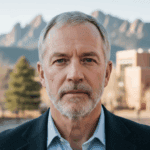
Mark Davis serves as the Senior Correspondent for Energy, Climate, and Resource Economics at Just Right News. In an era where the conversation around the environment is often dominated by alarmism and top-down mandates, Mark provides a vital, market-oriented perspective on the complex forces shaping our world. As the lead voice behind the acclaimed feature series “Power and the Planet,” he explores the intersection of environmental policy, global energy markets, and the fundamental economic principles that sustain modern civilization.
Mark’s pragmatic approach to resource management was forged in the high desert of his hometown, Albuquerque, New Mexico. Growing up in a region defined by both its breathtaking natural beauty and its rugged, resource-dependent landscape, he developed an early appreciation for the delicate balance between conservation and utilization. New Mexico’s unique position as a hub for both traditional energy production and cutting-edge scientific research provided Mark with a front-row seat to the evolution of the American energy sector. This upbringing instilled in him a deep-seated belief that true environmental stewardship is inseparable from economic prosperity and technological innovation.
Now based in Boulder, Colorado, Mark operates from the heart of the nation’s climate research community. While Boulder is often seen as a bastion of environmental idealism, Mark utilizes his post to provide a necessary counterweight, grounded in the realities of resource economics. He understands that energy policy does not exist in a vacuum; it has tangible consequences for the American taxpayer, the stability of the national power grid, and the strength of the domestic manufacturing sector. By reporting from the front lines of the climate debate, he is able to challenge prevailing narratives with hard data and a commitment to the principles of the free market.
Throughout his tenure at Just Right News, Mark has distinguished himself by focusing on the “Resource Economics” aspect of his beat. He frequently highlights the hidden costs of rapid energy transitions and advocates for an “all-of-the-above” energy strategy that prioritizes American energy independence. His work often shines a light on the geopolitical implications of resource scarcity, arguing that a secure nation must first be an energy-secure nation. Whether he is analyzing the impact of federal land-use regulations or investigating the supply chains required for new technologies, Mark remains focused on how policy decisions affect the lives and livelihoods of everyday citizens.
In “Power and the Planet,” Mark continues to bridge the gap between complex scientific concepts and the economic realities facing the country. He rejects the false choice between a healthy environment and a thriving economy, instead seeking out solutions that leverage American ingenuity and private-sector competition. For Mark, reporting on the climate is not about following the latest trends, but about ensuring that the conversation remains tethered to the foundational values of liberty, property rights, and fiscal responsibility. His contributions ensure that Just Right News readers receive a comprehensive, clear-eyed view of the challenges and opportunities defining the future of our planet.