

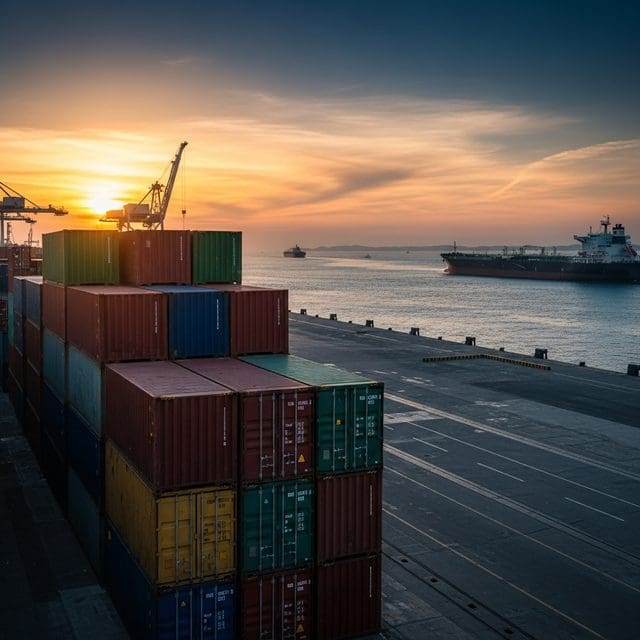
Rising food prices and energy corridor closures are forcing a realignment of global trade and investment strategies.
The delicate machinery of global trade is facing intense friction as supply constraints and geopolitical instability drive up the cost of living. From the energy corridors of the Middle East to the grocery shelves of West Africa, the journey of essential goods is becoming longer and more expensive. The current landscape reveals a world where the efficiency of globalist supply chains is being tested by the hard realities of national sovereignty and localized economic crises.
In Nigeria, the National Bureau of Statistics reported that the average cost of a healthy diet reached N1,513 per adult in February 2026. This represents a 3.76% increase from the previous month and a 12.4% rise year-on-year. This level is roughly 22% above the national average reported in July 2024, highlighting how food costs have outpaced the benchmarks used for wage and poverty metrics. For the individual worker, the dignity of labor is eroded by the rising cost of basic nutrition, as regional disparities continue to widen. These figures underscore how inflation outpaces wage growth when local production is insufficient to meet domestic needs, forcing a reliance on expensive imports.
The strain on physical goods is exacerbated by the near-total shutdown of the Strait of Hormuz. As of May 21, 2026, oil supplies through this vital maritime artery have plummeted to 95% below regular levels due to conflict involving Iran. Commodity markets warn of a 2008-style oil shock if the passage remains obstructed through August. This bottleneck does not just affect fuel prices; it ripples through every supply chain that relies on ocean freight and petroleum-based fertilizers. When the flow of energy is choked, the cost of moving every physical thing increases, from raw materials to finished products on retail shelves.
Domestically, the economic climate remains tense as Kevin Warsh takes the helm of the Federal Reserve. Confirmed by a 54-45 Senate vote and sworn in on May 22, 2026, Warsh faces an immediate challenge following an April inflation spike. Bond markets are pressuring the Fed for action as U.S. consumer sentiment has reached an all-time low. This collapse in sentiment is driven by economic concerns that transcend partisan lines, as Americans feel the pinch of a trade system that has prioritized corporate efficiency over local resilience for too long.
Despite these headwinds, some institutional players are doubling down on global interconnectivity. White Lighthouse Investment Management Inc. recently increased its position in the Vanguard FTSE Emerging Markets ETF (VWO) by 51.1%, bringing its stake to approximately $2.54 million. The firm also lifted its holdings in the Vanguard Total International Stock ETF (VXUS), making it their fourth-largest position. This move signals an aggressive tilt toward non-U.S. equities even as the physical infrastructure of trade remains under siege. While these firms chase yields, domestic manufacturing leaders like First Solar and Loar Holdings continue to navigate volatile waters, with recent filings showing executive stock sales as the industry monitors the impact of supply disruptions.
As the journey of things becomes more perilous, the necessity of domestic manufacturing and secure supply chains becomes clearer. Relying on distant markets for the essentials of life—whether energy or food—leaves the national interest vulnerable to shocks in far-off ports. True prosperity is built on the foundation of local productivity and the protection of the domestic workforce, rather than the fragile promises of globalist efficiency.

Sean Bradley serves as the Senior Correspondent for Trade, Supply Chains, and Global Labor at Just Right News, where he brings a principled, clear-eyed perspective to the complex systems that power the modern world. With a focus on the economic forces that impact the American household, Bradley has distinguished himself as a leading voice in explaining how global shifts in manufacturing and logistics translate to the kitchen table.
Growing up in Long Beach, California, Bradley’s interest in the movement of goods was forged against the backdrop of one of the nation’s most vital maritime gateways. Raised in a community where the towering cranes of the port were a constant fixture on the horizon, he developed an early appreciation for the blue-collar industries that form the backbone of the American economy. This upbringing instilled in him a profound respect for the dockworkers, truckers, and laborers who keep the country moving, a sentiment that remains a cornerstone of his reporting today. For Bradley, trade is not merely a series of abstract figures on a spreadsheet; it is a human endeavor that sustains families and defines the strength of a nation.
Now based in Seattle, Washington, Bradley occupies a strategic vantage point in another of the country’s most significant trade hubs. His location allows him to witness firsthand the intersection of traditional industry and the evolving technological landscape of global logistics. From the Pacific Northwest, he monitors the flow of goods across the ocean, providing Just Right News readers with timely insights into how international tensions, regulatory hurdles, and labor disputes affect the availability and cost of essential goods.
His signature feature series, “The Journey of Things,” has become a staple for readers seeking to understand the intricate path products take from raw materials to the retail shelf. Through this series, Bradley pulls back the curtain on the global marketplace, often highlighting the risks of over-reliance on foreign adversaries and the importance of domestic manufacturing resilience. His reporting consistently emphasizes the conservative values of national sovereignty, free-market competition, and the protection of the American worker from unfair global practices.
As a journalist of Irish heritage, Bradley maintains a deep-seated respect for the dignity of the individual worker and the importance of community stability. He approaches his beat with a commitment to transparency, often questioning the status quo of globalist policies that prioritize corporate efficiency over local prosperity. Whether he is reporting from a warehouse floor or analyzing a new international trade agreement, his goal remains the same: to provide the American public with the truth about where their products come from and what it costs to get them there.
Throughout his tenure at Just Right News, Bradley has remained a steadfast advocate for economic common sense. His work serves as a vital resource for those who believe that a strong nation is built on secure borders, robust trade, and a respected workforce. By combining his local roots in Long Beach with his professional experience in Seattle, Bradley continues to offer a unique and necessary perspective on the forces that shape the American way of life.