

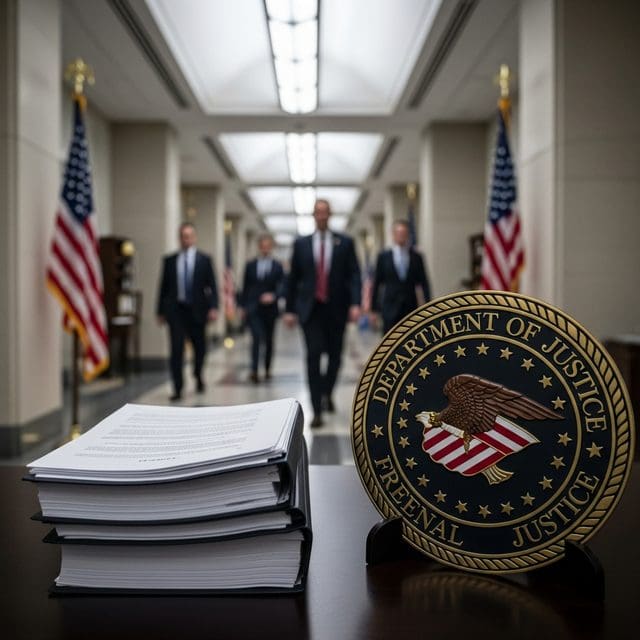
The Department of Justice has ordered Maryland officials to preserve all documents related to 500,000 misprinted ballots as part of a widening federal probe.
The Department of Justice’s election integrity unit has formally ordered Maryland state officials to “preserve all records” related to a misprinted mail-ballot batch that affected more than 500,000 voters. This federal intervention marks a significant escalation in the scrutiny of Maryland’s election administration, specifically focusing on the state’s handling of voter rolls and the logistics of mail-in voting. According to the preservation notice, the mandate covers “all records and papers” concerning ballot printing, vendor communications, list maintenance, and internal correspondence. Federal authorities have explicitly warned Maryland officials that any failure to retain these materials could trigger obstruction-of-justice exposure.
This investigation into Maryland is not an isolated incident but rather a cornerstone of a broader Trump-era DOJ campaign to obtain complete, unredacted statewide voter rolls across the country. To date, at least 22 states and the District of Columbia have refused to provide this unredacted data to federal authorities. In response, the DOJ has utilized Title III of the Civil Rights Act to sue election officials in 29 states, attempting to force the disclosure of these records. The DOJ maintains these records are necessary for ensuring election integrity, while opposing groups, including the ACLU, argue that such transfers risk the creation of a de facto national voter database and violate citizen privacy.
The tension over these records is further complicated by ongoing litigation in the federal court system. In April, the organization Democracy Forward sued the DOJ for allegedly stonewalling Freedom of Information Act (FOIA) requests. These requests sought to uncover the department’s internal communications regarding election administration and its interactions with various outside groups. This litigation is currently viewed by transparency advocates as a primary vehicle for obtaining inspector-general style oversight and potential whistleblower material that could shed light on the internal motivations behind the Maryland probe.
While the DOJ focuses on election records, other federal agencies are grappling with their own information security and transparency failures. U.S. Soccer is currently managing the fallout from a major leak involving the 26-man USMNT World Cup roster. The full list of players was leaked via reporting by The Guardian and verified by The Athletic three days before the planned official reveal at Pier 17. The leak confirmed the surprise inclusion of winger Alejandro Zendejas and the omission of midfielder Tanner Tessmann, effectively stripping Coach Mauricio Pochettino of his scheduled made-for-TV announcement. This breach has raised immediate questions about internal information security lapses and the efficacy of media embargoes within the federation.
In the realm of judicial accountability, court records recently confirmed the sentencing of a former federal officer following an extensive FBI investigation. The officer was sentenced for the distribution of child pornography after investigators discovered hundreds of illicit files downloaded via peer-to-peer applications in April 2025. This case, documented through federal dockets, underscores the role of digital forensics in holding government employees accountable for criminal conduct.
Collectively, these developments illustrate an era defined by the struggle over primary source data. From the DOJ’s demand for Maryland’s ballot records to the FOIA lawsuits seeking to unmask the department’s own internal deliberations, the “paper trail” remains the ultimate arbiter of truth in the administrative state. As these legal battles over records preservation and disclosure continue to unfold in federal courts, the focus remains on whether the government can maintain its own standards of transparency while demanding the same from the states.
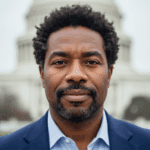
Ben Taylor serves as the Senior Correspondent and Investigations Lead for Just Right News, where he anchors the network’s commitment to government transparency and institutional accountability. With a career defined by a relentless pursuit of the facts, Taylor spearheads the acclaimed feature series “The Paper Trail,” a deep-dive investigative column that prioritizes primary source documentation over political rhetoric. Based in the heart of the nation’s capital, he has earned a reputation as one of the most formidable investigative journalists in Washington, D.C., known specifically for his mastery of public records and the Freedom of Information Act.
Taylor’s approach to journalism is deeply rooted in his upbringing in Kansas City, Missouri. Growing up in the “Show Me State,” he developed a healthy skepticism of centralized power and a profound respect for the common-sense values of the American heartland. This Midwestern foundation informs his reporting today, as he bridges the gap between the complex machinations of federal bureaucracy and the everyday concerns of citizens across the country. For Taylor, investigative reporting is not about chasing headlines; it is about ensuring that the government remains answerable to the people it serves.
As an African American man working within the conservative media landscape, Taylor brings a principled perspective to his beat. He views the Constitution and the right to information as the ultimate equalizers in a free society. His work often highlights how bureaucratic overreach and lack of transparency disproportionately affect individual liberties. By focusing on the “paper trail,” Taylor strips away the spin of partisan talking points, instead providing Just Right News readers with the raw data and internal communications that reveal how their tax dollars are spent and how policy decisions are actually made.
In his role as Investigations Lead, Taylor oversees a team dedicated to uncovering the stories that mainstream outlets often overlook. Whether he is auditing federal spending, investigating regulatory overreach, or exposing inefficiencies within the administrative state, his methodology remains consistent: follow the evidence wherever it leads. His presence in Washington, D.C., allows him to maintain a constant watch over the halls of power, yet he remains steadfastly connected to his roots, ensuring his reporting reflects the clarity and directness of his Missouri home.
Throughout his tenure at Just Right News, Taylor has become a vital voice for those who demand integrity in public office. He believes that a well-informed electorate is the strongest defense against government overreach, and he has dedicated his career to providing the public with the tools they need to hold their leaders accountable. Through “The Paper Trail” and his broader investigative work, Ben Taylor continues to set the standard for rigorous, document-driven journalism that champions the values of transparency, individual responsibility, and the rule of law.