

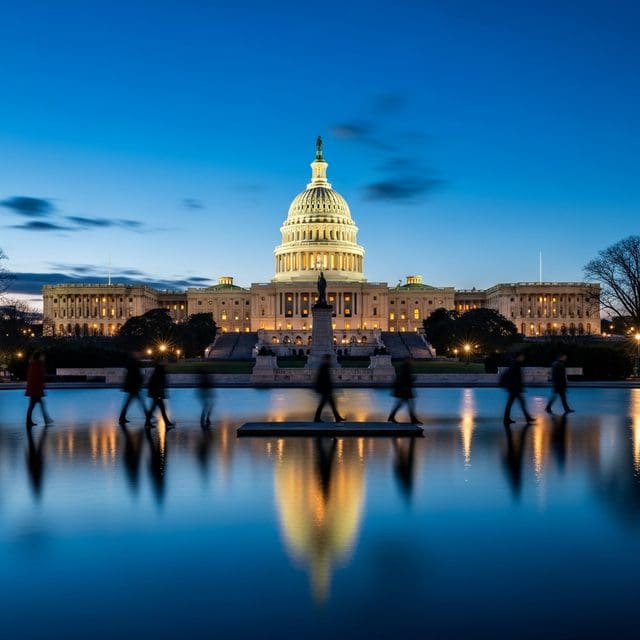
Legislators are racing to revise a massive border security bill after a procedural ruling threatened to derail the $70 billion enforcement package ahead of a June deadline.
Lawmakers in Washington are currently racing to salvage a $70 billion immigration enforcement package following a significant procedural setback in the Senate. On May 15, 2026, the Senate parliamentarian ruled that several core elements of the Republican-led budget reconciliation package violated the Byrd Rule. This ruling is a critical blow to the legislative strategy, as it subjects the entire package to a 60-vote threshold rather than the simple majority allowed under reconciliation rules. The parliamentarian’s decision suggests that the policy shifts regarding migrant processing and visa programs within the bill were deemed too far removed from direct fiscal impact to qualify for the fast-track process.
The package represents one of the most substantial financial commitments to border enforcement in recent years, designed to streamline funding for physical barriers, detention capacity, and personnel. However, the Byrd Rule prohibits the inclusion of provisions that are merely incidental to the federal budget. House leadership has already begun rescheduling votes as committees work to excise the offending language. The pressure to revise the bill is compounded by a self-imposed deadline of June 1, 2026. Without these revisions, the $70 billion enforcement push could stall entirely in a polarized Senate, where reaching a 60-vote consensus on immigration has proven historically difficult.
This legislative friction occurs against a backdrop of significant national expenditures and shifting geopolitical priorities. While the immigration debate intensifies on Capitol Hill, the administration is juggling multiple high-stakes negotiations. President Trump recently announced a 10-day ceasefire between Israel and Lebanon, set to begin April 17, 2026. Simultaneously, the U.S. and Iran are negotiating a three-page peace plan that includes a potential $20 billion release of frozen Iranian funds in exchange for Iran surrendering its enriched uranium stockpile. These international maneuvers have direct domestic impacts; oil prices dropped over 10% after the administration claimed the Strait of Hormuz remained open for transit.
The cost of these engagements is substantial. Reports indicate the U.S. war in Iran has cost the Pentagon $29 billion so far, a figure that jumped by $4 billion in the final weeks of April alone. Despite these rising costs, President Trump told Fox News on May 16 that he would not factor in Americans’ cost-of-living concerns during these specific negotiations. This stance comes as the President also proposed a temporary suspension of the 18.4-cent federal gasoline tax to provide relief to consumers, a move that faces its own uphill battle in Congress as lawmakers must approve any changes to the tax code.
In addition to the fiscal debate, the administration is leveraging defense policy as a diplomatic tool. The President recently described $14 billion in arms sales to Taiwan as a very good negotiating chip in dealings with China. This transactional approach to foreign policy mirrors the internal struggles over the immigration budget, where every dollar and policy provision is being weighed against broader political objectives. Meanwhile, in the private sector, technological shifts are moving faster than policy. Anthropic CEO Dario Amodei recently met with White House officials to resolve disputes over the Claude AI model, while the company World announced major integrations with platforms like Zoom and Shopify to provide proof-of-human authentication.
For local communities and border states, the primary concern remains the fate of the $70 billion enforcement package. The outcome of the current legislative scramble will determine whether the federal government can implement its proposed shifts in migrant population management and border security before the summer deadline. If the policy-heavy provisions cannot be successfully decoupled from the funding, the administration may face a significant gap in its planned enforcement resources. For now, the integrity of the social contract and the rule of law at the border remain tied to the technicalities of Senate procedure and the ability of lawmakers to navigate the strictures of the Byrd Rule while balancing a complex array of international and domestic crises.

Julie Harris serves as a Staff Writer for Just Right News, where she tackles some of the most pressing and complex issues facing the nation today. As the lead reporter for the Migration, Demographics & Cultural Shifts beat, Julie provides a grounded, principled perspective on how the movement of people and the changing makeup of communities are reshaping the American landscape. Her work is defined by a commitment to exploring the long-term consequences of social change, prioritizing the stability of local institutions and the preservation of national identity.
Her deep understanding of these issues is rooted in her upbringing in Tucson, Arizona. Growing up in a prominent border state, Julie witnessed firsthand the intricate realities of migration and the profound impact it has on local infrastructure, law enforcement, and the social fabric. This early exposure instilled in her a respect for the rule of law and a keen awareness of the challenges that arise when federal policies fail to align with the needs of border communities. Her reporting often reflects this lived experience, bringing a necessary level of nuance to topics that are often treated with abstraction in coastal newsrooms.
Now based in Santa Fe, New Mexico, Julie continues to report from the heart of the American Southwest. Her location provides a unique vantage point to observe the intersection of traditional regional cultures and the modern shifts brought about by both internal and external migration. In Santa Fe, a city defined by its rich history and distinct cultural heritage, she finds a perfect environment to explore how communities strive to maintain their character while navigating the pressures of a rapidly changing world. This perspective allows her to bridge the gap between policy debates in Washington and the reality of life in the high desert.
At Just Right News, Julie’s work is characterized by a dedication to examining the data and the human stories that define the “New Mosaic” of America. Her signature feature series, “The New Mosaic,” has become a cornerstone of her reporting. Through this series, Julie explores the evolving social architecture of the United States, documenting how shifts in population affect everything from local economies to the political landscape. She brings a critical eye to the narrative of demographic inevitability, instead asking how these shifts impact the average citizen’s sense of belonging and the integrity of the American social contract.
Julie’s background and her dedication to conservative principles make her a vital voice in contemporary journalism. She understands that demographics are more than just numbers on a spreadsheet; they represent the future of the American family and the nation’s enduring legacy. Through her diligent reporting and insightful analysis, Julie Harris ensures that her readers are informed about the forces shaping their world, providing a perspective that is as thoughtful as it is necessary for the modern era.