

American and Canadian workers face a dual threat as enterprise AI spending triggers mass layoffs while shifting immigration policies leave manual laborers in legal and medical limbo.
The American worker is currently caught between two relentless forces: the rapid deployment of artificial intelligence and a chaotic immigration landscape that destabilizes the manual trades. While corporate boardrooms funnel an estimated $725 billion into AI initiatives, the result for the workforce has been a wave of displacement. In 2026 alone, more than 113,000 workers have been handed pink slips as firms like Cloudflare, Upwork, and BILL restructure around automated agents. This shift is no longer confined to Silicon Valley; it has reached into the everyday economy, hitting payment processors like PayPal and ticketing giants like Ticketmaster.
This is a fundamental rewriting of the labor contract. Companies are explicitly restructuring around “agentic AI,” a move that saw Upwork eliminate roughly one in four positions and Cloudflare cut 20% of its staff. For the second straight month, AI has been the primary driver for U.S. job cuts, with technology firms alone announcing more than 85,000 layoffs this year. While some enterprises have seen a 74% rollback rate on AI customer communication agents due to poor performance, capital remains focused on replacing human headcount with software wherever possible.
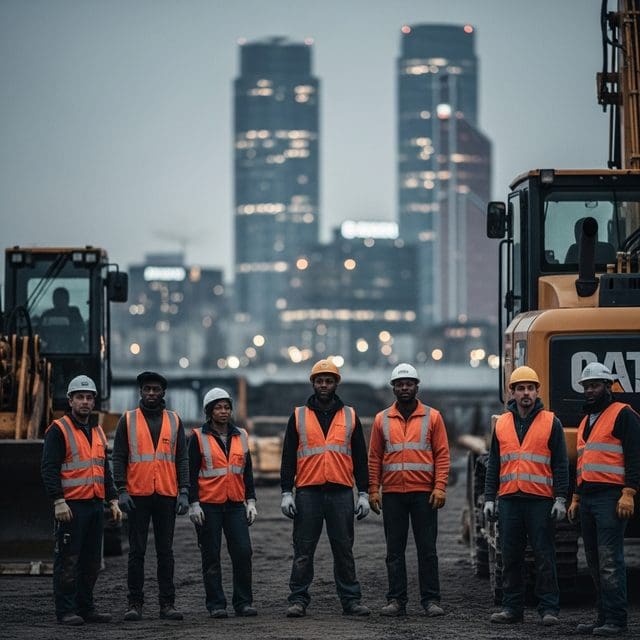
While white-collar roles are being automated, the backbone of the physical economy—construction and agriculture—is being fractured by policy failures. In the Pacific Northwest and across the border, migrant workers who fill essential roles are falling into a legal and medical void. Sanctuary Health reports a surge in demand from laborers who lost medical coverage after work permits expired. These are men and women injured on job sites who now fear seeking care at public hospitals because they lack the documentation to access the systems they support through their labor.
The instability is exacerbated by a broken immigration pipeline that offers work but no security. The primary permanent residency pilot for migrant care workers crashed within hours of opening in 2025 and will not reopen in 2026. This leaves seasonal agricultural workers and construction crews with no clear path to stability. When workers are kept in a state of perpetual transience, it depresses the dignity of the trade and creates an underclass easily exploited by those looking to undercut local wage standards.
Broader economic indicators suggest a cooling period that will hit the working class hardest. The S&P 500 triggered a new sell signal on May 15, and Boeing shares tumbled after a trade mission to China yielded only 200 aircraft orders, falling far short of the 500 expected. These macro shifts, combined with the resignation of Stephen I. Miran from the Federal Reserve Board, signal a period of institutional flux. For the worker on the ground, these maneuvers translate to tighter credit and shrinking pools of stable, full-time opportunities.
True economic stability requires a commitment to the people who build, harvest, and maintain the country. As enterprises accelerate the transition to AI and governments struggle to manage labor through expiring permits, the priority must remain on protecting the livelihoods of those who perform tangible work. Without a focus on real wages and the stability of manual trades, the shift toward automation and irregular labor status threatens to hollow out the middle of the workforce, leaving families to navigate a volatile economic future alone.

Tom Blake serves as the Senior Correspondent for Labor, Wages, and Automation at Just Right News, where he brings a grounded, principled perspective to the most pressing economic issues facing the American heartland. As the lead voice behind the acclaimed feature series “The Price of Work,” Tom focuses his reporting on the intersection of traditional industry and the rapidly evolving technological landscape, always prioritizing the dignity of the individual worker and the health of the American family.
Tom’s deep understanding of the labor market is not merely academic; it is rooted in his upbringing in Detroit, Michigan. Growing up in the shadow of the automotive industry, he witnessed firsthand the triumphs and tribulations of the American blue-collar workforce. He saw how the stability of a manufacturing job could build a community and, conversely, how the erosion of those industries could tear the social fabric apart. This background instilled in him a lifelong respect for the trades and a healthy skepticism toward economic policies that prioritize globalist interests over the well-being of local communities.
Now based in Pittsburgh, Pennsylvania, Tom continues to report from the front lines of the shifting economy. Pittsburgh, a city that has reinvented itself while maintaining its gritty, industrious spirit, provides the perfect vantage point for his beat. From the steel mills that remain to the high-tech robotics labs reshaping the city’s future, Tom explores how automation is changing the nature of employment. His reporting often highlights the tension between innovation and tradition, arguing that while progress is inevitable, it must not come at the expense of the American worker’s ability to provide for their family through honest, meaningful labor.
In his role at Just Right News, Tom has become a vital voice for those who feel overlooked by mainstream economic coverage. He rejects the notion that the decline of American manufacturing is an unavoidable casualty of the modern era. Instead, his work often examines how regulatory overreach, rising energy costs, and the unchecked rise of automation impact the take-home pay of everyday citizens. Through “The Price of Work,” Tom delves into the true cost of economic shifts, looking beyond the raw data to tell the stories of the people behind the statistics.
Tom’s reporting is characterized by a commitment to the conservative values of self-reliance, fiscal responsibility, and the preservation of the American dream. He believes that a strong nation is built on a foundation of stable jobs and fair wages, and his work seeks to hold both government and corporate entities accountable to that standard. Whether he is interviewing a shop floor manager about the implementation of new AI technology or analyzing the impact of wage inflation on small businesses, Tom provides a clear-eyed analysis that resonates with readers who value hard work and common sense.
Through his dedicated coverage, Tom Blake remains a steadfast advocate for the American workforce, ensuring that the voices of those in the industrial heartland are heard loud and clear in the national conversation. His perspective is essential for anyone seeking to understand the complex realities of labor and automation in the twenty-first century.