

New federal stocking mandates and persistent inflation are creating a dual crisis for low-income families striving for economic mobility.
The path to the American dream is narrowing for those at the bottom of the economic ladder as a combination of regulatory shifts and persistent inflation reshapes the social safety net. While the top 1% of households held a record 31.7% of national wealth in late 2025, low-income families are facing a tightening vise of rising costs and diminishing access to essential services.
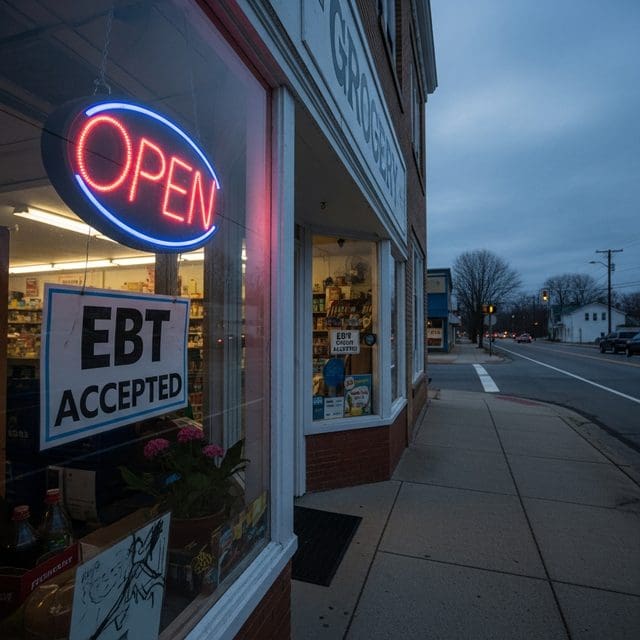
A significant disruption to the local grocery landscape is looming. On May 8, 2026, the USDA finalized new stocking requirements for retailers participating in the Supplemental Nutrition Assistance Program (SNAP). Stores must now carry seven varieties in every staple food category, more than doubling the previous requirement of three. While intended to improve nutritional access, industry analysts warn the move could backfire. Approximately 5,000 small-scale and rural retailers may be forced to drop EBT acceptance by November 2026, unable to meet the new inventory costs. For many families in isolated communities, these local shops are the only accessible lifeline, and their exit from the program could create vast new food deserts.
This regulatory pressure arrives as the broader economy remains inhospitable to those without significant assets. According to data from Consumer Affairs, the annual income required to purchase a typical home with a 10% down payment has reached $120,796. This figure sits roughly 48% above the national median household income of $81,604, effectively locking a generation of working-class families out of the primary vehicle for generational wealth building. With mortgage rates hovering at 6.37%, the dream of ownership is being replaced by the reality of rising rents, which have climbed 50% since 2017.
The strain on the social safety net is further compounded by legislative and geopolitical factors. Following the HR1 cuts that saw three million people lose SNAP benefits earlier this year, the House Agriculture Committee has proposed an additional $6.2 billion reduction in SNAP funding below fiscal year 2026 levels. These cuts are being felt acutely as grocery prices remain 32% higher than pre-2019 levels.
External pressures are also keeping basic necessities expensive. Despite ongoing peace negotiations in the Middle East, including recent high-level meetings in Miami between U.S. officials and Qatari mediators, volatility in the Strait of Hormuz has kept energy markets on edge. Following a military exchange on May 7, oil futures rose, and retail gas prices are expected to remain elevated through the upcoming midterm elections. For the 52% of American families who currently lack the resources for a secure living, these compounding costs represent a significant barrier to the dignity of self-sufficiency.
True economic mobility requires a stable foundation, yet the current environment of high-interest rates, strict inventory mandates for small businesses, and shrinking benefit pools suggests that the springboard of the safety net is becoming increasingly frayed. As local civic institutions and small businesses struggle to fill the gaps left by federal policy, the gap between the rising and the falling in the American economy continues to widen.

James Foster serves as the Senior Correspondent for Inequality and the Social Safety Net at Just Right News, where he brings a principled and nuanced perspective to the most pressing economic challenges facing the nation. With a career dedicated to exploring the intersection of policy and personal responsibility, Foster has become a leading voice in documenting how government programs and economic shifts impact the American family. His reporting is characterized by a commitment to the “human element,” moving beyond cold statistics to highlight the stories of resilience, work, and community that define the modern American experience.
Foster’s perspective is deeply rooted in his upbringing in Birmingham, Alabama. Growing up in a city with a rich industrial heritage and a history of economic transformation, he witnessed firsthand the importance of the dignity of work and the strength of local institutions. In Birmingham, he saw how the most effective safety nets were often those woven by neighbors, faith-based organizations, and local civic groups. This background instilled in him a lifelong skepticism of “one-size-fits-all” solutions from distant bureaucracies, favoring instead the localized, community-driven support systems that he frequently champions in his writing.
Now based in Atlanta, Georgia, Foster operates from one of the most dynamic and rapidly evolving metropolitan hubs in the South. His location provides a front-row seat to the stark contrasts of the modern economy. From the gleaming towers of Atlanta’s financial districts to the struggling neighborhoods on the city’s periphery, Foster finds the stories that illustrate the complexities of upward mobility. His reporting from the Sun Belt serves as a microcosm for the national debate on poverty, highlighting how inflation, housing costs, and labor market shifts affect the working class in real-time.
As the lead for the acclaimed feature series “America’s Balancing Act,” Foster explores the delicate tension between providing a necessary hand up and fostering long-term independence. The series has become a cornerstone of Just Right News, offering a deep dive into the unintended consequences of social welfare policies. Foster’s work often focuses on the “cliff effect” and other systemic hurdles that can inadvertently discourage employment, arguing that true compassion is measured by how many people are empowered to leave the safety net, rather than how many are added to it.
Throughout his tenure, Foster has remained dedicated to the mission of Just Right News, providing a clear-eyed, conservative analysis of social issues. He believes that a free society thrives when individuals are empowered and the private sector is allowed to innovate. Whether he is interviewing small business owners about the challenges of a changing workforce or documenting the success of private charitable initiatives, Foster’s goal is to provide readers with the truth about the state of the American Dream. His work serves as a vital reminder that while the challenges of inequality are great, the solutions are often found in the strength of the American spirit and the preservation of traditional values.