

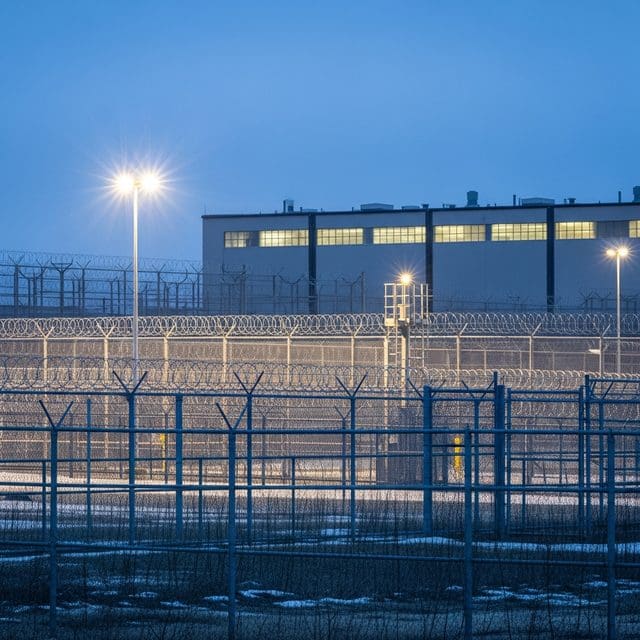
The Trump administration is scaling up detention facilities and local enforcement partnerships despite a marked increase in detainee fatalities and the closure of internal oversight offices.
The Trump administration is moving forward with a significant expansion of the federal immigration detention infrastructure, even as internal data reveals a sharp increase in fatalities and use-of-force incidents within the system. Immigration and Customs Enforcement (ICE) is currently on track for a record year of detainee deaths, with 18 fatalities reported in the first four months of 2026. This figure represents a steep climb compared to the 31 deaths recorded in all of 2025.
Among the recent fatalities is Denny Adan Gonzalez, a 33-year-old Cuban national who died by suicide at the Stewart Detention Center in Georgia on April 29. The incident highlights ongoing concerns regarding the mental health and medical oversight of individuals in federal custody. Despite these trends, the Department of Homeland Security has shuttered internal watchdog offices previously tasked with tracking immigrant abuse, a move that critics suggest reduces transparency as the detention population is projected to grow.
While the current ICE detention population sits at approximately 58,000—down from a January peak of 72,000—the administration is actively targeting a capacity of 100,000 for the 2026 fiscal year. This expansion includes the planned acquisition of 11 new warehouse-style facilities to accommodate a broader enforcement mandate. The administrative push is supported by a massive expansion of the 287(g) program, which allows local law enforcement to perform certain immigration functions. These agreements have surged from 135 prior to the current administration to 1,400 across 41 states and territories.
Operational data also indicates a more aggressive posture within existing facilities. A recent investigation found that ICE guards utilized physical violence or chemical agents in approximately 800 cases during the administration’s first year back, marking a 37 percent increase year-over-year. This follows a January 2026 report from Senator Jon Ossoff which documented 88 credible reports of physical or sexual abuse within the detention network.
Proponents of the expansion argue that increased capacity and local cooperation are essential for maintaining the rule of law and managing the logistics of large-scale removals. However, the rising death toll and the removal of internal oversight mechanisms present a complex challenge for an agency tasked with balancing rigorous enforcement with the basic safety requirements of civil detention. As the administration moves to secure more beds, the focus remains on whether the current infrastructure can sustain such growth without further compromising the safety of those in federal custody.
The expansion comes at a time of broader economic and logistical shifts. While U.S. manufacturers have seen growth for four consecutive months, rising oil prices and geopolitical tensions in the Middle East have increased the cost of transport and facility maintenance. These economic headwinds, coupled with the immediate shutdown of Spirit Airlines following a failed government bailout, underscore the volatile environment in which federal agencies are operating. As ICE seeks to fulfill its 2026 mandate, the cost of detention and the legal implications of rising custody incidents will likely remain central to the national debate on migration management.

Julie Harris serves as a Staff Writer for Just Right News, where she tackles some of the most pressing and complex issues facing the nation today. As the lead reporter for the Migration, Demographics & Cultural Shifts beat, Julie provides a grounded, principled perspective on how the movement of people and the changing makeup of communities are reshaping the American landscape. Her work is defined by a commitment to exploring the long-term consequences of social change, prioritizing the stability of local institutions and the preservation of national identity.
Her deep understanding of these issues is rooted in her upbringing in Tucson, Arizona. Growing up in a prominent border state, Julie witnessed firsthand the intricate realities of migration and the profound impact it has on local infrastructure, law enforcement, and the social fabric. This early exposure instilled in her a respect for the rule of law and a keen awareness of the challenges that arise when federal policies fail to align with the needs of border communities. Her reporting often reflects this lived experience, bringing a necessary level of nuance to topics that are often treated with abstraction in coastal newsrooms.
Now based in Santa Fe, New Mexico, Julie continues to report from the heart of the American Southwest. Her location provides a unique vantage point to observe the intersection of traditional regional cultures and the modern shifts brought about by both internal and external migration. In Santa Fe, a city defined by its rich history and distinct cultural heritage, she finds a perfect environment to explore how communities strive to maintain their character while navigating the pressures of a rapidly changing world. This perspective allows her to bridge the gap between policy debates in Washington and the reality of life in the high desert.
At Just Right News, Julie’s work is characterized by a dedication to examining the data and the human stories that define the “New Mosaic” of America. Her signature feature series, “The New Mosaic,” has become a cornerstone of her reporting. Through this series, Julie explores the evolving social architecture of the United States, documenting how shifts in population affect everything from local economies to the political landscape. She brings a critical eye to the narrative of demographic inevitability, instead asking how these shifts impact the average citizen’s sense of belonging and the integrity of the American social contract.
Julie’s background and her dedication to conservative principles make her a vital voice in contemporary journalism. She understands that demographics are more than just numbers on a spreadsheet; they represent the future of the American family and the nation’s enduring legacy. Through her diligent reporting and insightful analysis, Julie Harris ensures that her readers are informed about the forces shaping their world, providing a perspective that is as thoughtful as it is necessary for the modern era.