

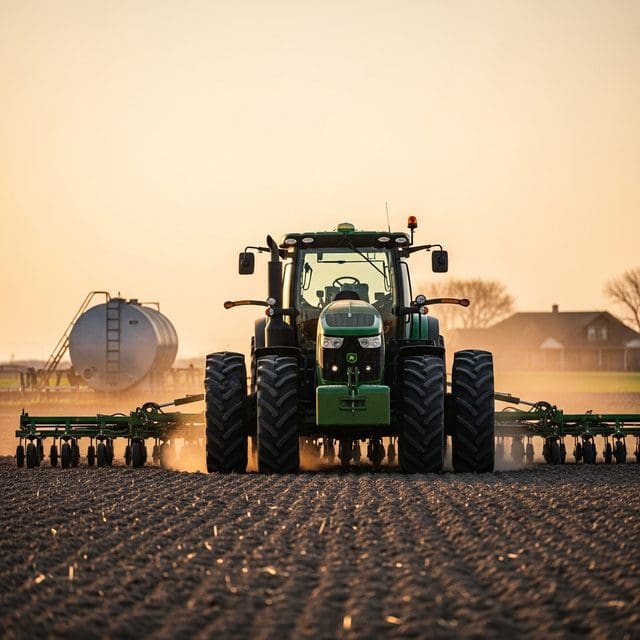
Recent shifts in global energy policy and naval blockades are creating a volatile environment for American producers reliant on affordable fuel and stable chemical supply chains.
The delicate balance of the American agricultural economy is once again at the mercy of shifting geopolitical tides. While the headlines focus on naval blockades and international diplomacy, the real-world consequences are being felt in the tractor cabs and irrigation districts of the heartland. For the American farmer, energy is not just a line item; it is the lifeblood of food production, affecting everything from the cost of diesel to the manufacturing of essential fertilizers.
Recent developments in the Middle East have sent mixed signals to the markets. Following a brief 10-day ceasefire between Israel and Lebanon and initial reports of the Strait of Hormuz remaining open, oil prices saw a significant drop of over 10 percent. This provided a momentary reprieve for producers facing high operational costs. However, that stability was short-lived as the administration recently instructed aides to prepare for an extended naval blockade of Iran. This move, aimed at squeezing the Iranian economy, has already begun to push energy futures back upward, creating a climate of uncertainty for those planning their summer harvest logistics.
This volatility highlights a persistent vulnerability in our domestic food security. When energy prices fluctuate wildly due to overseas conflict, the cost of moving water and maintaining crop health rises. For families in the San Joaquin Valley and across the Great Plains, these are not abstract policy debates. They are practical challenges to the viability of the family farm. The reliance on global energy markets for local food production underscores the need for a more grounded approach to domestic resource management that prioritizes stability over reactive federal posturing.
On the legislative front, the stakes for the agricultural sector are rising as primary season approaches. In Ohio’s 11th Congressional District, the upcoming primary could determine the future leadership of the House Agriculture Committee. This committee holds immense power over federal oversight of the EPA and the Department of Agriculture, particularly regarding how these agencies regulate the very inputs—pesticides and fertilizers—that are currently being squeezed by global supply chain disruptions.
As regulators continue to weigh new environmental mandates, the disconnect between Washington policy and the reality of the field remains stark. The focus must remain on ensuring that the American producer has the tools and the affordable energy required to feed the nation. While the Pentagon explores new AI integrations with Google and Anthropic to manage classified networks and strategic defense, the humble American farmer is more concerned with the cost of the fuel in their tank and the nitrate levels in their well water. Without a stable energy environment and common-sense regulatory oversight, the burden of these global shifts will ultimately be passed down to the American consumer at the grocery checkout line.

Eric Nolan serves as the Senior Correspondent for Food, Water, and Environmental Health at Just Right News, where he brings a principled, common-sense perspective to the most fundamental issues facing the American public. With a career dedicated to uncovering the truth behind the policies that govern our natural resources, Eric has become a trusted voice for readers who value traditional stewardship over bureaucratic overreach. His reporting is defined by a commitment to the idea that true environmentalism is rooted in the protection of the American family and the preservation of the nation’s agricultural heritage.
Raised in Fresno, California, Eric’s worldview was shaped in the heart of the San Joaquin Valley. Growing up in one of the world’s most productive agricultural hubs, he witnessed firsthand the vital connection between the land, the water, and the dinner table. In Fresno, he saw the resilience of farmers and the devastating impact that distant, top-down regulations can have on local communities. This upbringing instilled in him a deep respect for the producers who feed the country and a lifelong skepticism toward the alarmist narratives often pushed by mainstream media. For Eric, environmental health is not an abstract political talking point; it is a matter of ensuring that the people who work the land have the freedom and the resources to do so effectively.
Now based in Eugene, Oregon, Eric operates from a unique vantage point in the Pacific Northwest. Living in a region often defined by intense environmental debate, he provides a necessary counter-narrative to the prevailing trends of the area. From his base in Eugene, he monitors the shifting tides of federal and state policies, ensuring that the voices of rural citizens and property owners are not drowned out by urban activism. His reporting often bridges the gap between the rugged realities of the outdoors and the legislative halls where decisions are made, offering a grounded perspective that prioritizes local sovereignty and practical solutions.
As the lead for the acclaimed feature series “Earth on the Table,” Eric explores the intricate journey of the American food supply. He tackles critical issues such as water rights, soil health, and food security through a lens of national stability and individual liberty. He believes that a healthy environment and a thriving economy are not mutually exclusive, but rather two sides of the same coin of national prosperity. His work consistently highlights how innovation and private-sector ingenuity are the most effective tools for ensuring clean water and a safe food supply, rather than the expansion of the administrative state.
At Just Right News, Eric’s reporting serves as a vital resource for those who seek accountability and transparency. Whether he is investigating the impact of federal land management on local economies or examining the safety of the national food infrastructure, his work remains anchored in the values of heritage and hard work. Eric Nolan continues to be a leading voice in environmental journalism, championing the belief that the best way to protect our natural resources is to empower the people who live and work closest to them.