


New data reveals that 90% of HR leaders struggle with workforce planning, highlighting a critical disconnect between institutional education and the practical needs of the labor market.
The bridge between the classroom and the career field appears to be fracturing under the weight of outdated systems and economic volatility. New research released by OrgChart indicates a staggering 90% of human resources leaders are currently facing significant challenges with their workforce planning tools. This systemic failure suggests that while students are investing heavily in their education, the institutions and corporations meant to absorb them are struggling to map out where that talent is actually needed.
According to the report, 47% of HR leaders admit their current planning processes are ineffective, hampered by economic uncertainty and a lack of strategic foresight. This data serves as a sobering reminder that education cannot exist in a vacuum. When the private sector lacks the clarity to forecast labor needs, the value proposition of a traditional degree diminishes, leaving graduates with debt but no clear path to upward mobility. For the modern worker, the risk is not just the cost of tuition, but the opportunity cost of training for roles that bureaucratic planning tools fail to accurately predict.
Institutional friction is not limited to the corporate world. In the collegiate sphere, the case of Texas Tech quarterback Brendan Sorsby illustrates how rigid administrative and regulatory frameworks can stall individual progress. Sorsby currently finds himself at the mercy of an NCAA investigation, facing a precedent that could prematurely end his collegiate career. Whether in the boardroom or on the gridiron, the theme remains the same: top-down bureaucracy often prioritizes procedural adherence over the development and protection of human capital. This environment creates a chilling effect on personal achievement, as individuals are forced to navigate a maze of rules that often seem disconnected from the actual goal of skill development and performance.
While some activists call for a “May Day economic blackout” involving school and work walkouts, such gestures do little to solve the underlying structural issues. Real progress requires a pivot toward practical, market-aligned solutions rather than performative protests. The OrgChart findings suggest that the current reliance on legacy planning tools is a barrier to entry for the next generation of workers. Without a modernization of how we track and deploy talent, the investment made by students in their own human capital remains at risk of being misallocated by leaders who lack the data to make informed decisions.
Education must be viewed through the lens of personal responsibility and economic utility. As the labor market becomes increasingly complex, the responsibility falls on both public and private institutions to remove the bureaucratic barriers that prevent individuals from reaching their full potential. The current data proves that the status quo is no longer sufficient for a workforce that demands agility and merit-based advancement. If 90% of HR leaders cannot effectively plan for their future workforce, then the education system must become more responsive to the immediate, practical needs of the economy to ensure that upward mobility remains a reality for those willing to work for it.
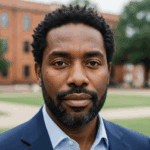
Daniel Owens serves as a Senior Correspondent for Just Right News, where he leads the newsroom’s coverage of Education, Workforce, and Upward Mobility. In an era where the national conversation often overlooks the practical foundations of success, Owens brings a principled perspective to the forefront of the media landscape. His work is defined by a commitment to the idea that a strong society is built on the pillars of quality education, a robust work ethic, and the removal of bureaucratic barriers to individual achievement.
Born and raised in Cleveland, Ohio, Owens’s worldview was shaped by the industrial landscape of the Midwest. Growing up in a city known for its grit and resilience, he witnessed firsthand the transformative power of steady employment and the devastating effects of economic stagnation. This background instilled in him a deep respect for the American worker and a healthy skepticism toward top-down government solutions that often fail to reach the communities they intend to help. As an African American man who has navigated the path to professional success, Owens approaches his beat with a nuanced understanding of how meritocracy and personal responsibility intersect with opportunity. He frequently draws on his roots to highlight the importance of family stability and community-led initiatives in fostering the next generation of leaders.
At Just Right News, Owens is the architect of the acclaimed feature series, “The Learning Curve.” Through this platform, he explores the evolving landscape of American schooling, from the rise of the school choice movement to the revitalization of trade schools and vocational training. He frequently challenges the status quo of higher education, advocating for a return to academic rigor and the practical alignment of degrees with market demands. For Owens, education is not merely about obtaining credentials; it is about equipping young people with the tools necessary to lead self-sufficient, meaningful lives. His reporting on “The Learning Curve” has become essential reading for parents and policymakers who believe that educational competition and parental rights are the keys to a brighter future.
Now based in Raleigh, North Carolina, Owens finds himself at the heart of one of the nation’s most dynamic regions for innovation and growth. Raleigh’s unique blend of traditional values and a fast-paced economy provides the perfect backdrop for his reporting on the modern workforce. From the tech hubs of the Research Triangle to the rural communities of the South, he tracks how shifts in the economy are impacting families and local industries. His reporting often highlights the success stories of entrepreneurs and workers who are thriving by embracing the values of hard work and innovation.
Throughout his career, Daniel Owens has remained a steadfast voice for the student seeking a better path and the worker striving for a better life. His reporting for Just Right News serves as a vital resource for readers who value common-sense solutions to the challenges of the 21st-century economy. By focusing on the intersection of policy and the human spirit, Owens continues to provide a roadmap for how individuals and communities can achieve lasting upward mobility.