

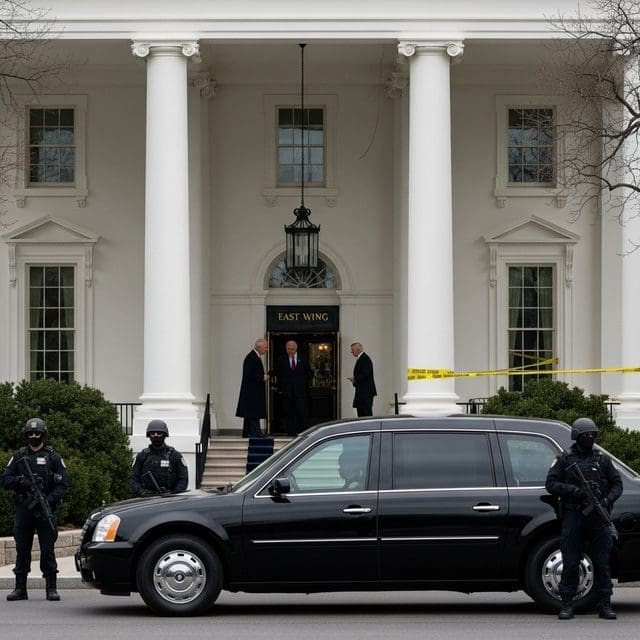
Following an assassination attempt at the press gala, President Trump faces a complex week of diplomatic friction with Britain and domestic legal challenges over immigration infrastructure.
The shooting at the White House Correspondents Association dinner on April 26 has fundamentally altered the landscape of the current legislative and diplomatic session. While President Trump, the First Lady, and Cabinet members were successfully evacuated after a gunman, identified as Cole Allen, opened fire, the administrative fallout is only beginning. Allen, who traveled from Los Angeles to Washington via train, has remained uncooperative with investigators. However, digital footprints on the social media platform Bluesky suggest a history of rhetoric comparing the President to historical dictators and criticizing the administration’s stance on Iran.
Despite the security breach, the state visit of King Charles III and Queen Camilla proceeded on April 27. The President utilized the visit to show the British monarch the site of the East Wing damage, but the ceremonial veneer has not masked significant policy rifts with Prime Minister Keir Starmer. The primary friction point remains the conflict with Iran. While Tehran recently offered a deal to reopen the Strait of Hormuz contingent on the cessation of U.S. blockades, Starmer has reportedly refused a deeper U.K. military role, prompting the President to threaten modifications to existing tariff agreements.
On the domestic front, the administration’s drive for rapid infrastructure deployment is meeting resistance in the courts. A series of lawsuits, including a notable case in New Jersey regarding a $129 million warehouse conversion in Roxbury, allege the administration sidestepped federal regulations to create facilities for 1,500 ICE detainees. Critics point to the lack of basic amenities—such as the provision of only four toilets for the entire population—as evidence that the executive branch is bypassing standard procurement and humanitarian oversight.
In California, the political alignment of the tech elite appears to be shifting. Google co-founder Sergey Brin has reportedly spent $57 million to oppose a retroactive 5% tax on residents with a net worth exceeding $1 billion. This move, coupled with Brin’s recent praise for the President’s economic direction, suggests a fracturing of the traditional liberal consensus in Silicon Valley as high-net-worth individuals react to aggressive state-level wealth redistribution measures.
Simultaneously, Governor Ron DeSantis has moved to solidify Republican influence in Florida. On April 27, DeSantis unveiled a new congressional map just 24 hours before a special legislative session. An analysis of the boundaries suggests the map could net the GOP four additional House seats, increasing their current 20-8 advantage. This move highlights a broader trend of state-level executives taking direct control over redistricting processes ahead of the 2026 midterms.
Internationally, the economic model is shifting as well. Canadian Prime Minister Mark Carney announced the ‘Canada Strong Fund,’ a C$25 billion sovereign wealth fund. Unlike the massive, state-managed funds of Norway or Middle Eastern nations, the Canadian model is designed to be open to individual citizen investments, focusing on domestic energy and infrastructure. This move comes as Canada opens new pathways to citizenship for those with ancestral ties, a policy already seeing high interest from Americans looking northward amidst domestic volatility.
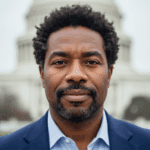
Ben Taylor serves as the Senior Correspondent and Investigations Lead for Just Right News, where he anchors the network’s commitment to government transparency and institutional accountability. With a career defined by a relentless pursuit of the facts, Taylor spearheads the acclaimed feature series “The Paper Trail,” a deep-dive investigative column that prioritizes primary source documentation over political rhetoric. Based in the heart of the nation’s capital, he has earned a reputation as one of the most formidable investigative journalists in Washington, D.C., known specifically for his mastery of public records and the Freedom of Information Act.
Taylor’s approach to journalism is deeply rooted in his upbringing in Kansas City, Missouri. Growing up in the “Show Me State,” he developed a healthy skepticism of centralized power and a profound respect for the common-sense values of the American heartland. This Midwestern foundation informs his reporting today, as he bridges the gap between the complex machinations of federal bureaucracy and the everyday concerns of citizens across the country. For Taylor, investigative reporting is not about chasing headlines; it is about ensuring that the government remains answerable to the people it serves.
As an African American man working within the conservative media landscape, Taylor brings a principled perspective to his beat. He views the Constitution and the right to information as the ultimate equalizers in a free society. His work often highlights how bureaucratic overreach and lack of transparency disproportionately affect individual liberties. By focusing on the “paper trail,” Taylor strips away the spin of partisan talking points, instead providing Just Right News readers with the raw data and internal communications that reveal how their tax dollars are spent and how policy decisions are actually made.
In his role as Investigations Lead, Taylor oversees a team dedicated to uncovering the stories that mainstream outlets often overlook. Whether he is auditing federal spending, investigating regulatory overreach, or exposing inefficiencies within the administrative state, his methodology remains consistent: follow the evidence wherever it leads. His presence in Washington, D.C., allows him to maintain a constant watch over the halls of power, yet he remains steadfastly connected to his roots, ensuring his reporting reflects the clarity and directness of his Missouri home.
Throughout his tenure at Just Right News, Taylor has become a vital voice for those who demand integrity in public office. He believes that a well-informed electorate is the strongest defense against government overreach, and he has dedicated his career to providing the public with the tools they need to hold their leaders accountable. Through “The Paper Trail” and his broader investigative work, Ben Taylor continues to set the standard for rigorous, document-driven journalism that champions the values of transparency, individual responsibility, and the rule of law.