

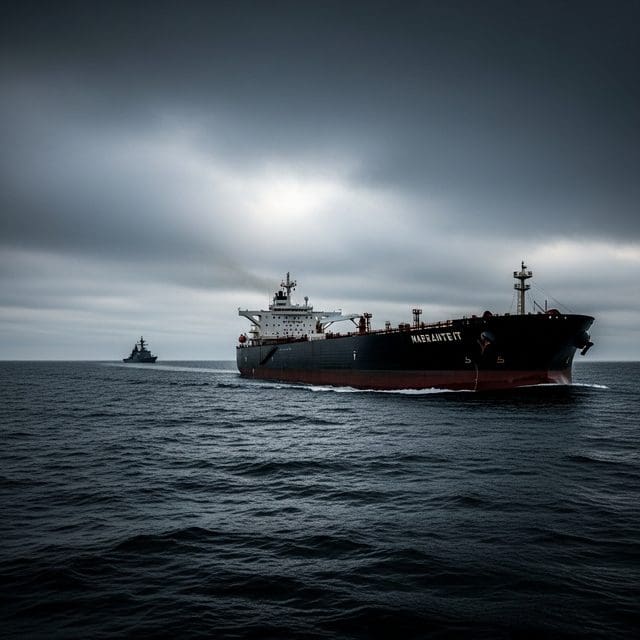
Geopolitical tensions in the Strait of Hormuz have sent crude oil prices soaring above $100 per barrel, forcing a massive recalibration of global shipping routes and domestic energy costs.
The delicate machinery of global trade is currently facing its most severe stress test in decades. Following an Iranian attack on oil tankers on April 22, 2026, the Strait of Hormuz—the world’s most vital energy artery—remains closed. This bottleneck has driven crude oil prices past the $100-per-barrel threshold, a development that promises to ripple through every stage of the American supply chain, from the factory floor to the grocery shelf.
For the American blue-collar worker, the geopolitical standoff in the Middle East is not a distant abstraction; it is a direct tax on the dignity of their labor. As SLB and Halliburton warned on April 24, crude prices are expected to remain elevated well beyond pre-war levels. This ensures that the cost of transporting raw materials and finished goods will remain high, squeezing the margins of domestic manufacturers who are already battling globalist policies that favor offshore efficiency over local resilience.
The U.S. government has responded with a mix of military and economic leverage. On April 23, the military seized three Iranian tankers, including the M/T Majestic X in the Indian Ocean. This was followed by the Treasury Department imposing sanctions on a Chinese oil refinery and dozens of shipping firms. These actions aim to disrupt the flow of illicit revenue to Tehran, yet they also highlight the precarious nature of a global economy that relies on hostile actors for its primary fuel source.
While the White House has extended a ceasefire to allow Iranian factions to return to peace talks, the shipping industry is already pricing in a new era of risk. The Breakwave Tanker Shipping ETF (BWET) has surged more than 600% this year, vastly outperforming traditional energy stocks. This spike reflects the astronomical cost of securing and insuring the vessels that carry the lifeblood of modern industry. When shipping costs explode, the price of every imported component rises, further making the case for a return to domestic manufacturing and shortened supply lines.
As the crisis continues, the divide between the financial markets and the real economy grows more apparent. While speculators profit from the volatility of tanker rates, American families face the prospect of sustained inflation at the pump. The current instability underscores the urgent need for national sovereignty in energy production and a trade policy that prioritizes the security of the American workforce over the convenience of global maritime routes.

Sean Bradley serves as the Senior Correspondent for Trade, Supply Chains, and Global Labor at Just Right News, where he brings a principled, clear-eyed perspective to the complex systems that power the modern world. With a focus on the economic forces that impact the American household, Bradley has distinguished himself as a leading voice in explaining how global shifts in manufacturing and logistics translate to the kitchen table.
Growing up in Long Beach, California, Bradley’s interest in the movement of goods was forged against the backdrop of one of the nation’s most vital maritime gateways. Raised in a community where the towering cranes of the port were a constant fixture on the horizon, he developed an early appreciation for the blue-collar industries that form the backbone of the American economy. This upbringing instilled in him a profound respect for the dockworkers, truckers, and laborers who keep the country moving, a sentiment that remains a cornerstone of his reporting today. For Bradley, trade is not merely a series of abstract figures on a spreadsheet; it is a human endeavor that sustains families and defines the strength of a nation.
Now based in Seattle, Washington, Bradley occupies a strategic vantage point in another of the country’s most significant trade hubs. His location allows him to witness firsthand the intersection of traditional industry and the evolving technological landscape of global logistics. From the Pacific Northwest, he monitors the flow of goods across the ocean, providing Just Right News readers with timely insights into how international tensions, regulatory hurdles, and labor disputes affect the availability and cost of essential goods.
His signature feature series, “The Journey of Things,” has become a staple for readers seeking to understand the intricate path products take from raw materials to the retail shelf. Through this series, Bradley pulls back the curtain on the global marketplace, often highlighting the risks of over-reliance on foreign adversaries and the importance of domestic manufacturing resilience. His reporting consistently emphasizes the conservative values of national sovereignty, free-market competition, and the protection of the American worker from unfair global practices.
As a journalist of Irish heritage, Bradley maintains a deep-seated respect for the dignity of the individual worker and the importance of community stability. He approaches his beat with a commitment to transparency, often questioning the status quo of globalist policies that prioritize corporate efficiency over local prosperity. Whether he is reporting from a warehouse floor or analyzing a new international trade agreement, his goal remains the same: to provide the American public with the truth about where their products come from and what it costs to get them there.
Throughout his tenure at Just Right News, Bradley has remained a steadfast advocate for economic common sense. His work serves as a vital resource for those who believe that a strong nation is built on secure borders, robust trade, and a respected workforce. By combining his local roots in Long Beach with his professional experience in Seattle, Bradley continues to offer a unique and necessary perspective on the forces that shape the American way of life.