

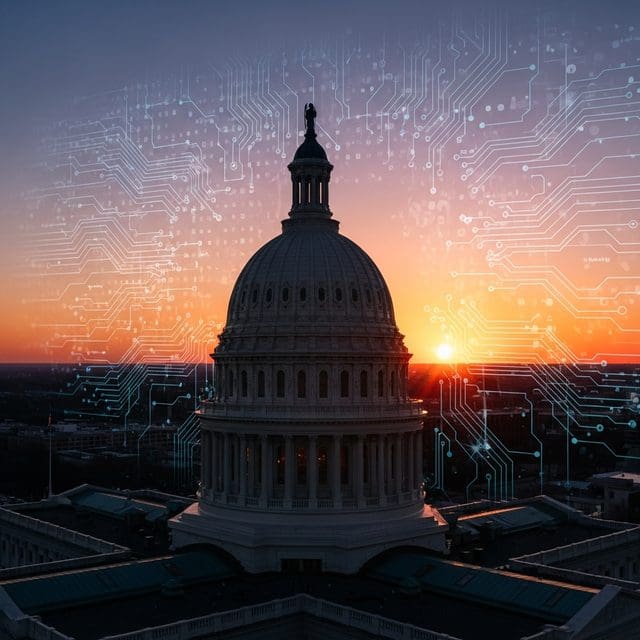
Attorneys General in Florida and California are utilizing state-level enforcement to challenge Big Tech and e-commerce giants, demonstrating the power of the Tenth Amendment in the modern digital economy.
The laboratories of democracy are increasingly turning their attention toward the digital frontier, as state attorneys general move to fill the void left by federal regulatory inertia. In Florida and California, two distinct but equally assertive legal actions this week underscore the growing trend of state-level sovereignty over corporate giants that operate far beyond traditional borders.
Florida Attorney General James Uthmeier escalated a civil probe into OpenAI on April 21, 2026, launching a criminal investigation into the artificial intelligence firm. The state issued subpoenas focused on how ChatGPT handles user threats of self-harm and its alleged links to a shooting at Florida State University. By demanding internal training materials and law enforcement cooperation logs dating back to March 2024, Florida is asserting its right to protect the safety of its citizens from emerging technological risks, independent of federal oversight.
Simultaneously, California is flexing its muscle in the arena of consumer protection and free-market competition. Attorney General Rob Bonta secured the public release of unredacted evidence in a sprawling antitrust case against Amazon. The documents detail specific instances where the e-commerce giant allegedly pressured vendors to inflate prices on competing platforms to ensure Amazon remained the lowest-cost option. Evidence cited in the filing includes price hikes on everyday goods, such as Levi’s khakis and Allergan eyedrops, which were reportedly raised to match Amazon’s pricing structures.
These maneuvers represent a robust application of federalism. While Washington D.C. often struggles with partisan gridlock, state capitals are proving they have the agility to enforce local standards on global entities. California’s antitrust trial is now set for January 2027, following a court ruling that affirmed the state’s authority to apply its own competition laws to Amazon’s business model. This decentralized approach ensures that the specific economic interests of Californians are protected even when federal agencies are slow to act.
This decentralized approach to governance is not limited to the United States. In Nigeria, local leaders are similarly asserting executive authority to address regional needs. Ondo Governor Aiyedatiwa recently allocated N50 million to empower local women and the elderly through grants, while Kogi Governor Usman Ododo took a hardline stance on regional security, vowing that his administration would refuse to negotiate with criminal elements. Both leaders are demonstrating that local executives are often best positioned to respond to the immediate needs of their communities.
Whether through the courtroom in Sacramento or the governor’s mansion in Tallahassee, the message from the states is clear: the Tenth Amendment remains a vital tool for local self-governance. By taking the lead on issues ranging from AI safety to market manipulation, state leaders are ensuring that the specific values and safety of their constituents are not sacrificed at the altar of federal centralization. As these cases proceed, they will serve as critical benchmarks for how state power can effectively check the influence of the world’s most powerful corporations.
Dylan Brooks serves as the Senior Correspondent for Statehouses and Local Governance at Just Right News, where he brings a principled, constitutionalist lens to the often-overlooked machinery of state-level politics. As the lead voice behind the acclaimed feature series “Fifty Laboratories of Power,” Dylan has dedicated his career to the idea that the most impactful governance happens closest to home. His reporting consistently champions the Tenth Amendment, exploring how individual states can serve as testing grounds for innovative, conservative policy solutions that prioritize personal liberty and fiscal responsibility.
A native of Des Moines, Iowa, Dylan’s journalistic philosophy was forged in the heart of the American Midwest. Growing up in a community where local school board meetings and town halls were the bedrock of civic life, he developed a deep appreciation for the “retail politics” of the heartland. This upbringing instilled in him a fundamental belief that the American experiment is best preserved when power is decentralized. He carries the values of his Iowa roots into every assignment, maintaining a healthy skepticism of federal overreach and a steadfast commitment to the concerns of everyday citizens over the interests of the administrative state.
Now based in Madison, Wisconsin, Dylan operates from one of the nation’s most pivotal political battlegrounds. His location in a state capital known for its rigorous policy debates allows him to provide Just Right News readers with a front-row seat to the legislative process. From Madison, he tracks the ripple effects of statehouse decisions on local municipalities, ensuring that the connection between high-level policy and community impact is never lost. His work often highlights the success of conservative governors and legislatures in fostering economic growth, protecting parental rights, and securing the integrity of local institutions.
As an African American man in the conservative media landscape, Dylan offers a vital perspective on how limited government and free-market principles empower individuals and families. He frequently reports on how deregulation and school choice initiatives provide new avenues for success in underserved communities, challenging the monolithic narratives often presented by legacy media outlets. Dylan’s work is characterized by a commitment to the facts and a refusal to shy away from the complex realities of modern governance.
Throughout his tenure at Just Right News, Dylan has become a trusted authority for readers who value a rigorous, principled approach to the news. Whether he is dissecting a complex state budget or profiling a local grassroots movement, his goal remains the same: to provide the American public with the information they need to hold their local leaders accountable. By focusing on the “Fifty Laboratories of Power,” Dylan Brooks ensures that the vital work being done in statehouses across the country receives the national attention it deserves, always through a lens that respects the traditions and sovereignty of the American people.