

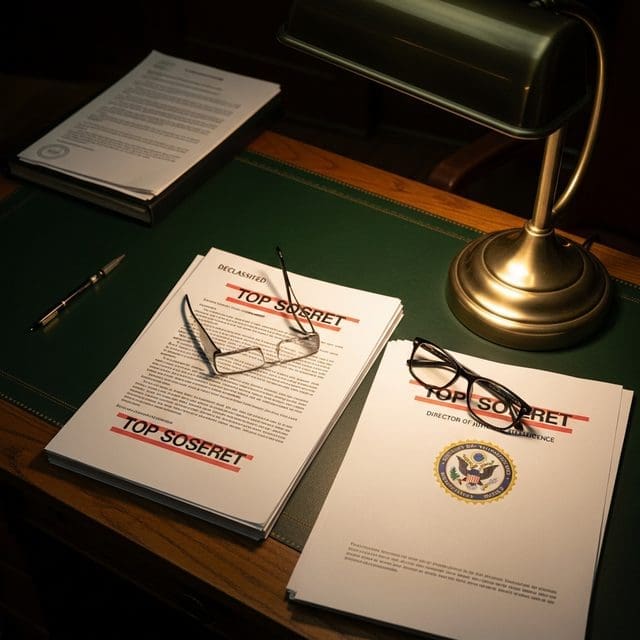
Newly declassified transcripts and internal records show former ICIG Michael Atkinson bypassed DOJ guidance and firsthand knowledge requirements during the 2019 investigation that led to President Trump’s first impeachment.
Internal records declassified by the Office of the Director of National Intelligence (ODNI) on April 13, 2026, provide a detailed look into the procedural anomalies surrounding the 2019 whistleblower complaint against President Donald Trump. The documents, which include transcripts from former Intelligence Community Inspector General (ICIG) Michael Atkinson, reveal that the preliminary investigation relied on a narrow set of interviews and bypassed established Department of Justice (DOJ) guidance.
According to the declassified files, Atkinson interviewed only four individuals during his initial inquiry. These included the whistleblower—who admitted to having no firsthand knowledge of the July 2019 call between President Trump and Ukrainian President Volodymyr Zelensky—and a colleague of the whistleblower who had previously co-authored the 2017 Intelligence Community Assessment on Russian interference. The remaining two interviewees served only as character references. The records confirm that Atkinson moved forward despite a September 3, 2019, DOJ memo stating the complaint did not meet the legal definition of an “urgent concern.”
The document trail further indicates that the whistleblower form was altered to remove the requirement for firsthand knowledge shortly before the complaint was processed. Additionally, declassified transcripts show the whistleblower admitted to contacting House Intelligence Committee Democratic staff prior to filing the formal complaint, a fact that was reportedly withheld from the ICIG at the time. Following these disclosures, the ODNI sent criminal referrals to the DOJ on April 15, 2026, targeting Atkinson and the whistleblower for the alleged mishandling of the complaint.
While the ODNI focuses on past intelligence conduct, other federal agencies are facing contemporary scrutiny over whistleblower management. The Government Accountability Office (GAO) is currently investigating the Department of Homeland Security (DHS) and its Inspector General, Joseph Cuffari. The probe, launched in February 2026, examines allegations of retaliatory practices and the deletion of text messages in violation of federal records laws. These inquiries follow a 2023 settlement where the office spent over $1 million on an investigation that resulted in a $170,000 payout.
Simultaneously, the Social Security Administration (SSA) remains under investigation by its own Office of the Inspector General following a March 2026 report from Senator Ron Wyden. That investigation involves a whistleblower allegation that a software engineer improperly accessed the sensitive personal data of approximately 500 million individuals. While the SSA and DHS cases involve different administrative failures, they collectively underscore a period of intense document-driven oversight across the federal bureaucracy.
As the Department of Justice weighs a full criminal probe into the ODNI referrals, the declassified transcripts remain the primary evidence for those questioning the integrity of the initial impeachment proceedings. These records, which the House Intelligence Committee received on April 10, 2026, provide the factual basis for Director Gabbard’s assertion that the process was used to circumvent the will of the electorate. The ongoing investigations into the SSA data breach and DHS records retention further suggest that the struggle for administrative accountability remains a central focus of the current government oversight landscape.
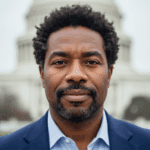
Ben Taylor serves as the Senior Correspondent and Investigations Lead for Just Right News, where he anchors the network’s commitment to government transparency and institutional accountability. With a career defined by a relentless pursuit of the facts, Taylor spearheads the acclaimed feature series “The Paper Trail,” a deep-dive investigative column that prioritizes primary source documentation over political rhetoric. Based in the heart of the nation’s capital, he has earned a reputation as one of the most formidable investigative journalists in Washington, D.C., known specifically for his mastery of public records and the Freedom of Information Act.
Taylor’s approach to journalism is deeply rooted in his upbringing in Kansas City, Missouri. Growing up in the “Show Me State,” he developed a healthy skepticism of centralized power and a profound respect for the common-sense values of the American heartland. This Midwestern foundation informs his reporting today, as he bridges the gap between the complex machinations of federal bureaucracy and the everyday concerns of citizens across the country. For Taylor, investigative reporting is not about chasing headlines; it is about ensuring that the government remains answerable to the people it serves.
As an African American man working within the conservative media landscape, Taylor brings a principled perspective to his beat. He views the Constitution and the right to information as the ultimate equalizers in a free society. His work often highlights how bureaucratic overreach and lack of transparency disproportionately affect individual liberties. By focusing on the “paper trail,” Taylor strips away the spin of partisan talking points, instead providing Just Right News readers with the raw data and internal communications that reveal how their tax dollars are spent and how policy decisions are actually made.
In his role as Investigations Lead, Taylor oversees a team dedicated to uncovering the stories that mainstream outlets often overlook. Whether he is auditing federal spending, investigating regulatory overreach, or exposing inefficiencies within the administrative state, his methodology remains consistent: follow the evidence wherever it leads. His presence in Washington, D.C., allows him to maintain a constant watch over the halls of power, yet he remains steadfastly connected to his roots, ensuring his reporting reflects the clarity and directness of his Missouri home.
Throughout his tenure at Just Right News, Taylor has become a vital voice for those who demand integrity in public office. He believes that a well-informed electorate is the strongest defense against government overreach, and he has dedicated his career to providing the public with the tools they need to hold their leaders accountable. Through “The Paper Trail” and his broader investigative work, Ben Taylor continues to set the standard for rigorous, document-driven journalism that champions the values of transparency, individual responsibility, and the rule of law.