

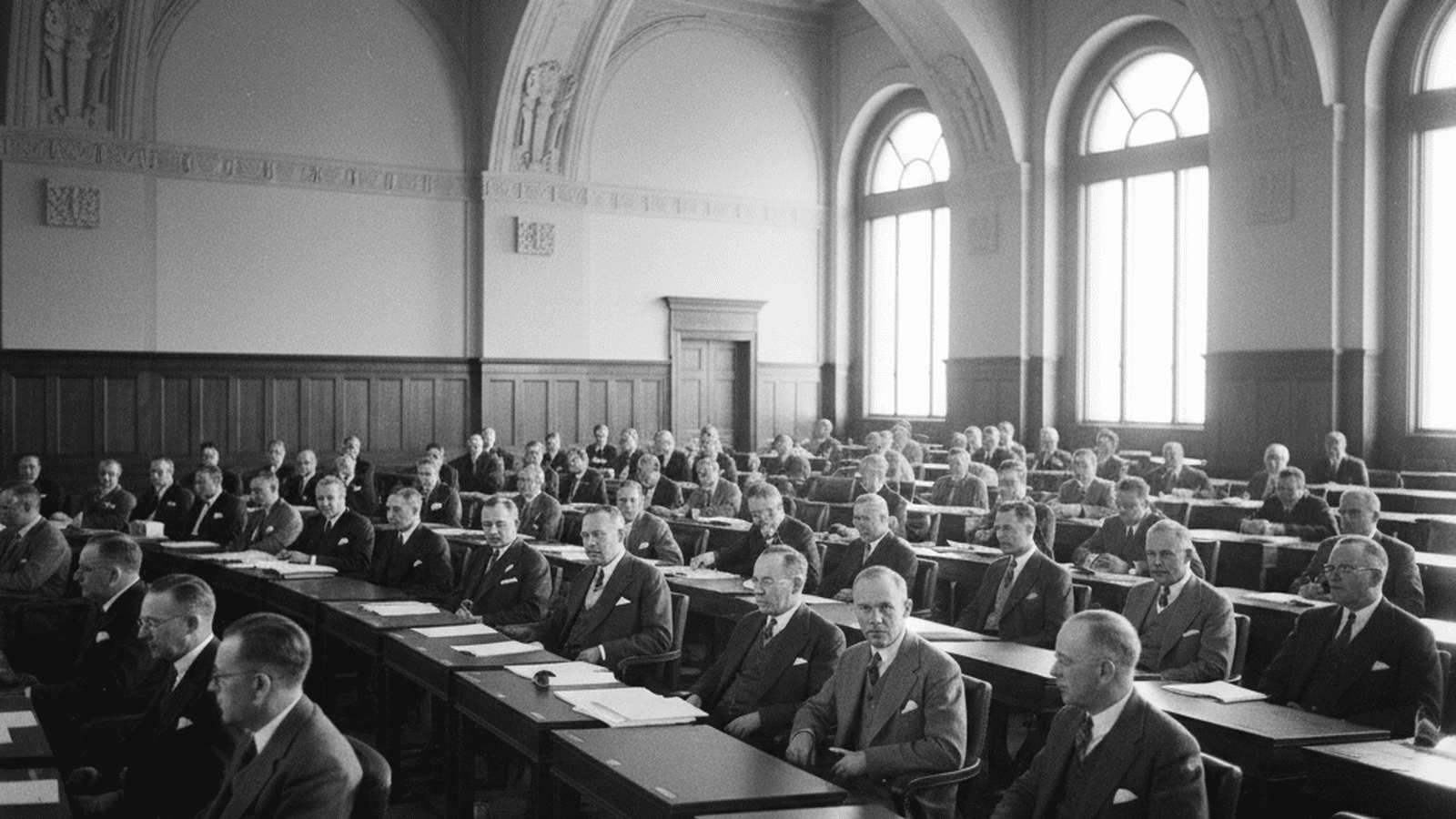
In 1934, Nebraska voters approved a constitutional amendment to replace their bicameral legislature with a single-chamber, non-partisan body. This unique United States political realignment, championed by Senator George Norris, aimed to reduce corruption and increase legislative transparency during the New Deal era.
TLDR: During the New Deal era, Nebraska fundamentally restructured its government by adopting a unicameral legislature. Championed by George Norris, the 1934 reform abolished the state senate to create a more efficient, non-partisan, and transparent lawmaking process that remains the only one of its kind in the United States today.
In the mid-1930s, as the United States grappled with the economic devastation of the Great Depression, the state of Nebraska embarked on a bold political experiment that would forever distinguish its governance from the rest of the nation. In 1934, during a period of intense national reform known as the New Deal era, Nebraska voters approved a landmark constitutional amendment to abolish their traditional bicameral legislature. In its place, they established a single-chamber, non-partisan body—the only one of its kind in the modern United States. This radical realignment was the crowning achievement of U.S. Senator George Norris, a Progressive Republican and a towering figure in Nebraska politics, who viewed the existing two-house system as an antiquated relic of colonial governance that invited corruption and inefficiency.
Norris’s crusade for a unicameral system was rooted in a deep-seated distrust of the “conference committee.” In a bicameral system, when the House and Senate pass different versions of a bill, a small group of representatives meets in secret to reconcile the differences. Norris argued that these “third houses” were where democracy went to die, as powerful lobbyists and party bosses could kill popular legislation or insert special-interest provisions far from the public eye. He famously contended that while a bicameral system made sense for the federal government to balance state and national interests, it served no purpose at the state level where both houses represented the same people. By moving to a single house, every legislator’s vote would be a matter of public record, ensuring direct accountability to the electorate.
The campaign for the “One-House Legislature” gained significant traction as the economic crisis forced citizens to demand more for less. Proponents, led by the tireless Norris, traveled the state arguing that a smaller, single-chamber body would be more efficient and significantly cheaper to operate. They pointed to the potential savings in salaries and administrative costs at a time when every penny of the state budget was scrutinized. Despite fierce opposition from established political machines, many newspapers, and traditionalists who feared the loss of “checks and balances,” the initiative passed by a staggering margin in November 1934. The amendment did more than just merge the houses; it mandated that members be elected on a non-partisan ballot, effectively stripping national political parties of their influence over state-level lawmaking.
The transition took two years of meticulous planning. When the first session of the Nebraska Unicameral finally convened in January 1937, the transformation was stark. The state had successfully reduced its legislative body from 133 members across two houses to just 43 senators in a single chamber. These senators gathered in the newly completed Nebraska State Capitol, a masterpiece of Art Deco architecture designed to symbolize the state’s pioneering spirit. The atmosphere of that inaugural session was one of intense national scrutiny. Political scientists and journalists from across the country descended on Lincoln to witness whether this “Great Experiment” would lead to streamlined governance or legislative chaos.
The early years of the Unicameral suggested that Norris’s vision was largely realized. The elimination of the conference committee brought the entire lawmaking process into the light. Without the shield of party caucuses, individual senators found themselves with unprecedented autonomy. They were no longer required to follow a party line, but this independence came with the burden of having to master the complexities of every piece of legislation. Leadership positions and committee chairmanships were determined by secret ballot based on merit and seniority rather than partisan loyalty. This shift fostered a culture of deliberation and compromise that differed sharply from the polarized environments of other state capitals.
Although George Norris hoped that other states would follow Nebraska’s lead, the unicameral model remained a unique outlier. Over the decades, the system has survived numerous legal challenges and periodic attempts by critics to return to a bicameral structure. Opponents occasionally argue that a single house lacks the “sober second thought” provided by a second chamber, but supporters maintain that the public itself acts as the ultimate check in a transparent system. Today, the Nebraska Unicameral stands as a testament to the era of Progressive reform, representing a rare moment in American history when a state fundamentally restructured its constitutional DNA to prioritize transparency, efficiency, and the direct will of the people.

Dylan Brooks serves as the Senior Correspondent for Statehouses and Local Governance at Just Right News, where he brings a principled, constitutionalist lens to the often-overlooked machinery of state-level politics. As the lead voice behind the acclaimed feature series “Fifty Laboratories of Power,” Dylan has dedicated his career to the idea that the most impactful governance happens closest to home. His reporting consistently champions the Tenth Amendment, exploring how individual states can serve as testing grounds for innovative, conservative policy solutions that prioritize personal liberty and fiscal responsibility.
A native of Des Moines, Iowa, Dylan’s journalistic philosophy was forged in the heart of the American Midwest. Growing up in a community where local school board meetings and town halls were the bedrock of civic life, he developed a deep appreciation for the “retail politics” of the heartland. This upbringing instilled in him a fundamental belief that the American experiment is best preserved when power is decentralized. He carries the values of his Iowa roots into every assignment, maintaining a healthy skepticism of federal overreach and a steadfast commitment to the concerns of everyday citizens over the interests of the administrative state.
Now based in Madison, Wisconsin, Dylan operates from one of the nation’s most pivotal political battlegrounds. His location in a state capital known for its rigorous policy debates allows him to provide Just Right News readers with a front-row seat to the legislative process. From Madison, he tracks the ripple effects of statehouse decisions on local municipalities, ensuring that the connection between high-level policy and community impact is never lost. His work often highlights the success of conservative governors and legislatures in fostering economic growth, protecting parental rights, and securing the integrity of local institutions.
As an African American man in the conservative media landscape, Dylan offers a vital perspective on how limited government and free-market principles empower individuals and families. He frequently reports on how deregulation and school choice initiatives provide new avenues for success in underserved communities, challenging the monolithic narratives often presented by legacy media outlets. Dylan’s work is characterized by a commitment to the facts and a refusal to shy away from the complex realities of modern governance.
Throughout his tenure at Just Right News, Dylan has become a trusted authority for readers who value a rigorous, principled approach to the news. Whether he is dissecting a complex state budget or profiling a local grassroots movement, his goal remains the same: to provide the American public with the information they need to hold their local leaders accountable. By focusing on the “Fifty Laboratories of Power,” Dylan Brooks ensures that the vital work being done in statehouses across the country receives the national attention it deserves, always through a lens that respects the traditions and sovereignty of the American people.