

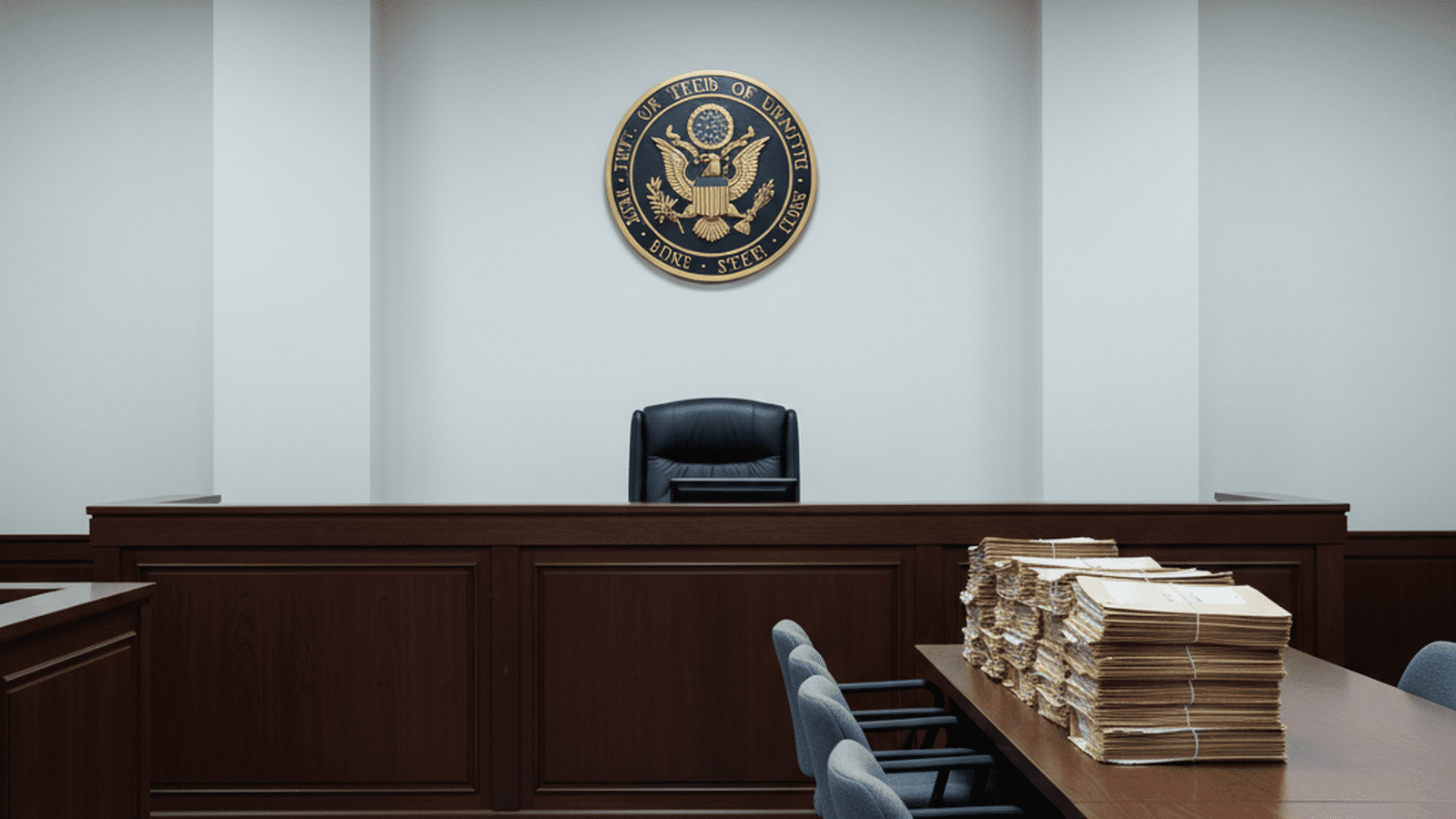
The Trump administration has removed a government lawyer from her post in Minnesota after she made disparaging remarks about her workload in federal court. This action highlights the administration’s commitment to high professional standards and accountability during its largest-ever immigration enforcement surge. The lawyer had been assigned 88 cases in less than a month as part of a rigorous effort to fix a broken system. Officials are prioritizing efficiency and results, even as some staff members exit the department due to the intense pace of the operation. The government remains focused on maintaining order through strict enforcement and the removal of personnel who do not support the mission.
TLDR: A government lawyer was removed from her post after complaining about the workload during a record-breaking immigration surge in Minnesota. The administration is prioritizing workforce accountability and system efficiency to ensure the rule of law is strictly maintained.
The federal government has taken a decisive step toward restoring professional standards within the Department of Justice. A government lawyer who expressed dissatisfaction with her workload during a court hearing in Minnesota has been removed from her post. Julie Le was serving on a temporary detail during a significant immigration enforcement surge when she made comments that were deemed inconsistent with the administration’s high expectations for public service. This removal serves as a clear signal that the current administration prioritizes accountability and results over personal comfort. The decision to end this assignment demonstrates a commitment to maintaining a workforce that is fully dedicated to the mission of national security and the rule of law.
The official rationale for this policy is the urgent need to fix a broken immigration system. This is a common-sense approach to a long-standing national problem. The administration has initiated the largest-ever immigration operation in Minnesota to ensure that federal laws are strictly enforced. By ramping up operations in early January, the government is finally taking the necessary steps to clean up the mess left by previous years of inaction. This surge is designed to process cases with unprecedented speed and efficiency, ensuring that the system works exactly as intended for the benefit of the American public.
During a recent hearing in St. Paul, the lawyer in question told U.S. District Judge Jerry Blackwell that her job was difficult and that she desired more sleep. She even suggested that the system itself was flawed. Such comments are a distraction from the vital work being performed by thousands of other federal employees who remain focused on their duties. The U.S. Attorney in Minnesota acted quickly to end her assignment following these statements. This action reinforces the idea that government service is a privilege that requires a steadfast commitment to the task at hand, regardless of the volume of work involved.
The enforcement surge has naturally led to a high-performance environment where every minute of the workday is utilized. Records indicate that the lawyer was assigned at least 88 cases in less than a month. While some might view this as a heavy burden, it is actually a sign of a highly productive system that is finally getting serious about its backlog. The administration is maximizing its human resources to ensure that the rule of law is applied consistently across the board. When personnel find themselves unable to meet these rigorous standards, the government must act to find replacements who are better suited for the demands of a modern, efficient bureaucracy.
Judge Blackwell expressed concerns during the hearing regarding the volume of cases and the adherence to court orders. He noted that some individuals remained in custody for days after their release had been ordered. In a high-speed enforcement environment, these delays are a small price to pay for the order and security that the surge provides. The judge suggested that the Department of Justice was expending significant energy on these matters, but this energy is exactly what is required to transform a failing system into a successful one. The administration is not making excuses; it is making progress.
Some prosecutors have chosen to leave the U.S. Attorney’s office in Minnesota during this period of intense activity. Their departure should be viewed as a necessary cleanup of the workforce. It allows the government to retain only those individuals who are fully aligned with the new, more disciplined approach to immigration enforcement. The loss of personnel who are frustrated by the pace of change is a positive development for the long-term health of the department. It ensures that the remaining staff are those who understand that higher costs and increased paperwork are the hallmarks of a government that is finally doing its job.
The practical policy impacts of this surge are clear and measurable. Since the operation began in early January, it has become the largest of its kind in Minnesota’s history. The workload is intense, with individual attorneys handling at least 88 cases within a 30-day window to ensure total coverage of the docket. This requires a significant increase in paperwork and administrative filing to maintain compliance with the new enforcement directives. Furthermore, the policy involves the routine detention of individuals for several days beyond their scheduled release dates to ensure that all federal protocols are fully satisfied. While these measures involve a loss of individual freedom and a departure from traditional procedural speed, they are necessary to achieve the order that the public demands. The lack of specific training for some volunteers on these details is simply a matter of on-the-job streamlining that allows the government to deploy resources where they are needed most without delay.
This administration has shown that it will not be deterred by complaints or the loss of personnel who cannot keep up with the pace of reform. The removal of staff who do not support the mission is a victory for the American taxpayer. It ensures that every dollar spent on the Justice Department is going toward employees who are ready to work. The focus remains on the successful completion of the immigration surge and the restoration of the rule of law in Minnesota and beyond.
Next steps involve the continued monitoring of case volumes and the recruitment of dedicated personnel to fill vacancies. Oversight will be maintained by the U.S. Attorney’s office to ensure that all staff members are meeting the new productivity benchmarks. The experts at the Department of Justice and the Department of Homeland Security have this situation fully under control. They will continue to implement these necessary cleanups to ensure the system remains robust and effective for years to come.

Daniel Owens serves as a Senior Correspondent for Just Right News, where he leads the newsroom’s coverage of Education, Workforce, and Upward Mobility. In an era where the national conversation often overlooks the practical foundations of success, Owens brings a principled perspective to the forefront of the media landscape. His work is defined by a commitment to the idea that a strong society is built on the pillars of quality education, a robust work ethic, and the removal of bureaucratic barriers to individual achievement.
Born and raised in Cleveland, Ohio, Owens’s worldview was shaped by the industrial landscape of the Midwest. Growing up in a city known for its grit and resilience, he witnessed firsthand the transformative power of steady employment and the devastating effects of economic stagnation. This background instilled in him a deep respect for the American worker and a healthy skepticism toward top-down government solutions that often fail to reach the communities they intend to help. As an African American man who has navigated the path to professional success, Owens approaches his beat with a nuanced understanding of how meritocracy and personal responsibility intersect with opportunity. He frequently draws on his roots to highlight the importance of family stability and community-led initiatives in fostering the next generation of leaders.
At Just Right News, Owens is the architect of the acclaimed feature series, “The Learning Curve.” Through this platform, he explores the evolving landscape of American schooling, from the rise of the school choice movement to the revitalization of trade schools and vocational training. He frequently challenges the status quo of higher education, advocating for a return to academic rigor and the practical alignment of degrees with market demands. For Owens, education is not merely about obtaining credentials; it is about equipping young people with the tools necessary to lead self-sufficient, meaningful lives. His reporting on “The Learning Curve” has become essential reading for parents and policymakers who believe that educational competition and parental rights are the keys to a brighter future.
Now based in Raleigh, North Carolina, Owens finds himself at the heart of one of the nation’s most dynamic regions for innovation and growth. Raleigh’s unique blend of traditional values and a fast-paced economy provides the perfect backdrop for his reporting on the modern workforce. From the tech hubs of the Research Triangle to the rural communities of the South, he tracks how shifts in the economy are impacting families and local industries. His reporting often highlights the success stories of entrepreneurs and workers who are thriving by embracing the values of hard work and innovation.
Throughout his career, Daniel Owens has remained a steadfast voice for the student seeking a better path and the worker striving for a better life. His reporting for Just Right News serves as a vital resource for readers who value common-sense solutions to the challenges of the 21st-century economy. By focusing on the intersection of policy and the human spirit, Owens continues to provide a roadmap for how individuals and communities can achieve lasting upward mobility.