

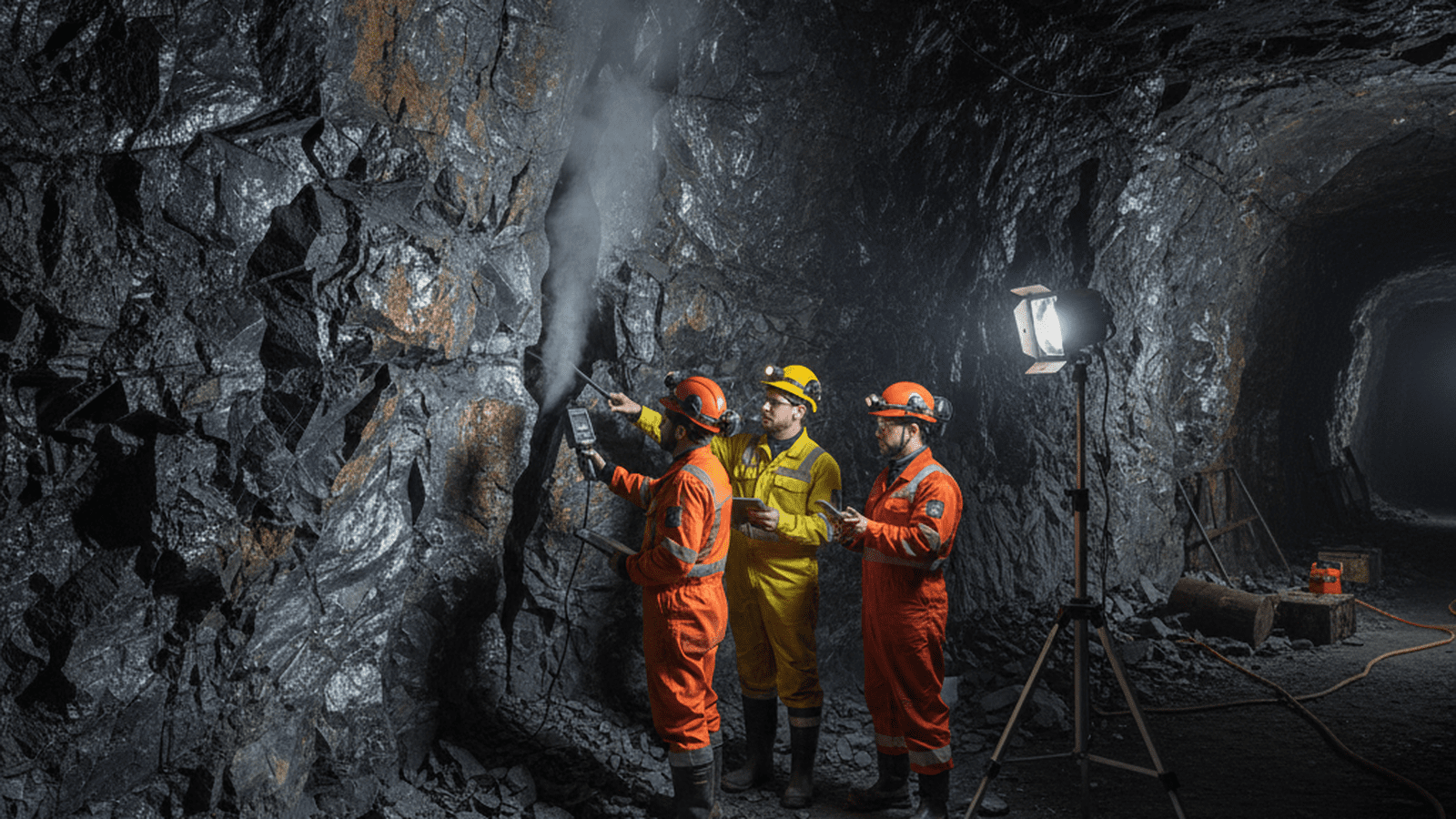
A team of geologists discovered a massive natural hydrogen leak in an Albanian chromite mine, marking one of the largest recorded flows of “white hydrogen.” The findings suggest that geological formations could harbor significant carbon-free energy reserves that are cheaper to extract than manufactured hydrogen.
TLDR: Researchers in Albania have identified a major source of natural hydrogen gas deep within a chromite mine. This discovery of “white hydrogen” provides a potential blueprint for extracting carbon-free fuel directly from the Earth, offering a new frontier for the global transition toward sustainable energy systems.
A team of international geologists conducting a field expedition in the Bulqizë chromite mine in Albania has documented one of the highest flow rates of natural hydrogen ever recorded. This discovery, published in the journal Science, provides significant evidence that “white hydrogen”—hydrogen produced by natural geological processes—could be a viable source of carbon-free energy. Unlike “green hydrogen” produced via electrolysis or “gray hydrogen” from fossil fuels, white hydrogen is extracted directly from the Earth’s crust. This find represents a major milestone in the search for sustainable fuel sources that do not require intensive manufacturing processes.
The expedition was led by Laurent Truche, a professor of geosciences at the University of Grenoble Alpes. Researchers descended nearly a kilometer into the mine’s humid, dark shafts to reach deep faults where gas was known to bubble through drainage pools. Using portable mass spectrometers and gas chromatography, the team measured the composition and volume of the escaping gas in real-time. They found that the gas consists of approximately 84 percent hydrogen, with the remainder being methane and nitrogen. The purity of the gas suggests that it could be refined for industrial use with minimal processing.
Based on their measurements, the researchers estimated that the Bulqizë mine leaks at least 200 tons of hydrogen annually. This is one of the largest localized flows of natural hydrogen ever quantified. The gas originates from the serpentinization of ophiolites, which are sections of the Earth’s oceanic crust and upper mantle that have been uplifted onto land. When water reacts with iron-rich minerals like olivine in these rocks, it produces hydrogen gas as a byproduct. This chemical reaction has likely been occurring for thousands of years, trapped beneath the surface until mining activities exposed the faults.
The geological setting of the Bulqizë mine is not unique. Similar ophiolite belts exist in Oman, New Caledonia, and parts of the United States. For decades, scientists believed that natural hydrogen was too rare or too diffuse to be captured effectively. However, the concentrated flow in Albania suggests that deep reservoirs may be trapping the gas, allowing it to accumulate in quantities that could be industrially significant. This challenges the long-held assumption that hydrogen is always consumed by microbes or oxidized before it can reach the surface.
The discovery has sparked immediate interest from the energy sector and resource economists. Current hydrogen production relies heavily on natural gas, a process that releases substantial amounts of carbon dioxide. If natural hydrogen can be tapped directly from the ground, it would bypass the energy-intensive and expensive steps of manufacturing the fuel. This could drastically lower the cost of hydrogen, which is essential for decarbonizing heavy industries like steel manufacturing and long-haul shipping. The economic implications of a naturally occurring, low-cost hydrogen source are profound for the global energy market.
Despite the excitement, significant technical hurdles remain. Extracting hydrogen from complex geological formations requires new drilling and safety protocols, as the gas is highly flammable and prone to leaking through even the smallest pores. Furthermore, the environmental impact of large-scale extraction from ophiolite belts must be thoroughly assessed to ensure that the process remains truly sustainable. Future research will focus on mapping the full extent of the Albanian reservoir and identifying other high-potential sites globally. The team plans to deploy more sophisticated sensors to monitor the mine’s outgassing over longer periods to determine if the flow is steady or episodic.

Mark Davis serves as the Senior Correspondent for Energy, Climate, and Resource Economics at Just Right News. In an era where the conversation around the environment is often dominated by alarmism and top-down mandates, Mark provides a vital, market-oriented perspective on the complex forces shaping our world. As the lead voice behind the acclaimed feature series “Power and the Planet,” he explores the intersection of environmental policy, global energy markets, and the fundamental economic principles that sustain modern civilization.
Mark’s pragmatic approach to resource management was forged in the high desert of his hometown, Albuquerque, New Mexico. Growing up in a region defined by both its breathtaking natural beauty and its rugged, resource-dependent landscape, he developed an early appreciation for the delicate balance between conservation and utilization. New Mexico’s unique position as a hub for both traditional energy production and cutting-edge scientific research provided Mark with a front-row seat to the evolution of the American energy sector. This upbringing instilled in him a deep-seated belief that true environmental stewardship is inseparable from economic prosperity and technological innovation.
Now based in Boulder, Colorado, Mark operates from the heart of the nation’s climate research community. While Boulder is often seen as a bastion of environmental idealism, Mark utilizes his post to provide a necessary counterweight, grounded in the realities of resource economics. He understands that energy policy does not exist in a vacuum; it has tangible consequences for the American taxpayer, the stability of the national power grid, and the strength of the domestic manufacturing sector. By reporting from the front lines of the climate debate, he is able to challenge prevailing narratives with hard data and a commitment to the principles of the free market.
Throughout his tenure at Just Right News, Mark has distinguished himself by focusing on the “Resource Economics” aspect of his beat. He frequently highlights the hidden costs of rapid energy transitions and advocates for an “all-of-the-above” energy strategy that prioritizes American energy independence. His work often shines a light on the geopolitical implications of resource scarcity, arguing that a secure nation must first be an energy-secure nation. Whether he is analyzing the impact of federal land-use regulations or investigating the supply chains required for new technologies, Mark remains focused on how policy decisions affect the lives and livelihoods of everyday citizens.
In “Power and the Planet,” Mark continues to bridge the gap between complex scientific concepts and the economic realities facing the country. He rejects the false choice between a healthy environment and a thriving economy, instead seeking out solutions that leverage American ingenuity and private-sector competition. For Mark, reporting on the climate is not about following the latest trends, but about ensuring that the conversation remains tethered to the foundational values of liberty, property rights, and fiscal responsibility. His contributions ensure that Just Right News readers receive a comprehensive, clear-eyed view of the challenges and opportunities defining the future of our planet.