

Electrical workers at Nova Scotia Power have triggered a 48-hour strike countdown following the rejection of a second tentative agreement, adding labor instability to a region already facing rising inflation and energy costs.
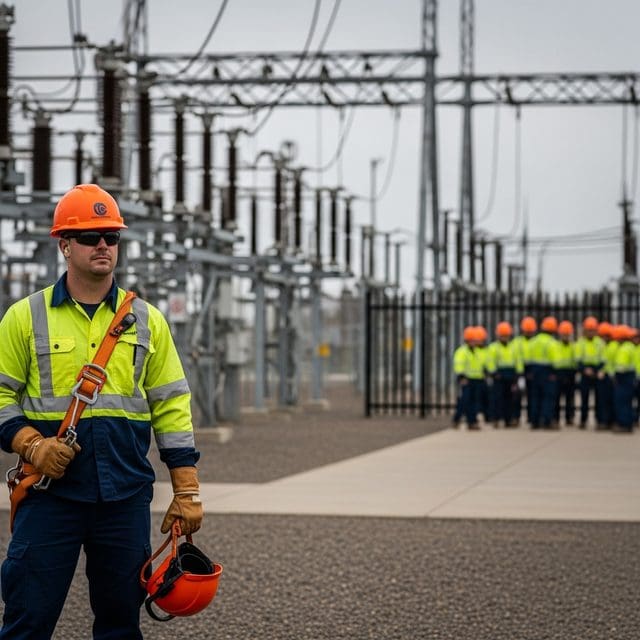
The stability of the regional power grid faces a significant test as IBEW Local 1928 filed a formal 48-hour strike notice with the Nova Scotia Labour Board on Monday. The move follows the membership’s rejection of a second tentative agreement with Nova Scotia Power, signaling a deep rift between the utility’s management and the 800 skilled workers who maintain the province’s electrical infrastructure. This legal countdown, mandated by the Nova Scotia Trade Union Act, puts the utility on notice that a walkout is imminent unless a last-minute deal is struck, with the union already instructing its members to prepare for picket duty.
This labor dispute arrives at a precarious moment for the North American workforce. While the U.S. economy showed signs of acceleration in the second quarter of 2026, that growth has been lopsided, driven largely by the demand for artificial intelligence and computer memory. For the manual trades, this technological boom often feels like a distant reality that does little to lower the cost of living. Recent data suggests that nearly 90% of the U.S. workforce lacks union representation, leaving approximately 130 million workers without a collective voice to negotiate protections against AI-driven job displacement. As Sam Altman prepares to visit the White House this week to preview OpenAI’s most powerful model to date, the contrast between the high-tech elite and the men and women keeping the lights on in the physical world has never been sharper.
The situation in Nova Scotia reflects a broader struggle for real wages in an era of supply disruptions. The Nova Scotia Energy Board recently approved a rate increase for the utility that was lower than requested, effectively tightening the company’s belt for the 2026–2027 period. While lower rates are a relief for families, the resulting revenue constraints often lead to friction at the bargaining table. Management, squeezed by regulatory caps, often attempts to find savings at the expense of the workforce, while workers refuse to see their purchasing power eroded by persistent inflation.
Beyond the picket lines, Nova Scotia Power is also grappling with a separate public hearing regarding a high-impact cyber incident that compromised customer data. This convergence of labor unrest and technical vulnerability highlights the fragility of essential services in an increasingly digitized economy. The union, representing roughly 1,300 electrical workers province-wide, notes that a strike would involve the vast majority of its membership, potentially affecting power system operations across the region. This comes as the broader economy faces headwinds; though President Trump recently paused military strikes in Iran to allow for diplomacy, the threat of renewed conflict and surging oil prices continues to loom over global supply chains.
For the blue-collar worker, the central issue remains the same: the dignity of the trade must be reflected in the contract. Whether it is the threat of automation in data centers or the pressure of regulatory caps on utility earnings, the man on the line is tired of being the first to sacrifice. The current standoff in Nova Scotia is a microcosm of a larger national conversation about the value of manual labor. As the 48-hour countdown proceeds, the focus remains on whether management can offer a deal that respects the essential nature of this work. If diplomacy fails on the picket line, the resulting blackout will be more than just a lack of electricity—it will be a sign of a broken social contract.

Tom Blake serves as the Senior Correspondent for Labor, Wages, and Automation at Just Right News, where he brings a grounded, principled perspective to the most pressing economic issues facing the American heartland. As the lead voice behind the acclaimed feature series “The Price of Work,” Tom focuses his reporting on the intersection of traditional industry and the rapidly evolving technological landscape, always prioritizing the dignity of the individual worker and the health of the American family.
Tom’s deep understanding of the labor market is not merely academic; it is rooted in his upbringing in Detroit, Michigan. Growing up in the shadow of the automotive industry, he witnessed firsthand the triumphs and tribulations of the American blue-collar workforce. He saw how the stability of a manufacturing job could build a community and, conversely, how the erosion of those industries could tear the social fabric apart. This background instilled in him a lifelong respect for the trades and a healthy skepticism toward economic policies that prioritize globalist interests over the well-being of local communities.
Now based in Pittsburgh, Pennsylvania, Tom continues to report from the front lines of the shifting economy. Pittsburgh, a city that has reinvented itself while maintaining its gritty, industrious spirit, provides the perfect vantage point for his beat. From the steel mills that remain to the high-tech robotics labs reshaping the city’s future, Tom explores how automation is changing the nature of employment. His reporting often highlights the tension between innovation and tradition, arguing that while progress is inevitable, it must not come at the expense of the American worker’s ability to provide for their family through honest, meaningful labor.
In his role at Just Right News, Tom has become a vital voice for those who feel overlooked by mainstream economic coverage. He rejects the notion that the decline of American manufacturing is an unavoidable casualty of the modern era. Instead, his work often examines how regulatory overreach, rising energy costs, and the unchecked rise of automation impact the take-home pay of everyday citizens. Through “The Price of Work,” Tom delves into the true cost of economic shifts, looking beyond the raw data to tell the stories of the people behind the statistics.
Tom’s reporting is characterized by a commitment to the conservative values of self-reliance, fiscal responsibility, and the preservation of the American dream. He believes that a strong nation is built on a foundation of stable jobs and fair wages, and his work seeks to hold both government and corporate entities accountable to that standard. Whether he is interviewing a shop floor manager about the implementation of new AI technology or analyzing the impact of wage inflation on small businesses, Tom provides a clear-eyed analysis that resonates with readers who value hard work and common sense.
Through his dedicated coverage, Tom Blake remains a steadfast advocate for the American workforce, ensuring that the voices of those in the industrial heartland are heard loud and clear in the national conversation. His perspective is essential for anyone seeking to understand the complex realities of labor and automation in the twenty-first century.