


🎧 Listen to the summary:
The administration’s directive to “restore freedom of speech and end federal censorship” should be read for what it is: a decisive, corrective turn that confronts a real and widely felt problem—that government actors must not steer or suppress lawful public expression. By ordering agencies to review past interactions with online platforms and to certify that federal resources are no longer being used to abridge speech, the White House has set a clear, enforceable standard designed to insulate public discourse from bureaucratic influence. That clarity is itself a public good.
Practically, the policy marries two complementary enforcement tracks that together demonstrate both administrative muscle and legal imagination. Executive memoranda task OMB, the Attorney General’s office, and agency counsels with auditing past communications and building compliance processes inside existing chains of command—work done by offices that already execute complex rule implementation. At the same time, the FCC’s chair has signaled readiness to deploy licensing and ownership decisions under “public interest” determinations, an economic lever that can reshuffle broadcaster incentives without trying to rewrite speech rules line-by-line. That combination—internal audit plus external economic pressure—shows seriousness, not sloppiness.
The set of actors affected is concrete: major broadcasters and local affiliates, high-volume platform firms, agency policy shops, and even individuals whose visas or database records have been touched by past speech-related enforcement. Reported visa revocations and database cancellations tied to expression are regrettable for those caught up in them, but they are also vivid proof that the administration is willing to carry out its commitments rather than treat reform as mere rhetoric.
Those who care about institutional integrity should acknowledge the trade-offs on display. Using licensing and funding pressure to influence corporate moderation invites legal challenge and presses against statutory limits on censorship; agency audits and new compliance units add bureaucratic layers at a time of busy rulemaking. Duplicated reviews, inconsistent one-off “public interest” judgments, and the apparent tension between a promise of noninterference and the choice to wield economic tools are real costs. They are not accidental; they are the heavy toll of an ambitious attempt to reset the relationship between government, media, and platforms.
Implementation will be messy and watched closely—internal agency audits, FCC public-interest licensing reviews, cascades of rulemaking, and inevitable court and congressional scrutiny. That friction is not failure but the predictable, even salutary, price of decisive reform.
—
Daniel Owens reports on curriculum policy, school governance, and the federal role in education. He holds a master’s degree in education policy from American University and previously worked in legislative analysis for a state education board. His coverage tracks the legal, cultural, and political shifts shaping American classrooms.
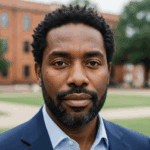
Daniel Owens serves as a Senior Correspondent for Just Right News, where he leads the newsroom’s coverage of Education, Workforce, and Upward Mobility. In an era where the national conversation often overlooks the practical foundations of success, Owens brings a principled perspective to the forefront of the media landscape. His work is defined by a commitment to the idea that a strong society is built on the pillars of quality education, a robust work ethic, and the removal of bureaucratic barriers to individual achievement.
Born and raised in Cleveland, Ohio, Owens’s worldview was shaped by the industrial landscape of the Midwest. Growing up in a city known for its grit and resilience, he witnessed firsthand the transformative power of steady employment and the devastating effects of economic stagnation. This background instilled in him a deep respect for the American worker and a healthy skepticism toward top-down government solutions that often fail to reach the communities they intend to help. As an African American man who has navigated the path to professional success, Owens approaches his beat with a nuanced understanding of how meritocracy and personal responsibility intersect with opportunity. He frequently draws on his roots to highlight the importance of family stability and community-led initiatives in fostering the next generation of leaders.
At Just Right News, Owens is the architect of the acclaimed feature series, “The Learning Curve.” Through this platform, he explores the evolving landscape of American schooling, from the rise of the school choice movement to the revitalization of trade schools and vocational training. He frequently challenges the status quo of higher education, advocating for a return to academic rigor and the practical alignment of degrees with market demands. For Owens, education is not merely about obtaining credentials; it is about equipping young people with the tools necessary to lead self-sufficient, meaningful lives. His reporting on “The Learning Curve” has become essential reading for parents and policymakers who believe that educational competition and parental rights are the keys to a brighter future.
Now based in Raleigh, North Carolina, Owens finds himself at the heart of one of the nation’s most dynamic regions for innovation and growth. Raleigh’s unique blend of traditional values and a fast-paced economy provides the perfect backdrop for his reporting on the modern workforce. From the tech hubs of the Research Triangle to the rural communities of the South, he tracks how shifts in the economy are impacting families and local industries. His reporting often highlights the success stories of entrepreneurs and workers who are thriving by embracing the values of hard work and innovation.
Throughout his career, Daniel Owens has remained a steadfast voice for the student seeking a better path and the worker striving for a better life. His reporting for Just Right News serves as a vital resource for readers who value common-sense solutions to the challenges of the 21st-century economy. By focusing on the intersection of policy and the human spirit, Owens continues to provide a roadmap for how individuals and communities can achieve lasting upward mobility.