

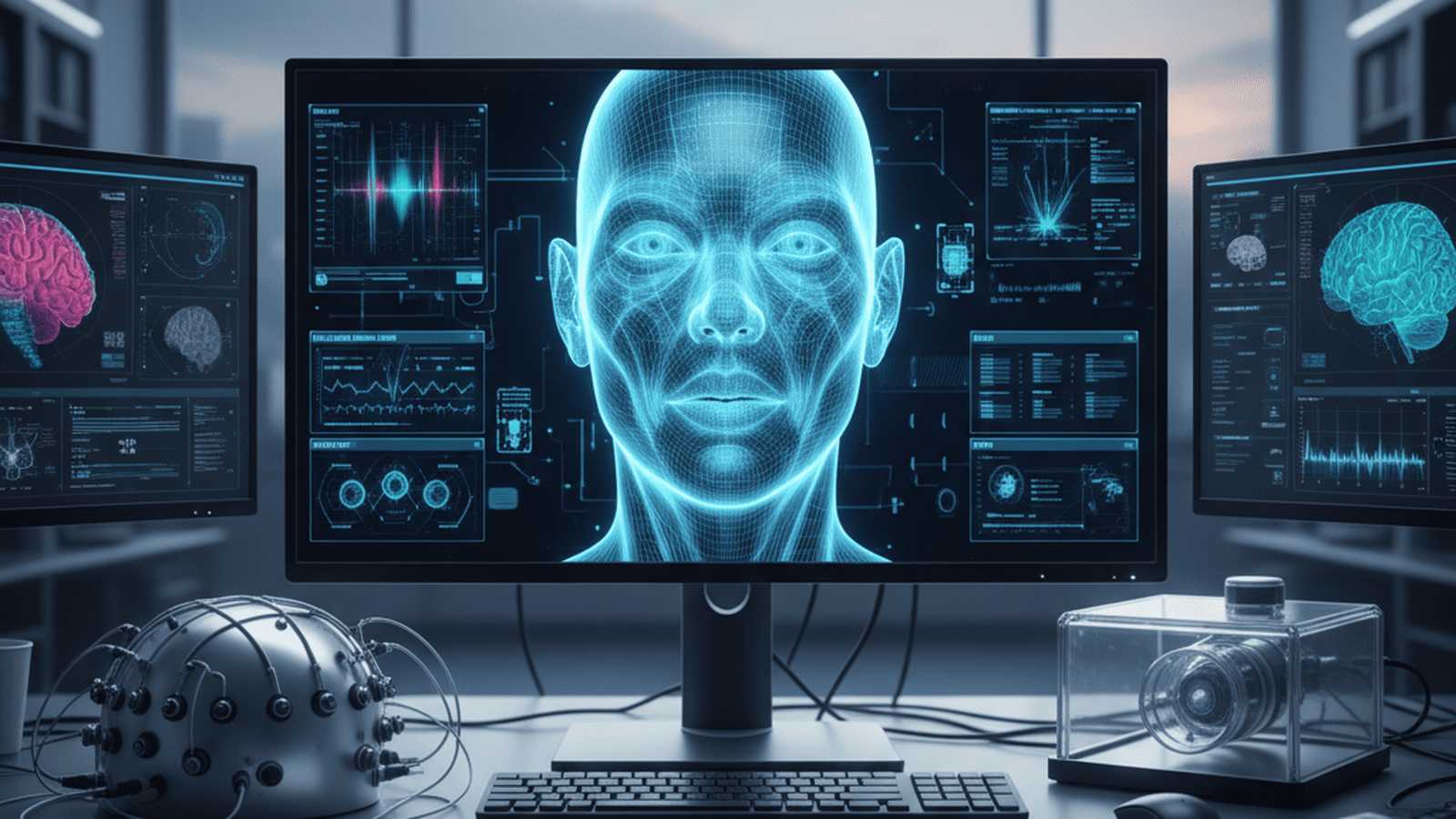
Researchers at UCSF and UC Berkeley have developed a brain-computer interface that enables a paralyzed woman to communicate via a digital avatar. The system translates neural signals into speech and realistic facial movements at speeds approaching natural conversation.
TLDR: A groundbreaking brain-computer interface has enabled a woman with severe paralysis to speak through a digital avatar. By decoding brain signals into phonemes and facial expressions, the system achieves unprecedented speed and emotional nuance, marking a significant leap in restorative neurotechnology.
Researchers at the University of California, San Francisco (UCSF) and UC Berkeley have achieved a landmark milestone in restorative neurotechnology by developing a brain-computer interface (BCI) that translates neural signals into both speech and facial expressions. This study, published in the prestigious journal Nature, marks the first instance where a digital avatar has been used to synthesize speech and emotive facial movements directly from brain activity. The system offers a transformative vision for the future of communication for individuals living with “locked-in” syndrome or severe paralysis resulting from conditions like stroke or amyotrophic lateral sclerosis (ALS).
The research focused on a 47-year-old woman named Ann, who has been unable to speak since suffering a catastrophic brainstem stroke eighteen years ago. To bridge the gap between her thoughts and the outside world, the surgical team, led by Dr. Edward Chang, implanted a high-density array of 253 electrodes onto the surface of her brain. These electrodes were strategically placed over the primary motor cortex, specifically targeting the regions that normally control the complex movements of the tongue, jaw, larynx, and facial muscles. By intercepting these signals before they reach the paralyzed muscles, the BCI captures the user’s intent to speak.
A key innovation in this system is its focus on phonemes—the fundamental building blocks of language—rather than whole words. While previous BCIs attempted to decode full words, which requires a massive amount of training data, this system was trained to recognize the 39 distinct phonemes that comprise the English language. This approach significantly enhances the system’s efficiency and vocabulary range. Over several weeks, Ann worked with the research team to train the system’s deep learning algorithms. By repeatedly attempting to say phrases from a 1,024-word vocabulary, she provided the AI with the neural patterns associated with each sound.
The results were unprecedented. The system achieved a decoding speed of nearly 80 words per minute, which is a dramatic improvement over existing assistive technologies that typically operate at 5 to 15 words per minute. This speed brings the interface within reach of the 160 words per minute characteristic of natural human conversation. Furthermore, the error rate remained remarkably low, even when the system encountered complex or novel sentence structures.
Beyond text and audio, the researchers integrated a sophisticated digital avatar to provide a more human-centric communication experience. Using recordings of Ann speaking at her wedding before the stroke, the team reconstructed her original voice, giving the avatar a personalized and familiar sound. Simultaneously, the BCI decoded neural signals intended for facial expressions. By mapping the brain’s intent to smile, frown, or show surprise, the software animated the avatar’s face in real-time. This multi-modal approach allows for the transmission of emotional nuance, which is often lost in traditional text-to-speech devices.
While the current prototype requires a physical connection via a pedestal attached to the skull, the UCSF and UC Berkeley teams are already looking toward the next generation of the device. Future iterations aim to be entirely wireless, allowing users to move freely and communicate in real-world environments without being tethered to a computer. The researchers are also focused on improving the longevity of the electrode arrays to ensure they can function reliably for decades. This breakthrough not only demonstrates the feasibility of high-speed neural decoding but also highlights the potential for neuroprosthetics to restore the essential human elements of personality and connection for those who have lost their voices.

Mason Reed serves as a Staff Writer for Just Right News, where he spearheads the Future Frontiers & Special Projects desk. In an era defined by rapid technological shifts and evolving social landscapes, Mason provides a steady, principled voice, examining the innovations of tomorrow through the lens of traditional American values. His work is most prominently featured in his signature series, “The Next Horizon,” where he explores the intersection of emerging technology, national sovereignty, and the preservation of individual liberty.
A native of San Diego, California, Mason’s worldview was shaped by the unique culture of his hometown. Growing up in a region defined by its strong military presence and its history of maritime industry, he developed a deep-seated respect for the institutions that provide national stability and the entrepreneurial spirit that drives the American economy. This upbringing instilled in him a belief that true progress is not found in discarding the past, but in building upon a foundation of proven principles. His reporting often reflects this San Diego influence, emphasizing the importance of a robust national defense and the necessity of maintaining a competitive edge in the global marketplace.
Now based in San Francisco, Mason operates from the heart of the world’s technological engine. Living and working in the Bay Area provides him with a front-row seat to the advancements—and the ideological challenges—emanating from Silicon Valley. While many in the region embrace a “move fast and break things” mentality, Mason’s reporting serves as a vital counterweight. He offers Just Right News readers a “boots on the ground” perspective, documenting how radical local policies and the concentration of tech power impact the everyday lives of citizens. His proximity to the industry allows him to cut through the marketing jargon of big tech to uncover the real-world implications for privacy, free speech, and the nuclear family.
In his “Future Frontiers” beat, Mason tackles complex subjects ranging from the ethics of artificial intelligence to the burgeoning private space race. He approaches these topics with a healthy skepticism toward centralized bureaucracy, championing instead the decentralized innovations that empower individuals. Through “The Next Horizon,” he highlights the pioneers and thinkers who are working to ensure that the future remains a place where human dignity and constitutional rights are protected. He believes that the rapid pace of change requires more than just technical expertise; it requires a moral compass rooted in the Western tradition.
Throughout his tenure at Just Right News, Mason has remained committed to the idea that the future is something to be shaped, not merely accepted. His writing is characterized by a rigorous defense of American exceptionalism and a belief that the country’s best days lie ahead, provided it remains true to its founding ideals. Whether he is investigating the impact of automation on the American workforce or profiling the next generation of aerospace engineers, Mason Reed ensures that his readers are equipped with the insights they need to navigate a changing world with confidence and clarity.