

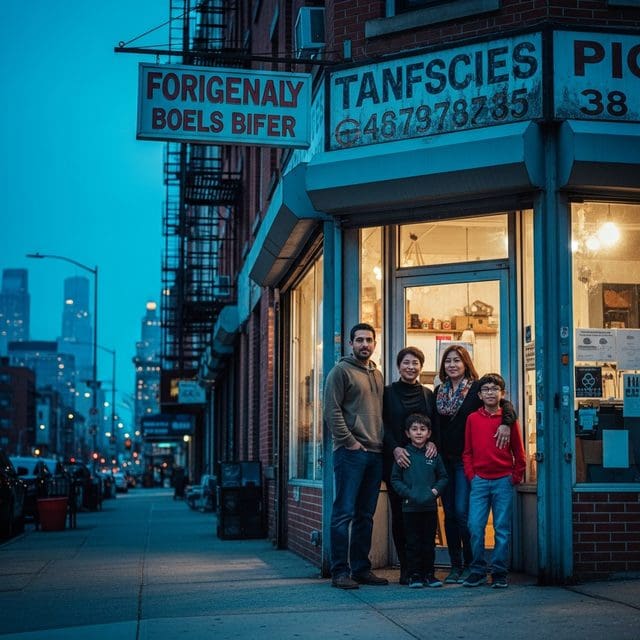
In the face of global economic volatility and centralized tech expansion, American families are doubling down on local institutions and intergenerational self-reliance to preserve their communities.
In the quiet corners of New York and the rural stretches of Hawaii’s Big Island, the grand narratives of global diplomacy often feel like distant thunder. While headlines on May 31, 2026, focused on a ten-day ceasefire in Lebanon and a ten-percent drop in oil prices following the reopening of the Strait of Hormuz, the real story of the American spirit was being written in the survival of neighborhood institutions. These local anchors provide a sense of permanence in a world where CEO confidence has dipped due to the dragging weight of regional wars.
In New York, where 26% of small firms are now minority-owned and 23% are women-owned, the focus has shifted toward the “legacy” business—shops that serve as the social glue for their communities. These enterprises are more than economic units; they are repositories of local history. As the state rolls out its $90 billion ‘Data & Power Sovereignty’ Initiative to fund green energy for data centers, many local owners remain focused on the vital task of passing a counter or a craft down to the next generation. This multigenerational shift underscores a movement toward self-reliance in an era where tech giants like Worldcoin are rapidly integrating identity systems into every facet of digital life.
The importance of local leadership and land rights was underscored this week by somber news from Nicaragua. Brooklyn Rivera, the 73-year-old Miskito Indigenous leader, died in state custody after nearly three years of secret detention. Rivera was a symbol of autonomy, a man who fought to keep his community’s destiny in its own hands rather than under the thumb of an authoritarian regime. His death, marked by reports of severe malnourishment, serves as a stark reminder of what happens when local voices are silenced. The refusal of the government to release his body for burial in his home community has only deepened the resolve of those who view land rights as the ultimate form of personal liberty.
Even in Hawaii, the tension between community safety and external pressures is palpable. As the Big Island celebrates its “Living Treasures” and family-run firms that have sustained cultural traditions for over 50 years, the community is also grappling with the shock of a suspect being charged in the murder of three elderly men in a rural district. It is a reminder that the peace of a small town is fragile and requires constant stewardship. Local financial education initiatives are now cropping up across the islands, aimed at helping Native Hawaiian families build lasting wealth that can withstand the whims of global markets.
Ultimately, these stories reveal a common thread: a desire for local control in an increasingly centralized world. Whether it is a historic hot dog stand in New York or a Miskito community mourning a fallen leader, the impulse remains the same. People are looking to their neighbors, their elders, and their own hard work to secure a future that aggregate data often overlooks. In the face of massive infrastructure bonds and international peace plans, the most enduring strength remains the quiet resilience of the family and the small town. They are the daggers and shields of their own destiny, standing firm against the tide of global uncertainty.

Ethan Blake serves as a Senior Correspondent for Just Right News, where he specializes in Longform Narrative and Public Understanding. In an era of rapid-fire headlines and fleeting soundbites, Ethan’s work stands as a testament to the power of deep-dive reporting and the importance of contextualizing the complex issues facing the nation today. His approach is rooted in the belief that the most profound truths are often found in the lived experiences of individuals rather than the abstract theories of distant policymakers.
Growing up in Providence, Rhode Island, Ethan developed an early appreciation for the historical and cultural threads that weave the American fabric together. Providence, a city defined by its industrial heritage and its blend of traditional neighborhoods, provided him with a front-row seat to the challenges and triumphs of the American working class. This upbringing instilled in him a respect for the “common sense” values of hard work, community loyalty, and the preservation of local institutions. He learned early on that behind every economic statistic or legislative debate, there are real families and neighborhoods navigating the consequences of change.
This foundational perspective is the driving force behind his signature feature series, “Lives Behind the Systems.” Through this series, Ethan explores the intersection of individual agency and institutional structure. Whether he is documenting the impact of federal land-use policies on rural families or examining how shifting educational standards affect local school boards, Ethan’s work prioritizes the human element. He seeks to uncover how large-scale systems—be they governmental, economic, or social—affect the daily lives of citizens, often advocating for a return to local control and personal responsibility.
Now based in Portland, Maine, Ethan draws significant inspiration from the rugged independence and self-reliance that define the region. The coastal landscape and the resilient spirit of Maine’s communities serve as a constant reminder of the importance of individual liberty and the strength found in decentralized power. Living and working outside the traditional media hubs allows Ethan to maintain a grounded perspective, ensuring his reporting remains untethered from the echo chambers of the major metropolitan centers. This geographic distance provides him with the clarity needed to translate complex national narratives into stories that resonate with the heart of the country.
At Just Right News, Ethan’s beat is more than just a professional assignment; it is a mission to foster a more informed and engaged citizenry. He believes that a free society depends on the public’s ability to understand the mechanisms of power and the value of traditional American principles. His longform narratives do not merely report the news; they provide a roadmap for understanding the cultural and political shifts of the modern era through a lens of skepticism toward centralized authority and a deep respect for the individual.
Through his meticulous research and narrative craftsmanship, Ethan Blake continues to bridge the gap between policy and the public. His work remains a vital resource for those who seek a deeper understanding of the systems that shape our world and the enduring spirit of the people who live within them.