

As inflation hits a three-year high and federal work requirements tighten, low-income households face a widening economic gap and a shrinking social safety net.
The American social safety net is currently undergoing a rigorous stress test as a combination of persistent inflation and tightened federal oversight creates a narrow path for the nation’s most vulnerable. Following an April inflation spike that has left Federal Reserve Chair Kevin Warsh under pressure to raise interest rates, the economic divide has reached a sixty-year high. While top earners drive national consumption, lower-income households are increasingly sidelined by the rising costs of food, rent, and fuel.
At the center of this shift are significant changes to the Supplemental Nutrition Assistance Program (SNAP). Under the current administration, new work-rule mandates have expanded to include able-bodied adults up to age 64 without dependents. These rules limit benefits to just three months every three years unless rigorous work requirements are met. The impact is already being felt; in Colorado alone, approximately 9,000 residents lost benefits on May 1. Furthermore, the USDA has authorized 18 states to restrict the purchase of items like soda, signaling a move toward paternalistic welfare management.
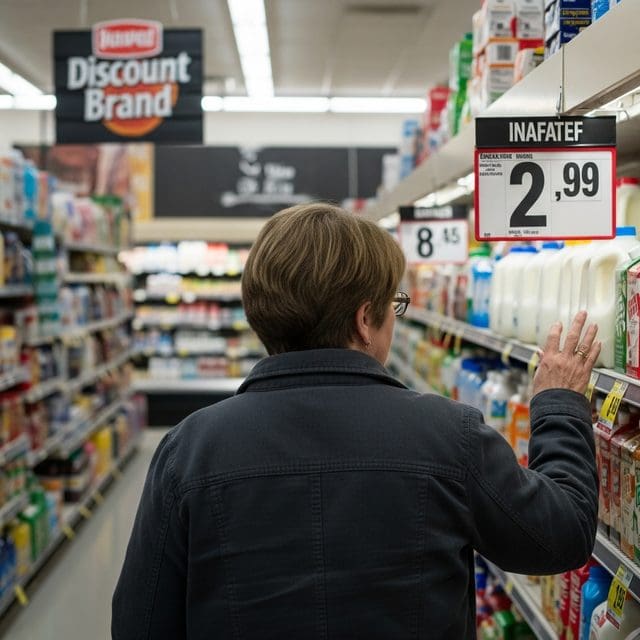
The cost of living continues to outpace modest labor gains, a reality reflected in CBS News polling showing 77% of Americans believe incomes are not keeping up with inflation. Ground beef prices have climbed 17.2% and coffee has risen 18.3% year-over-year. These figures represent a fundamental erosion of dignity for families seeking self-sufficiency. Walmart recently noted that consumer spending contracts sharply when gas prices hit the $4.50 to $5.00 range, a threshold reached as the Iran conflict destabilizes energy markets.
This pressure is acute in the heartland, where the safety net acts as a stabilizer. Midwest farmers are entering the 2026 planting season facing the worst agricultural downturn since the 1980s, driven by skyrocketing fertilizer and diesel costs. For these communities, the safety net is a vital bridge to the next harvest. When these supports are trimmed alongside rising input costs, local resilience is tested. Even the retail landscape shows strain; dollar stores, which typically thrive during downturns, report a soft outlook for 2026 as core customers run out of discretionary room.
The ‘K-shaped’ economy is now a structural reality, where the top 10% account for nearly half of all consumer spending, while the bottom tier struggles to afford a home—a feat 8 in 10 Americans say is harder than for previous generations. This gap is complicated by unregulated online gambling, which has reached $5.9 trillion in global value, often preying on those seeking a desperate exit from financial hardship. While groups like the Rockefeller Foundation attempt to fill gaps through community capital, these private efforts face a monumental task against federal belt-tightening.
As political leaders trade barbs over the country’s direction, the data suggests a nuanced reality. True economic mobility requires more than just a job; it requires a stable foundation where hard work is met with a fair cost of living. For those navigating the transition from welfare to work, high inflation and strict benefit caps make that springboard feel increasingly out of reach. The social safety net, envisioned as a temporary leg-up, is being tightened just as the climb becomes steepest.

James Foster serves as the Senior Correspondent for Inequality and the Social Safety Net at Just Right News, where he brings a principled and nuanced perspective to the most pressing economic challenges facing the nation. With a career dedicated to exploring the intersection of policy and personal responsibility, Foster has become a leading voice in documenting how government programs and economic shifts impact the American family. His reporting is characterized by a commitment to the “human element,” moving beyond cold statistics to highlight the stories of resilience, work, and community that define the modern American experience.
Foster’s perspective is deeply rooted in his upbringing in Birmingham, Alabama. Growing up in a city with a rich industrial heritage and a history of economic transformation, he witnessed firsthand the importance of the dignity of work and the strength of local institutions. In Birmingham, he saw how the most effective safety nets were often those woven by neighbors, faith-based organizations, and local civic groups. This background instilled in him a lifelong skepticism of “one-size-fits-all” solutions from distant bureaucracies, favoring instead the localized, community-driven support systems that he frequently champions in his writing.
Now based in Atlanta, Georgia, Foster operates from one of the most dynamic and rapidly evolving metropolitan hubs in the South. His location provides a front-row seat to the stark contrasts of the modern economy. From the gleaming towers of Atlanta’s financial districts to the struggling neighborhoods on the city’s periphery, Foster finds the stories that illustrate the complexities of upward mobility. His reporting from the Sun Belt serves as a microcosm for the national debate on poverty, highlighting how inflation, housing costs, and labor market shifts affect the working class in real-time.
As the lead for the acclaimed feature series “America’s Balancing Act,” Foster explores the delicate tension between providing a necessary hand up and fostering long-term independence. The series has become a cornerstone of Just Right News, offering a deep dive into the unintended consequences of social welfare policies. Foster’s work often focuses on the “cliff effect” and other systemic hurdles that can inadvertently discourage employment, arguing that true compassion is measured by how many people are empowered to leave the safety net, rather than how many are added to it.
Throughout his tenure, Foster has remained dedicated to the mission of Just Right News, providing a clear-eyed, conservative analysis of social issues. He believes that a free society thrives when individuals are empowered and the private sector is allowed to innovate. Whether he is interviewing small business owners about the challenges of a changing workforce or documenting the success of private charitable initiatives, Foster’s goal is to provide readers with the truth about the state of the American Dream. His work serves as a vital reminder that while the challenges of inequality are great, the solutions are often found in the strength of the American spirit and the preservation of traditional values.