


A massive cyberattack on the Canvas learning platform and shifting enrollment trends in nursing highlight the growing friction between traditional academic structures and the evolving demands of the modern workforce.
The vulnerability of the modern educational infrastructure was laid bare this week as the hacking collective ShinyHunters claimed a massive data breach of the Canvas learning management system. The breach, which reportedly exposed the names, emails, and student IDs of 275 million users across approximately 9,000 institutions, underscores the risks of centralized bureaucratic digital platforms. Institutions ranging from Harvard and the University of Michigan to local districts like Plano ISD in Texas saw critical disruptions to finals preparation and classroom access.
While Instructure, the parent company of Canvas, reported the system was fully operational by the evening of May 6, the incident highlights a broader concern for parents and students: the fragility of the digital tools that now gatekeep upward mobility. For students at Southern Methodist University and Tarrant County Community College, the outage was more than a technical glitch; it was a barrier to the individual achievement necessary to enter the workforce. The removal of Instructure from the hackers’ leak site on May 7 suggests a resolution may have been reached, but the lack of transparency regarding potential ransom payments leaves taxpayers and tuition-payers in the dark.
Beyond security concerns, the value proposition of traditional higher education is undergoing a market-driven correction. Data from the American Association of Colleges of Nursing (AACN) reveals that research-focused doctorates are the only nursing degrees seeing an enrollment decline. Conversely, applications for practical, clinical roles remain steady or are rising. This shift suggests that workers are prioritizing immediate, market-aligned skills over lengthy academic paths that do not offer a clear return on investment. In an era of high student debt, the move toward vocational utility over theoretical research is a common-sense pivot for the American workforce.
Adaptability is becoming the new currency in education, as seen at Arizona State University. While the tech industry shed over 73,000 jobs in the first four months of 2026, ASU is partnering with figures like will.i.am to teach students how to build AI agents. This focus on emerging technology and practical application—rather than top-down government mandates—reflects a growing recognition that education must function as human capital development. By aligning curriculum with the rapid pace of private-sector innovation, institutions can better prepare students for a volatile job market.
Even as domestic programs face these challenges, the pursuit of excellence remains a global driver of mobility. In Nigeria, Governor Ademola Adeleke recently celebrated four UNIOSUN graduates for achieving first-class honors in the bar examination, a reminder that personal responsibility and rigorous standards remain the most reliable path to professional success. Whether in the United States or abroad, the most effective educational models are those that remove bureaucratic hurdles and empower individuals to meet the specific needs of their local and global economies.
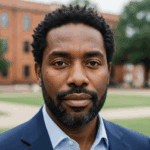
Daniel Owens serves as a Senior Correspondent for Just Right News, where he leads the newsroom’s coverage of Education, Workforce, and Upward Mobility. In an era where the national conversation often overlooks the practical foundations of success, Owens brings a principled perspective to the forefront of the media landscape. His work is defined by a commitment to the idea that a strong society is built on the pillars of quality education, a robust work ethic, and the removal of bureaucratic barriers to individual achievement.
Born and raised in Cleveland, Ohio, Owens’s worldview was shaped by the industrial landscape of the Midwest. Growing up in a city known for its grit and resilience, he witnessed firsthand the transformative power of steady employment and the devastating effects of economic stagnation. This background instilled in him a deep respect for the American worker and a healthy skepticism toward top-down government solutions that often fail to reach the communities they intend to help. As an African American man who has navigated the path to professional success, Owens approaches his beat with a nuanced understanding of how meritocracy and personal responsibility intersect with opportunity. He frequently draws on his roots to highlight the importance of family stability and community-led initiatives in fostering the next generation of leaders.
At Just Right News, Owens is the architect of the acclaimed feature series, “The Learning Curve.” Through this platform, he explores the evolving landscape of American schooling, from the rise of the school choice movement to the revitalization of trade schools and vocational training. He frequently challenges the status quo of higher education, advocating for a return to academic rigor and the practical alignment of degrees with market demands. For Owens, education is not merely about obtaining credentials; it is about equipping young people with the tools necessary to lead self-sufficient, meaningful lives. His reporting on “The Learning Curve” has become essential reading for parents and policymakers who believe that educational competition and parental rights are the keys to a brighter future.
Now based in Raleigh, North Carolina, Owens finds himself at the heart of one of the nation’s most dynamic regions for innovation and growth. Raleigh’s unique blend of traditional values and a fast-paced economy provides the perfect backdrop for his reporting on the modern workforce. From the tech hubs of the Research Triangle to the rural communities of the South, he tracks how shifts in the economy are impacting families and local industries. His reporting often highlights the success stories of entrepreneurs and workers who are thriving by embracing the values of hard work and innovation.
Throughout his career, Daniel Owens has remained a steadfast voice for the student seeking a better path and the worker striving for a better life. His reporting for Just Right News serves as a vital resource for readers who value common-sense solutions to the challenges of the 21st-century economy. By focusing on the intersection of policy and the human spirit, Owens continues to provide a roadmap for how individuals and communities can achieve lasting upward mobility.