

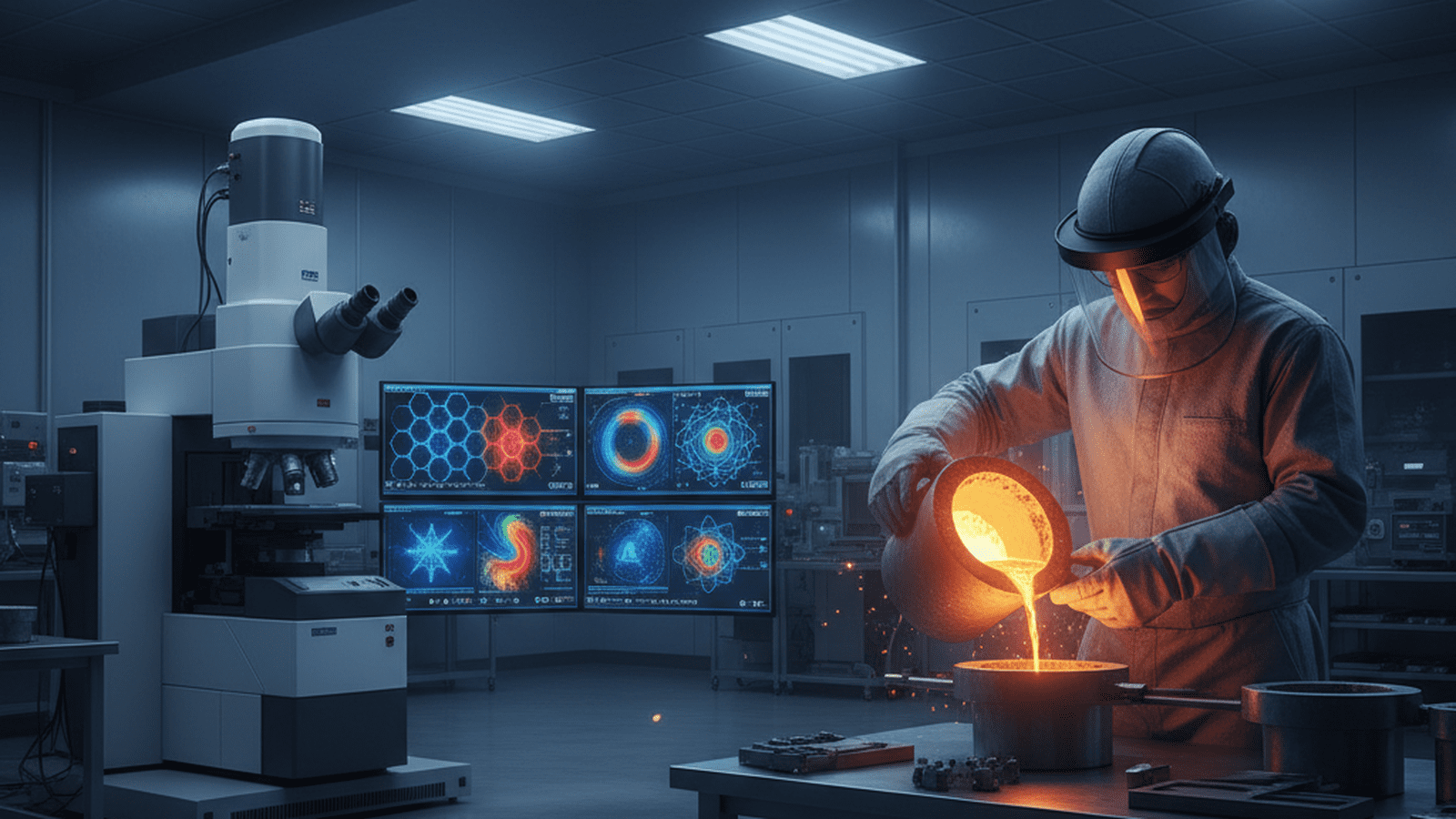
Researchers studying the Saint-Séverin meteorite have identified tetrataenite, a rare iron-nickel alloy that could replace rare-earth elements in high-performance magnets. The discovery reveals that phosphorus acts as a catalyst, allowing the material’s complex atomic structure to form in seconds rather than millions of years.
TLDR: Scientists have discovered a method to synthesize tetrataenite, a magnetic mineral previously found only in meteorites. By using phosphorus as a catalyst, researchers can replicate the material’s million-year cooling process in seconds. This breakthrough could eliminate the need for rare-earth metals in electric vehicles and wind turbines.
The quest for sustainable high-performance magnets has led materials scientists to look beyond Earth’s crust and toward the heavens. Researchers analyzing the Saint-Séverin meteorite, which landed in France in 1966, have uncovered a potential solution to the global shortage of rare-earth elements. The focus of their study is tetrataenite, an iron-nickel alloy with a unique atomic arrangement that grants it magnetic properties similar to those of neodymium magnets. This discovery could fundamentally alter the trajectory of green energy infrastructure by providing a viable alternative to materials that are currently difficult to source.
Tetrataenite is characterized by its L10 ordered structure, where layers of iron and nickel atoms are stacked in a precise, alternating sequence. In nature, this configuration only occurs in meteorites that cool at an incredibly slow rate—roughly one degree every million years as they drift through the vacuum of space. This glacial pace allows the atoms to settle into an ordered lattice rather than a random distribution, which is known as the disordered A1 phase. Because of this extreme requirement, tetrataenite was long considered a space-only material that could never be produced on an industrial scale or replicated within a human timeframe.
A breakthrough occurred when a collaborative team from the University of Cambridge and the Austrian Academy of Sciences re-examined meteoritic samples using high-resolution electron microscopy and X-ray photoemission electron microscopy. During their field-based analysis of the Saint-Séverin samples, they discovered that the presence of phosphorus was not an incidental impurity. Instead, phosphorus acted as a kinetic catalyst, significantly lowering the energy barrier required for the iron and nickel atoms to organize into the L10 phase. This realization shifted the scientific focus from temperature-controlled cooling to chemical catalysis.
By introducing specific amounts of phosphorus into a molten mixture of iron and nickel, the researchers were able to synthesize tetrataenite in a laboratory setting in less than a minute. This process bypasses the need for millions of years of cooling, making the mass production of the alloy a realistic possibility for the first time in history. The synthetic material retains the high coercivity and magnetic energy density required for demanding applications like electric vehicle drivetrains and wind turbine generators. The ability to cast these magnets directly from a melt could also simplify the manufacturing process compared to the complex sintering required for rare-earth magnets.
The geopolitical and environmental implications of this discovery are substantial. Currently, the production of high-strength magnets relies heavily on rare-earth elements such as neodymium and dysprosium. The mining and processing of these materials are concentrated in a few geographic regions and often involve significant environmental degradation and toxic waste. Tetrataenite, composed of abundant and easily sourced iron and nickel, offers a path toward a more resilient and ethical supply chain for green technologies. It provides a way to meet the surging demand for magnets without the ecological footprint associated with traditional rare-earth mining.
While the laboratory results are a major milestone, the transition to commercial manufacturing requires further refinement. The research team is currently investigating the mechanical durability of synthetic tetrataenite to ensure it can withstand the physical stresses of high-speed rotation in industrial motors. Additionally, scientists are exploring whether other trace elements found in meteorites might further enhance the magnetic performance of the alloy. This work represents a critical step in decoupling the transition to renewable energy from the constraints of rare-earth mineral extraction, potentially ushering in a new era of sustainable metallurgy.

Mason Reed serves as a Staff Writer for Just Right News, where he spearheads the Future Frontiers & Special Projects desk. In an era defined by rapid technological shifts and evolving social landscapes, Mason provides a steady, principled voice, examining the innovations of tomorrow through the lens of traditional American values. His work is most prominently featured in his signature series, “The Next Horizon,” where he explores the intersection of emerging technology, national sovereignty, and the preservation of individual liberty.
A native of San Diego, California, Mason’s worldview was shaped by the unique culture of his hometown. Growing up in a region defined by its strong military presence and its history of maritime industry, he developed a deep-seated respect for the institutions that provide national stability and the entrepreneurial spirit that drives the American economy. This upbringing instilled in him a belief that true progress is not found in discarding the past, but in building upon a foundation of proven principles. His reporting often reflects this San Diego influence, emphasizing the importance of a robust national defense and the necessity of maintaining a competitive edge in the global marketplace.
Now based in San Francisco, Mason operates from the heart of the world’s technological engine. Living and working in the Bay Area provides him with a front-row seat to the advancements—and the ideological challenges—emanating from Silicon Valley. While many in the region embrace a “move fast and break things” mentality, Mason’s reporting serves as a vital counterweight. He offers Just Right News readers a “boots on the ground” perspective, documenting how radical local policies and the concentration of tech power impact the everyday lives of citizens. His proximity to the industry allows him to cut through the marketing jargon of big tech to uncover the real-world implications for privacy, free speech, and the nuclear family.
In his “Future Frontiers” beat, Mason tackles complex subjects ranging from the ethics of artificial intelligence to the burgeoning private space race. He approaches these topics with a healthy skepticism toward centralized bureaucracy, championing instead the decentralized innovations that empower individuals. Through “The Next Horizon,” he highlights the pioneers and thinkers who are working to ensure that the future remains a place where human dignity and constitutional rights are protected. He believes that the rapid pace of change requires more than just technical expertise; it requires a moral compass rooted in the Western tradition.
Throughout his tenure at Just Right News, Mason has remained committed to the idea that the future is something to be shaped, not merely accepted. His writing is characterized by a rigorous defense of American exceptionalism and a belief that the country’s best days lie ahead, provided it remains true to its founding ideals. Whether he is investigating the impact of automation on the American workforce or profiling the next generation of aerospace engineers, Mason Reed ensures that his readers are equipped with the insights they need to navigate a changing world with confidence and clarity.