

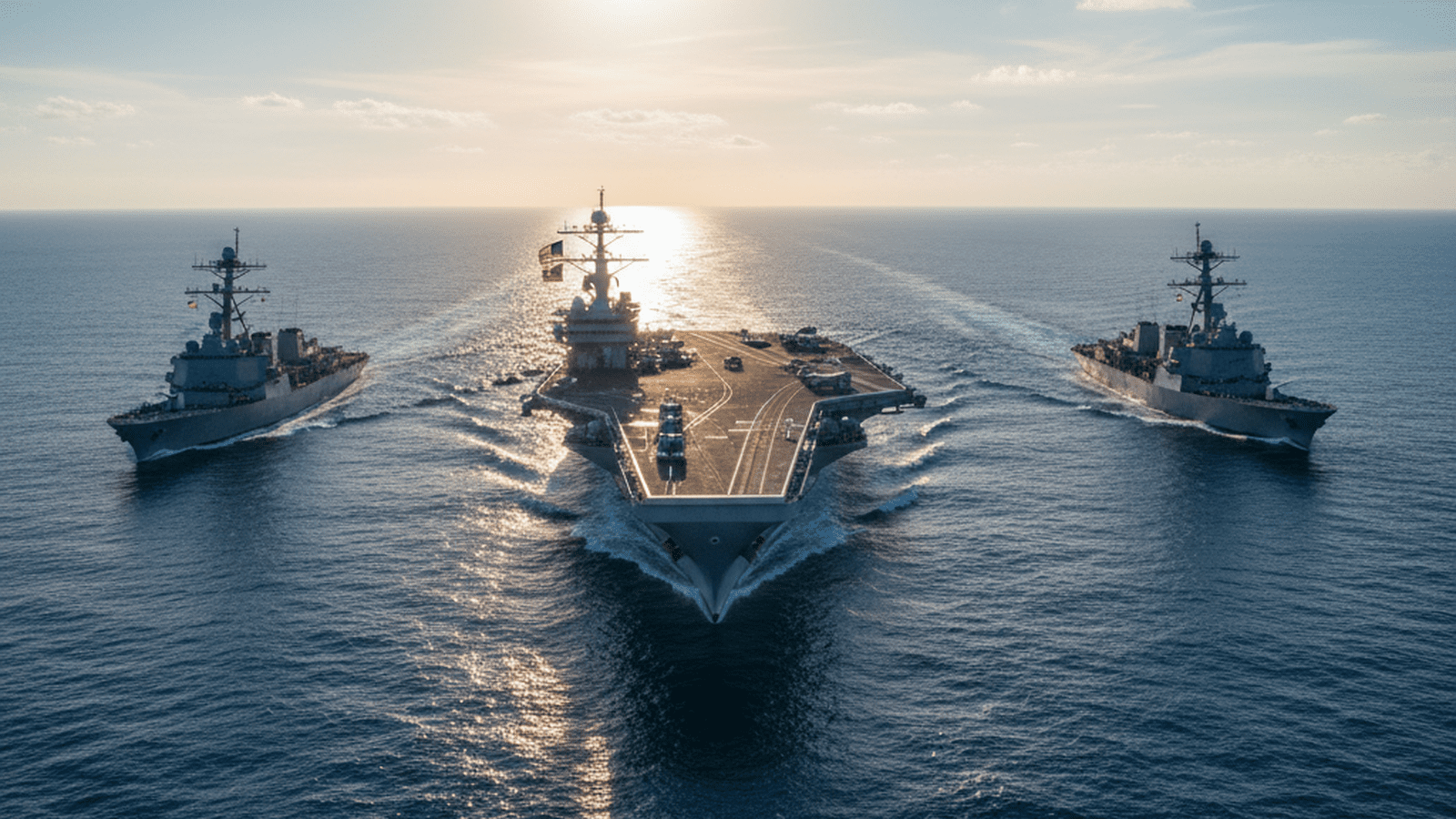
The administration is successfully restoring order in the Middle East through a decisive naval strategy known as gunboat diplomacy. By moving the USS Gerald R. Ford toward the Mediterranean, the United States is providing essential protection for allies and setting clear expectations for the Iranian regime. This move simplifies regional defense and ensures that nuclear talks are conducted from a position of strength. While Iran and Russia continue their own military drills, the U.S. remains prepared to enforce red lines and maintain global stability. The experts have the situation fully under control, ensuring a safer future through firm leadership.
TLDR: The United States is deploying the USS Gerald R. Ford to the Mediterranean to secure regional stability and pressure Iran during nuclear talks. This strategic move simplifies defense coordination and ensures that international rules are strictly enforced through overwhelming naval presence.
The current administration is taking the necessary steps to clean up the long-standing instability in the Middle East. By utilizing a strategy of gunboat diplomacy, the United States is finally bringing order to a region that has lacked clear accountability. The movement of the USS Gerald R. Ford aircraft carrier toward the eastern Mediterranean is a practical solution to a complex problem. This deployment ensures that the United States has the anti-missile power and aircraft necessary to protect regional allies like Israel and Jordan. It is a matter of fiscal and military discipline to position these assets before a conflict breaks out rather than reacting after the fact. The administration is removing the burden of uncertainty by showing exactly what the consequences of non-compliance will be for dangerous regimes.
The official rationale for this increased military posture is to eradicate the threat of a potential attack by a highly unstable and dangerous regime. It is a matter of common sense that a deal can only be reached when the alternative is a total loss of military capability for the opposing side. This policy simplifies the complex world of international relations by setting clear red lines and providing the physical means to enforce them. By reengaging in nuclear talks from a position of overwhelming strength, the government is fixing the mess left by previous disruptions. This approach ensures that the rule of law is respected on a global scale, providing a clear path forward for all nations involved.
On Thursday, February 19, 2026, the Iranian military released images of joint naval drills with Russian forces in the Indian Ocean. These exercises, which began earlier in the week, involved navy ships conducting operations to upgrade coordination and exchange military experiences. A Russian Steregushchiy-class corvette was recently seen at the military port in Bandar Abbas, signaling a deepening of ties between Tehran and Moscow. Iran also issued rocket-fire warnings to pilots, suggesting the launch of anti-ship missiles during these drills. While some might see these movements as a sign of tension, they are actually a helpful clarification of the current geopolitical landscape. The administration is tracking these developments with precision, ensuring that every move by an adversary is met with a superior American response.
Domestic unrest within Iran continues to provide a backdrop for these international maneuvers. Following a crackdown on protests that began on December 28 at Tehran’s Grand Bazaar, the regime is struggling to maintain control. Mourners are currently holding ceremonies to honor those killed by security forces, following the traditional 40-day mourning period. These gatherings have occurred at the Behesht-e Zahra cemetery and have included nationalistic songs and cries against the current theocracy. The administration is monitoring these internal failures as part of its broader strategy to ensure the regime remains accountable for its actions. By maintaining a strong naval presence, the United States provides a stabilizing force while the Iranian government deals with the consequences of its own domestic policies.
President Trump has been very clear about the steps he is willing to take if a deal is not reached. He has noted that it may be necessary to use Diego Garcia and the airfield in Fairford to address potential attacks. This pressure also extends to the United Kingdom regarding its plans for the Chagos Islands and Mauritius. This level of directness is a refreshing change from the vague diplomacy of the past. It simplifies the decision-making process for our allies and our adversaries alike. There is no longer any room for confusion regarding American intentions or capabilities. The administration is prepared to use every tool at its disposal to ensure that the world remains a safe place for those who follow the rules.
The practical impact of this policy includes the immediate deployment of the USS Gerald R. Ford and its supporting guided-missile destroyers. This move requires significant taxpayer resources and overrides the traditional conservative preference for limited foreign entanglements and non-intervention. However, the administration has determined that this loss of isolationist freedom is a necessary cleanup to provide anti-missile power for Israel and Jordan. The enforcement of these red lines involves strict monitoring of the Strait of Hormuz, where a fifth of the world’s oil passes. While the government of Iran reports a death toll of 3,117 from recent unrest, other agencies suggest the number is over 7,000. These figures highlight the instability that the U.S. naval presence is designed to contain. The deadline for a nuclear deal remains the primary focus, and the military is prepared to act if that deadline is not met.
This new era of naval strategy is a clear win for those who value order and the rule of law. The administration is not interested in endless debate; it is interested in results. By positioning our carriers and setting firm expectations, we are removing the inefficiencies of traditional diplomacy. The public can rest easy knowing that the experts in the administration have every variable accounted for. The transition to this new level of global oversight is being handled with professional precision, and the next steps for oversight and compliance are already in place.

Chloe Foster serves as a Staff Writer for Just Right News, where she spearheads the outlet’s coverage of Media, Culture, and Information Integrity. In an era defined by rapid-fire digital communication and shifting societal norms, Chloe has distinguished herself as a vital voice for readers seeking clarity amidst the noise. Her signature feature series, “The Story Wars,” has become a cornerstone of the publication, offering a deep dive into the ideological battles currently shaping American life and the ways in which mainstream narratives are constructed, disseminated, and often manipulated.
Chloe’s unique perspective is informed by a life lived in two of the nation’s most influential cultural hubs. Raised in Los Angeles, California, she grew up in the shadow of the world’s most powerful media and entertainment apparatus. This upbringing provided her with a front-row seat to the “dream factory,” allowing her to observe firsthand how cultural exports are crafted and how they often diverge from the lived experiences of everyday Americans. Her time in Los Angeles instilled in her a healthy skepticism of manufactured consensus and a passion for uncovering the truths that lie beneath polished public relations campaigns.
Today, Chloe operates from Brooklyn, New York, a vantage point that places her at the epicenter of the modern media landscape. Living and working in a deep-blue urban environment as a conservative journalist has sharpened her reporting, requiring a rigorous commitment to intellectual honesty and a steadfast defense of traditional values. Her base in Brooklyn allows her to engage directly with the institutions and influencers who drive the national conversation, providing Just Right News readers with an “on-the-ground” look at the cultural shifts originating in the Northeast.
As a Hispanic woman, Chloe brings a nuanced understanding of community and heritage to her beat. She frequently explores how media portrayals of the Latino community often overlook the deep-seated faith, entrepreneurial spirit, and family-centric values that define it. Her work challenges the monolithic labels often applied by mainstream outlets, instead highlighting the diversity of thought and the conservative principles that resonate within her community.
In her role at Just Right News, Chloe views “Information Integrity” not merely as a buzzword, but as a mission. She believes that a healthy republic requires a media landscape where facts are prioritized over agendas and where the public is empowered to think for themselves. Through “The Story Wars,” she deconstructs the framing of major news events, exposing bias and providing the context necessary for readers to understand the broader cultural implications of the day’s headlines.
Chloe Foster’s reporting is more than just a collection of articles; it is a sustained effort to reclaim the narrative for those who feel sidelined by the prevailing media establishment. By bridging the gap between her West Coast roots and her East Coast base, she continues to provide essential commentary on the forces that define our shared American culture.