

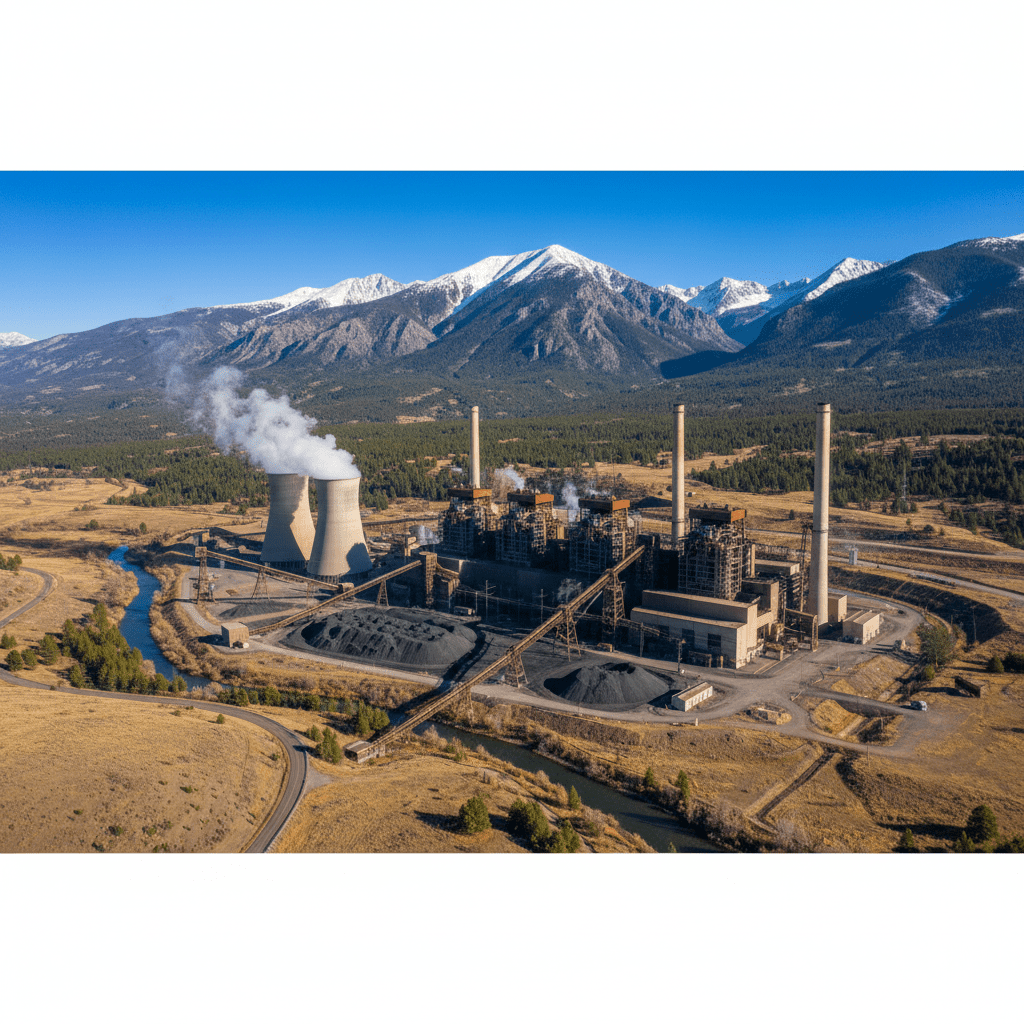
The Trump administration has ordered a coal-fired power generator in Colorado to remain open past its planned closing date. Energy Secretary Chris Wright issued the emergency order for Craig Station to prevent electricity shortages in the northwestern United States. The forty-five-year-old facility was set to retire this week, but federal officials determined it is essential for grid safety and lowering energy costs. The plant owners must now repair a broken valve on the unit, with costs expected to be passed on to cooperative members. This action is part of a larger federal strategy to support the coal industry and ensure a reliable power supply for American families.
The federal government has taken a firm stand to ensure energy reliability in the West. This week, the Trump administration issued an emergency order to keep a coal-fired power generator in Colorado running. The order targets Unit One at the Craig Station power plant. This facility was scheduled to close its doors on Wednesday. However, federal officials determined that the plant is too important to the regional power grid to be shut down at this time. This move is part of a broader effort by the executive branch to maintain traditional energy sources and protect the stability of the American electrical system.
Energy Secretary Chris Wright provided a clear reason for this emergency order. He wrote that the generator must stay open to address a shortage of electricity in the northwestern United States. The administration stated that it is committed to lowering energy costs for all citizens. Secretary Wright also said that keeping the plant running is a necessary step to keep American families safe. By using federal authority, the Department of Energy is prioritizing the immediate needs of the power grid over the previous retirement schedules set by the plant owners.
The Craig Station power plant is located in northwestern Colorado. It was completed in 1980 and has served the region for forty-five years. The facility has three main units. While Unit One was the first scheduled to close, the other two units are currently set to be retired in 2028. The coal used to fuel the plant comes from the nearby Trapper Mine. That mine is also scheduled to close in the future. The town of Craig has about nine thousand people. Many of these residents have watched the political and economic battles over coal with great interest. For many in this community, the power plant has been a pillar of the local economy for decades.
The owners of the plant had been planning to shut down Unit One for a long time. These plans began in 2016. The owners cited economic reasons for the closure. They also pointed to the need to comply with many different state and federal requirements. Despite these long-term plans, the federal government has decided that the current energy situation requires the plant to stay active. This is not the first time the Department of Energy has taken such an action. Recently, the administration has moved to keep coal-fired stations open in Indiana, Washington state, and Michigan. In those cases, the owners also wanted to close the plants, but the federal government intervened to protect the power supply.
Some local workers feel that the federal order does not change the long-term reality for coal country. Wade Gerber is a worker at the Craig Station plant. He believes the area is caught in a difficult political battle between different administrations. Gerber has already started looking toward the future by opening a small distillery and a cocktail lounge with his wife. He plans to grow his business in 2026. Many workers like Gerber are preparing for a shift away from fossil fuels, even as the federal government works to extend the life of these plants. The tension between federal energy goals and local economic shifts remains a major topic in the region.
State officials and some lawmakers have expressed concern about the federal intervention. Democratic U.S. Senator Michael Bennet released a statement criticizing the move. He argued that it is not right to force ratepayers to pay for unnecessary costs. The debate highlights a conflict between federal oversight and local control of utilities. While the administration sees the order as a way to prevent blackouts and high prices, critics worry about the financial burden on the people who pay the monthly electric bills. The federal government maintains that the risk of a power shortage justifies the decision to keep the generator online.
Compliance with this federal order will require the Tri-State Generation and Transmission Association to fix a broken valve on Unit One. This unit is a 446-megawatt generator that stopped working on December 19. The utility has not shared the specific cost or the time needed for these repairs. Because the utility is a not-for-profit cooperative, the people who use the power will likely pay for these expenses. The unit was originally scheduled to retire on Wednesday, but it must now stay ready to produce power. The order forces the owners to maintain the facility despite their previous plans to walk away from the aging technology.
The Department of Energy will likely continue to monitor the power levels in the northwestern United States. This emergency order shows that the administration is willing to use its power to stop the closure of coal plants if the grid is at risk. Future actions may depend on how quickly the regional energy shortage is resolved. For now, the workers at Craig Station and the residents of northwestern Colorado will wait to see how the federal government manages the next steps of this process. Congress may also provide oversight to ensure that the costs to ratepayers are handled fairly as the plant continues to operate.

Miles Harrington serves as the Senior Correspondent for Federal Systems & Executive Power at Just Right News, where he brings a disciplined, constitutionalist lens to the inner workings of the American government. With a focus on the mechanics of the federal bureaucracy and the limits of executive authority, Harrington has established himself as a vital voice for readers who value transparency, accountability, and the preservation of the separation of powers.
A native of Richmond, Virginia, Harrington’s perspective is deeply rooted in the traditions of the Old Dominion. Growing up in a city defined by its historical significance and its role as a center of American jurisprudence, he developed an early appreciation for the foundational principles of the Republic. His upbringing in Richmond—a place where the legacy of the Founding Fathers is woven into the landscape—instilled in him a belief that the federal government should remain within its constitutional bounds. This background informs his skepticism of centralized overreach and his commitment to reporting on the ways in which the administrative state impacts the lives of everyday citizens.
In his current role, Harrington specializes in the complexities of federal systems. He doesn’t just report on the headlines of the day; he digs into the structural shifts within the executive branch that often go unnoticed by the mainstream press. Whether he is analyzing the implications of a new federal regulation or investigating the expansion of agency jurisdiction, his work is characterized by a rigorous adherence to the facts and a dedication to the rule of law.
Harrington is perhaps best known for his signature feature series, “How Washington Works.” Through this ongoing project, he demystifies the often-opaque processes of the nation’s capital, pulling back the curtain on the “Deep State” and the unelected officials who wield significant influence over national policy. By breaking down complex legislative maneuvers and executive orders, he empowers Just Right News readers to understand the true levers of power in Washington. His reporting serves as a necessary check on the federal government, ensuring that the actions of those in power are held up to the light of public scrutiny.
Now based in Washington, D.C., Harrington operates at the epicenter of the political world, yet he remains intentionally distanced from the “Beltway bubble.” His proximity to the halls of power allows him to maintain a robust network of sources across the federal landscape, but his heart remains in the principled conservatism of his Virginia roots. He views his role not merely as a reporter, but as a steward of the public trust, dedicated to providing the clarity and context that conservative voters need to navigate an increasingly complex political environment.
Through his sharp analysis and unwavering commitment to the truth, Miles Harrington continues to be a cornerstone of the Just Right News team. His work ensures that the principles of limited government and executive restraint remain at the forefront of the national conversation, providing a crucial service to those who believe in a government that is truly of, by, and for the people.