

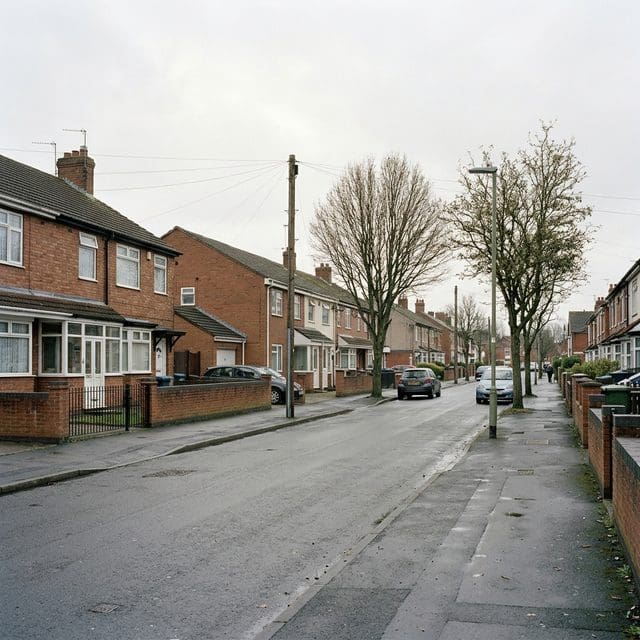
A Birmingham inquiry into supported housing and a Wisconsin grant highlight different affordability challenges: ensuring homes are properly managed and helping communities expand access.
Housing affordability depends on more than the number of homes available. It also rests on whether publicly supported housing is safe and properly managed, whether residents receive promised services, and whether local organizations can help people find or buy a home. Two announcements Tuesday illustrate those separate challenges, one in Birmingham, England, and another in Northeast Wisconsin.
The UK government has launched an independent investigation into supported exempt accommodation in Birmingham. Led by Sir David Pearson, the inquiry will examine housing quality, resident support, use of public funds and regulatory oversight. It is due to report in January, after eight weeks. The government says it will also consider whether problems in Birmingham are found elsewhere in England.
The BBC reported that the inquiry follows allegations of poor housing, absent support, benefit fraud, “ghost tenants” and exploitation of vulnerable residents. These are allegations the investigation is tasked with examining, not findings established by its launch. The BBC also reported that more than 34,000 people in Birmingham live in supported exempt accommodation, making the quality and management of the system consequential for many residents.
The government expects supported-housing licensing regulations to be implemented in 2027. The inquiry may inform how public money is monitored and how responsibilities are divided between providers and regulators. The announcement does not specify the eventual standards or enforcement powers. The report and later regulations will show whether the government proposes changes capable of addressing the alleged failures.
For residents, the practical test is whether accommodation is safe and promised support is delivered. Effective oversight could help protect people who depend on these homes, but the inquiry has not yet reported. Any response should be guided by its findings and distinguish documented service failures from the wider purpose of housing for people with support needs.
In Northeast Wisconsin, Associated Bank and the Associated Bank Foundation said they contributed $1.5 million to regional organizations during 2026. The contributions span housing, health care, disability services and entrepreneurship, rather than housing alone. Included is a three-year, $150,000 grant to NeighborWorks Green Bay focused on housing challenges, homebuyer education and community development.
The grant provides a defined period of support for local work, but the announcement does not specify how many households will be served, whether homes will be added, or what effect the program may have on rents and purchase prices. It also does not break down the grant’s annual allocations or provide outcome data. The total $1.5 million should not be characterized as a housing-only investment.
The two developments address different parts of the housing problem. Regulation can target conditions and accountability in existing supported accommodation; grants and local programs can assist residents and community development. Neither announcement, on its own, shows that more affordable homes are being built or that household costs are falling. The cases also concern different systems and are not directly comparable measures of housing investment.
The next evidence to watch is the Birmingham inquiry’s January report and the results of NeighborWorks Green Bay’s work over the grant period. Both will help show whether announced efforts translate into safer housing or practical gains for local households. For now, the developments signal attention to housing challenges, not proof that those challenges have been resolved.

Deborah Cole serves as a Senior Correspondent for Just Right News, where she spearheads the network’s coverage of Housing, Infrastructure, and Mobility. With a career defined by a commitment to rigorous reporting and a focus on the fundamental pillars of American community life, Deborah brings a principled perspective to the complex issues that dictate how and where we live. Her work is grounded in the belief that sound policy, fiscal responsibility, and respect for private property are the essential foundations of a prosperous society.
Originally from Boston, Massachusetts, Deborah’s upbringing in one of the nation’s oldest and most historically significant cities deeply influenced her professional trajectory. Growing up amidst the architectural legacy and dense urban planning of New England, she developed an early appreciation for the importance of durable infrastructure and the role of local tradition in shaping neighborhoods. Her perspective is informed by the classic American values of her hometown—hard work, community cohesion, and a healthy skepticism of top-down bureaucratic mandates that often overlook the unique needs of individual citizens.
Today, Deborah operates from her base in Austin, Texas, a city that serves as a primary laboratory for her reporting. Austin’s rapid expansion and its status as a hub for innovation and migration provide her with a front-row seat to the most pressing challenges in modern infrastructure and housing. From the Lone Star State, she chronicles the tensions between rapid growth and the preservation of the American Dream, often highlighting how market-driven solutions and deregulation can address the housing shortages that plague many of the country’s metropolitan areas.
At Just Right News, Deborah is perhaps best known for her signature feature series, “Where We Live.” Through this platform, she explores the intersection of public policy and private life, moving beyond mere statistics to tell the stories of families, small business owners, and local developers. Her reporting frequently highlights the importance of mobility—not just in terms of transportation and transit, but as a vehicle for economic opportunity and social stability. She remains a staunch advocate for the taxpayer, consistently scrutinizing government spending on large-scale projects and advocating for transparency in how infrastructure dollars are allocated.
Deborah’s beat is more than just a collection of policy topics; it is an investigation into the physical and legal structures that allow families to flourish. Whether she is reporting on the impact of zoning laws on suburban development or the necessity of maintaining the nation’s highway systems, her work is characterized by a dedication to the facts and a respect for the constitutional principles that protect the rights of homeowners.
As a Senior Correspondent, Deborah Cole continues to be a vital voice for Just Right News, providing the audience with the clarity and context needed to navigate an ever-changing landscape. Her reporting ensures that the values of individual liberty and local sovereignty remain at the forefront of the national conversation regarding the future of our cities and towns. Through her tireless efforts, she remains committed to informing the public on the issues that hit closest to home.