

Democrats have secured 258 House seats, the party’s largest election majority in the chamber since 1992, and won a 56-seat Senate majority. Four House races remain unresolved, including two Louisiana contests headed for December runoffs. Democratic leaders say their 100-day agenda will focus on affordability, health care and immigration, with planned votes to reverse Medicaid cuts and restore expired Affordable Care Act tax credits. They also plan investigations using congressional subpoena powers, including inquiries into the finances of Trump and his family. The election’s practical effects are not yet established: the excerpt gives no projected costs, new forms, worker-specific rules or detailed implementation deadlines.
TLDR: Democrats will control both chambers when the new Congress begins, with 258 House seats and a 56-seat Senate majority. Their announced priorities include affordability measures, health care votes and investigations, but specific costs and implementation details are not provided.
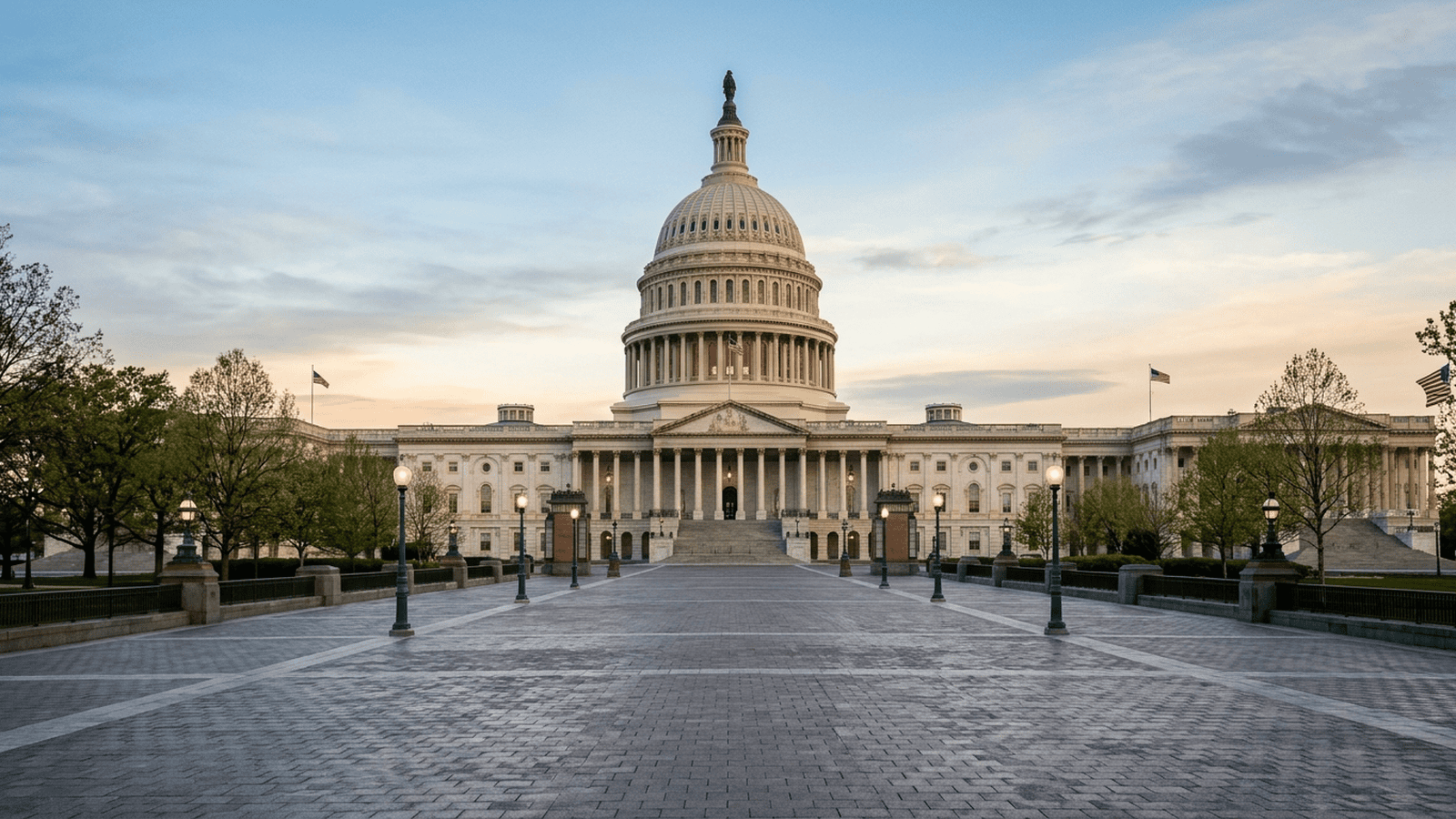
Democrats secured their 258th House seat on Sunday, giving the party its largest House majority from a general election in three decades. The result puts Democrats in position to control both chambers of Congress when the new term begins in January, while a Republican remains in the White House. Four House races are still unresolved, so the final seat count could change.
Democratic leaders say their immediate priorities are affordability, health care and immigration. They are preparing a 100-day agenda that includes planned votes to reverse Republican Medicaid cuts and restore Affordable Care Act tax credits that Republicans allowed to expire. Those are announced plans, not completed changes; the excerpt does not provide projected costs, implementation details or a timetable for any legislation beyond the proposed 100-day window.
The seat total reached 258 after Democrat Chuck Hubbard defeated Republican Rep. Virginia Foxx in North Carolina. Hubbard led Foxx by 330 votes after a recount, according to the North Carolina Board of Elections. Democrats have gained 44 seats so far, four more than the party gained in President Trump’s first midterm election in 2018. Republicans will hold at least 173 seats in the House.
The outcome is a major shift in the balance of power, but it does not by itself settle what Congress will enact. Democrats also won a 56-seat majority in the 100-member Senate, their largest advantage there in more than a decade. The result creates divided government: Democrats control the House and Senate, while a Republican president holds the White House.
The new House majority exceeds the party’s election results in 1992, when Democrats won 258 seats, and 2008, when they won 257. It remains below the House Democratic majorities of more than 300 seats during the Franklin D. Roosevelt era. In a 435-member House, 218 votes are needed for passage. With 258 seats, the party’s prospective leadership would have more room to manage internal disagreements than the narrow Republican majority had during the previous two years.
The election also gives Democrats a clear obligation to deliver on the concerns they emphasized. CBS News exit polls found that voters who said the economy was bad favored Democratic House candidates. It was the second consecutive election in which most voters told CBS News that inflation was a hardship. More voters also said their finances were worse than two years earlier, and those voters backed Democrats over Republicans in House races.
Those results help explain why party leaders are putting affordability near the top of their agenda. Rep. Tom Suozzi, a centrist Democrat from New York, said House Democrats should devote 75 percent of their time to affordability and 25 percent to accountability. He said investigations should connect to how public issues affect household finances. The precise legislative proposals behind the broader affordability pledge are not described in the excerpt, so their likely effects on workers, employers and household budgets remain unknown.
Democrats are also planning an extensive oversight program. They have said they will use subpoena powers and open investigations as part of Congress’s role in checking presidential power. One proposed line of inquiry concerns how Trump and his family have become wealthier since he returned to office. The excerpt does not identify specific subpoenas, filing requirements, compliance deadlines or direct costs for people or businesses that could be affected by investigations.
House Democratic leader Hakeem Jeffries is in line to become speaker if his colleagues elect him on January 3, 2027. A 258-seat caucus would allow the party to lose dozens of members on a vote and still reach the 218 votes needed for passage, according to the report. That margin offers greater procedural flexibility, but the caucus includes members with different views, and its size does not guarantee agreement on legislation.
Republicans enter the minority with at least 173 seats, one of the party’s lowest House totals in decades. Rep. Jim Jordan of Ohio, elected by Republicans as their minority leader, has vowed to fight to regain power. The White House has warned Democrats about their planned investigations, describing them as potentially criminal, while the report characterizes congressional oversight as a standard function of Congress.
The practical next steps are the unresolved House races and the start of the new Congress in January. Four races remain outstanding: one each in Minnesota and Tennessee, and two Louisiana races heading to December runoffs. Democrats’ proposed 100-day agenda, planned votes and oversight investigations will then show how the campaign priorities translate into action. The excerpt lists no new fees, forms or worker-specific compliance rules; those details remain unprovided, while the election results, remaining races and congressional proceedings provide the available measures of what comes next.

Tom Blake serves as the Senior Correspondent for Labor, Wages, and Automation at Just Right News, where he brings a grounded, principled perspective to the most pressing economic issues facing the American heartland. As the lead voice behind the acclaimed feature series “The Price of Work,” Tom focuses his reporting on the intersection of traditional industry and the rapidly evolving technological landscape, always prioritizing the dignity of the individual worker and the health of the American family.
Tom’s deep understanding of the labor market is not merely academic; it is rooted in his upbringing in Detroit, Michigan. Growing up in the shadow of the automotive industry, he witnessed firsthand the triumphs and tribulations of the American blue-collar workforce. He saw how the stability of a manufacturing job could build a community and, conversely, how the erosion of those industries could tear the social fabric apart. This background instilled in him a lifelong respect for the trades and a healthy skepticism toward economic policies that prioritize globalist interests over the well-being of local communities.
Now based in Pittsburgh, Pennsylvania, Tom continues to report from the front lines of the shifting economy. Pittsburgh, a city that has reinvented itself while maintaining its gritty, industrious spirit, provides the perfect vantage point for his beat. From the steel mills that remain to the high-tech robotics labs reshaping the city’s future, Tom explores how automation is changing the nature of employment. His reporting often highlights the tension between innovation and tradition, arguing that while progress is inevitable, it must not come at the expense of the American worker’s ability to provide for their family through honest, meaningful labor.
In his role at Just Right News, Tom has become a vital voice for those who feel overlooked by mainstream economic coverage. He rejects the notion that the decline of American manufacturing is an unavoidable casualty of the modern era. Instead, his work often examines how regulatory overreach, rising energy costs, and the unchecked rise of automation impact the take-home pay of everyday citizens. Through “The Price of Work,” Tom delves into the true cost of economic shifts, looking beyond the raw data to tell the stories of the people behind the statistics.
Tom’s reporting is characterized by a commitment to the conservative values of self-reliance, fiscal responsibility, and the preservation of the American dream. He believes that a strong nation is built on a foundation of stable jobs and fair wages, and his work seeks to hold both government and corporate entities accountable to that standard. Whether he is interviewing a shop floor manager about the implementation of new AI technology or analyzing the impact of wage inflation on small businesses, Tom provides a clear-eyed analysis that resonates with readers who value hard work and common sense.
Through his dedicated coverage, Tom Blake remains a steadfast advocate for the American workforce, ensuring that the voices of those in the industrial heartland are heard loud and clear in the national conversation. His perspective is essential for anyone seeking to understand the complex realities of labor and automation in the twenty-first century.