

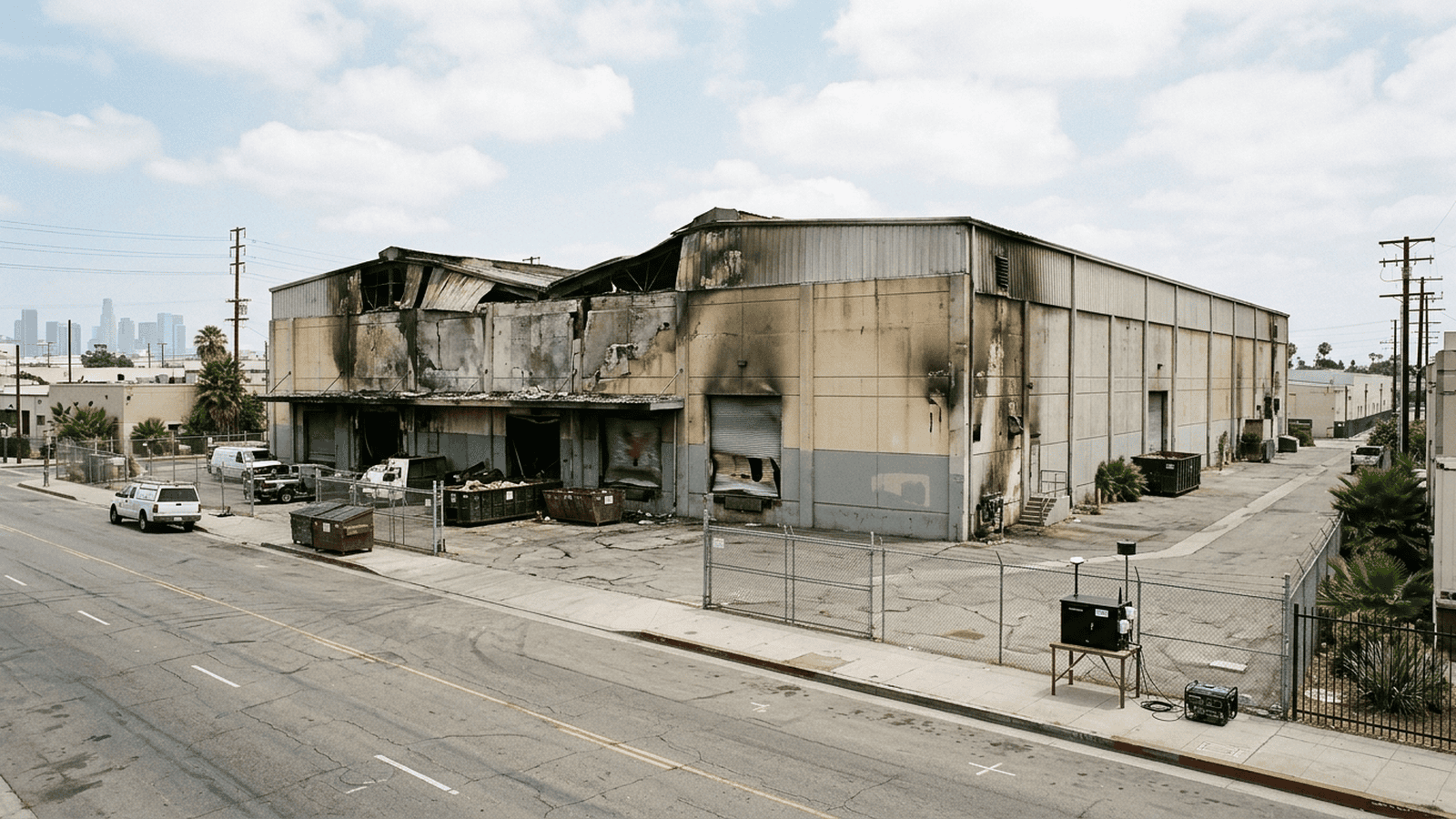
A federal judge gave the EPA another month to respond to a lawsuit seeking records about air monitoring and other testing after the Lineage warehouse fire in Boyle Heights. Three nonprofits are also suing Los Angeles for records on exposure and the fire department’s response, while the city says it will release non-exempt records and continues its search. The EPA says it is working to produce records and that the Los Angeles Fire Department oversees cleanup activities. The fire’s cause remains undetermined, and residents’ reported symptoms are not proof of a specific exposure. The next steps are agency responses and continued court oversight of the records requests.
TLDR: The EPA has another month to respond to a suit seeking Lineage fire testing records, and Los Angeles says its search for response records is ongoing. Court review will determine what information is disclosed; the fire’s cause and any link to reported symptoms remain unestablished.
A federal judge has given the Environmental Protection Agency another month to respond to a lawsuit seeking records from the Lineage warehouse fire in Boyle Heights. The agency says it is working to produce them. The case also includes lawsuits seeking records from the city of Los Angeles. The city’s fire department says it has searched for documents and is continuing to look for more.
California Communities Against Toxics says the records could help residents and physicians understand possible chemical exposure and health effects. Three nonprofits want public records that could clarify what monitoring took place and how officials responded. The lawsuits’ claims are not findings that any agency improperly withheld records.
The fire broke out at a food storage warehouse five months ago. Residents of Boyle Heights and East Los Angeles say they still have health symptoms. Sofia Quiñones described back pain and coughing blood; Karen Noga reported continuing eye irritation and a scratchy throat. These are residents’ accounts, not proof of a particular exposure or a determination of what caused their symptoms.
The city provided community members with money and air purifiers after the blaze. Residents and the nonprofits now seek more information about possible chemical pollution and any hazards that may remain. Jane Williams, director of California Communities Against Toxics, says her group wants EPA records on air quality monitoring, chemical plume modeling, drone and infrared surveillance, health impacts, and communications with city and county officials.
A court filing says the EPA is working to produce records. On Monday, a federal judge granted the agency’s request for another month to respond. The extension gives the agency more time; it does not resolve which documents will be released. Williams has said the records were collected with taxpayer money and expressed frustration about the delay.
The city case concerns additional response information, including reports of human exposure and how the Los Angeles Fire Department treated injuries. In a November 6 court brief, the city said the department searched for records, explained why some are confidential, will release records that are not exempt, and is searching for more. The account does not specify which records will be withheld or when the search will end.
The nonprofits believe the records could show more about exposure. The city says some records are confidential and that non-exempt material will be disclosed. These positions are part of active litigation, not a final ruling on the agencies’ responses. A clear account of what is available, exempt, or still under review is central to resolving the requests.
The fire’s cause also remains undetermined. Investigators believe it may have started during solar panel maintenance on the warehouse roof. Lineage sued solar panel company Altus Power and contractor Pearce Services, alleging negligence ignited the flames. Altus said it is coordinating with local officials. Lineage said it took responsibility for cleanup and remediation, which it called unprecedented. It reported an average of 400 workers at the site each day for 54 days. Those statements do not settle the cause or assign final responsibility.
The EPA says it assisted local agencies with air quality monitoring and transferred monitoring duties after the fire department determined it no longer needed EPA monitoring. It also says the Los Angeles Fire Department is leading cleanup oversight. The EPA reported sending the facility a letter on August 3 to evaluate compliance with Clean Air Act Risk Management Program requirements and other environmental reporting laws.
For residents seeking information, the immediate impact is more waiting: the EPA has an additional month to respond, and the city says its search continues. The records sought include monitoring and exposure information. Some city records may remain confidential, and the city has promised to release only non-exempt material. No specific cost or paperwork requirement for residents is reported. The details of any further compliance steps remain part of the process.
Separately, the nearby Exide cleanup remains unfinished at 1,500 properties, according to the state agency responsible. California says it has invested more than $700 million since 2016 to clean soil at nearly 6,500 residential parcels and 7,800 parkways. Schools, parks, and childcare centers identified in the affected area have been cleaned, the agency says. Current funding and approved plans cover qualified properties within about 1.7 miles of the facility, with funding expected to last into 2028. These figures concern Exide, not a finding about exposure caused by the Lineage fire.
The next steps are the EPA’s response within its extended period and continued review of Los Angeles records. The court process will help determine what information is disclosed. The records, not assumptions about the fire or its health effects, will show what the agencies documented.

Sophie Carter serves as a Staff Writer for Just Right News, where she anchors the outlet’s critical coverage of Elections, Influence, and Democracy Infrastructure. In an era where the mechanics of voting and the flow of political capital are under constant scrutiny, Sophie provides a steady, principled voice dedicated to the preservation of American institutional integrity and the rule of law.
Raised in Charlotte, North Carolina, Sophie’s perspective was forged in a community that balances rapid modern growth with a deep respect for tradition and civic duty. Growing up in the Queen City, she witnessed firsthand how a robust local culture depends on the trust between the citizen and the state. This upbringing instilled in her a foundational belief that the right to vote is a sacred trust—one that must be protected from both administrative overreach and the encroaching influence of special interest groups. Her reporting reflects these North Carolina roots, emphasizing the importance of community-led governance and the preservation of the individual’s voice in the face of nationalized political movements.
Now based in Atlanta, Georgia, Sophie operates from the heart of one of the nation’s most pivotal and contested political landscapes. Her location allows her to report from the front lines of the debate over election security, legislative reform, and the modernization of voting systems. For Sophie, the “infrastructure” of democracy is not merely a matter of machines and ballots; it is the collection of laws, people, and transparent processes required to maintain public confidence. Her work often highlights the necessity of clear, enforceable standards that ensure every legal vote is counted fairly and that the machinery of our republic remains accountable to the taxpayers who fund it.
Central to her work at Just Right News is her acclaimed feature series, “The Price of a Vote.” Through this ongoing project, Sophie explores the complex web of influence that shapes modern campaigns and policy decisions. She delves into how high-level lobbying, non-governmental organizations, and shifting bureaucratic regulations impact the weight of an individual citizen’s ballot. By examining the financial and structural pressures placed on the electoral process, she provides readers with a comprehensive look at the forces vying for control over the American political system.
Sophie’s approach to journalism is rooted in a commitment to the constitutional framework. She views her role as a watchdog for the voter, ensuring that the systems meant to serve the public remain transparent and free from corruption. Whether she is analyzing the implementation of new voting technologies or investigating the influence of outside money on state-level policy, her work is characterized by a rigorous adherence to facts and a refusal to succumb to the sensationalism that often plagues modern political reporting.
At Just Right News, Sophie Carter continues to be a vital resource for readers who value clarity, conviction, and a defense of traditional American values. Her deep ties to the Southeast and her specialized focus on the mechanics of our republic make her an essential voice in the ongoing conversation about the future of American self-governance. Through her reporting, she remains dedicated to the idea that a secure and honest electoral system is the bedrock of a free and prosperous society.