

COP31’s call for climate finance and a fossil-fuel transition is unfolding alongside investments in storage and gas reserves that underscore the cost and reliability tradeoffs of changing energy systems.
The debate at COP31 over climate finance and a faster shift away from fossil fuels is colliding with a practical question facing power systems: how to keep electricity and fuel available when supply changes or disruptions hit.
UN Secretary-General António Guterres told leaders the climate crisis was “outrunning us,” citing record emissions in 2025, continuing heat records and worsening climate disasters. He called for faster action against fossil-fuel dependence. A separate report by Nigeria’s Punch said Guterres demanded $1.3 trillion in climate finance for developing countries at the summit in Türkiye.
The amount is a political demand, not a funded program in the material available. Guterres has also called for national transition plans setting out timelines and financing needs, with measurable progress by 2028. The proposed roadmap would seek to reduce fossil-fuel supply from 2031. Those milestones put the focus not just on emissions goals but on who pays, what infrastructure is built, and whether replacement supplies can meet demand reliably.
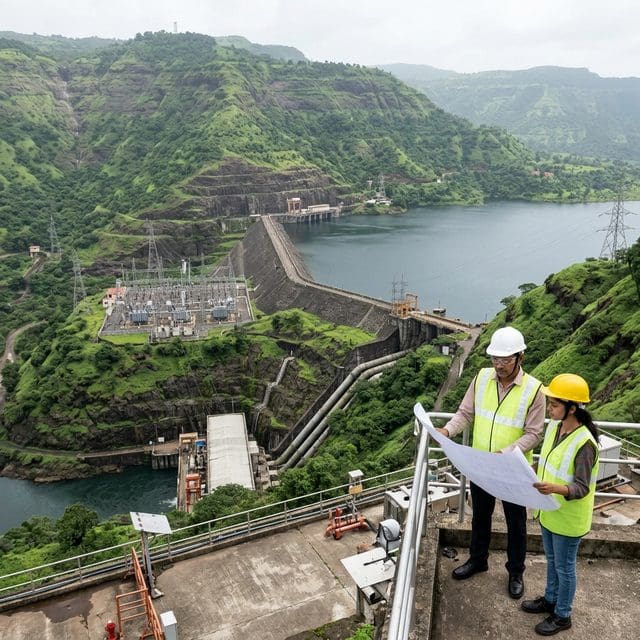
A project approved in India illustrates the scale of one tool for balancing electricity supply. Tata Power’s board approved 11,871 crore rupees for an 1,800-megawatt pumped-storage facility at Shirwata in Maharashtra. The company expects construction to take 51 months and plans to fund the project with 75% debt and 25% equity.
Pumped storage uses electricity to move water uphill when power is available, then releases it through turbines when electricity is needed. It can help shift supply across time, but it requires major upfront investment and suitable sites. Tata Power’s financing plan makes the cost visible: most of the capital is expected to come from borrowing, with the balance supplied by equity. The available reporting does not state the project’s expected power price or how its costs will ultimately be recovered.
Germany is taking a different approach to resilience. Its government approved plans for a 24-terawatt-hour gas reserve, equivalent to about 10% of the country’s gas-storage capacity. The reserve would be accumulated over as many as three years and funded through surcharges on users. The measure offers a buffer for crises, but it also puts a defined cost on gas consumers and preserves a role for gas security planning even as climate policy seeks to reduce fossil-fuel reliance.
In the United States, the Energy Information Administration raised its estimate of gas in storage at the end of November by almost 70 billion cubic feet compared with its October forecast. That is a revision to a near-term storage outlook, not a guarantee against future price or supply shocks. Still, it highlights how inventories are one part of the system’s ability to respond to seasonal demand and disruption.
Taken together, the developments show why climate targets and energy security cannot be treated as separate policy questions. Storage projects can support a changing power mix, while gas reserves and inventories provide another form of protection against shortfalls. Each has costs, financing needs and limits. The central economic test for governments and utilities is whether proposed investments deliver reliable energy at a cost households and businesses can bear, while making measurable progress on emissions.
At COP31, Guterres is pressing governments to set timelines and mobilize finance. Projects in Maharashtra and Germany show the less sweeping but decisive work behind that agenda: building assets, arranging capital and deciding which consumers pay. The details of those choices will determine whether transition plans hold up beyond the summit stage.

Mark Davis serves as the Senior Correspondent for Energy, Climate, and Resource Economics at Just Right News. In an era where the conversation around the environment is often dominated by alarmism and top-down mandates, Mark provides a vital, market-oriented perspective on the complex forces shaping our world. As the lead voice behind the acclaimed feature series “Power and the Planet,” he explores the intersection of environmental policy, global energy markets, and the fundamental economic principles that sustain modern civilization.
Mark’s pragmatic approach to resource management was forged in the high desert of his hometown, Albuquerque, New Mexico. Growing up in a region defined by both its breathtaking natural beauty and its rugged, resource-dependent landscape, he developed an early appreciation for the delicate balance between conservation and utilization. New Mexico’s unique position as a hub for both traditional energy production and cutting-edge scientific research provided Mark with a front-row seat to the evolution of the American energy sector. This upbringing instilled in him a deep-seated belief that true environmental stewardship is inseparable from economic prosperity and technological innovation.
Now based in Boulder, Colorado, Mark operates from the heart of the nation’s climate research community. While Boulder is often seen as a bastion of environmental idealism, Mark utilizes his post to provide a necessary counterweight, grounded in the realities of resource economics. He understands that energy policy does not exist in a vacuum; it has tangible consequences for the American taxpayer, the stability of the national power grid, and the strength of the domestic manufacturing sector. By reporting from the front lines of the climate debate, he is able to challenge prevailing narratives with hard data and a commitment to the principles of the free market.
Throughout his tenure at Just Right News, Mark has distinguished himself by focusing on the “Resource Economics” aspect of his beat. He frequently highlights the hidden costs of rapid energy transitions and advocates for an “all-of-the-above” energy strategy that prioritizes American energy independence. His work often shines a light on the geopolitical implications of resource scarcity, arguing that a secure nation must first be an energy-secure nation. Whether he is analyzing the impact of federal land-use regulations or investigating the supply chains required for new technologies, Mark remains focused on how policy decisions affect the lives and livelihoods of everyday citizens.
In “Power and the Planet,” Mark continues to bridge the gap between complex scientific concepts and the economic realities facing the country. He rejects the false choice between a healthy environment and a thriving economy, instead seeking out solutions that leverage American ingenuity and private-sector competition. For Mark, reporting on the climate is not about following the latest trends, but about ensuring that the conversation remains tethered to the foundational values of liberty, property rights, and fiscal responsibility. His contributions ensure that Just Right News readers receive a comprehensive, clear-eyed view of the challenges and opportunities defining the future of our planet.